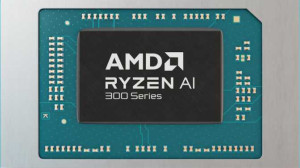
AMD Ryzen AI 7 350
Intel Core Ultra 9 285

AMD Ryzen AI 7 350 Intel Core Ultra 9 285

Overview

When choosing between the AMD Ryzen AI 7 350 and the Intel Core Ultra 9 285, shoppers face a genuinely fascinating matchup spanning platform flexibility, raw CPU throughput, integrated graphics capability, and memory performance. Both processors embrace modern DDR5 memory and big.LITTLE hybrid architecture, yet they diverge sharply in core counts, cache sizes, and supported PCIe generations. This comparison breaks down every key specification to help you decide which chip best fits your needs.

Common Features

  • Both processors include integrated graphics.
  • Both processors support 64-bit computing.
  • Neither processor has an unlocked multiplier.
  • Both processors use big.LITTLE technology.
  • Both processors support DirectX 12 on their integrated graphics.
  • Both integrated graphics solutions support up to 4 displays simultaneously.
  • Both processors use DDR5 memory.
  • Both processors feature dual memory channels.
  • Both processors share the same instruction sets: MMX, F16C, FMA3, AES, AVX, AVX2, SSE 4.1, and SSE 4.2.
  • Both processors include NX bit support.

Main Differences

  • The AMD Ryzen AI 7 350 is available for both laptop and desktop platforms, while the Intel Core Ultra 9 285 is designed for desktop only.
  • The semiconductor size is 4 nm on the AMD Ryzen AI 7 350 and 3 nm on the Intel Core Ultra 9 285.
  • The maximum CPU temperature is 100°C on the AMD Ryzen AI 7 350 and 105°C on the Intel Core Ultra 9 285.
  • The PCIe version is 4 on the AMD Ryzen AI 7 350 and 5 on the Intel Core Ultra 9 285.
  • The base CPU speed configuration is 4 x 2 & 4 x 2 GHz on the AMD Ryzen AI 7 350 and 8 x 2.5 & 16 x 1.9 GHz on the Intel Core Ultra 9 285.
  • The thread count is 16 on the AMD Ryzen AI 7 350 and 24 on the Intel Core Ultra 9 285.
  • The turbo clock speed is 5 GHz on the AMD Ryzen AI 7 350 and 5.6 GHz on the Intel Core Ultra 9 285.
  • The L2 cache is 8 MB on the AMD Ryzen AI 7 350 and 40 MB on the Intel Core Ultra 9 285.
  • The clock multiplier is 20 on the AMD Ryzen AI 7 350 and 25 on the Intel Core Ultra 9 285.
  • The integrated GPU base clock speed is 400 MHz on the AMD Ryzen AI 7 350 and 300 MHz on the Intel Core Ultra 9 285.
  • The integrated GPU turbo clock speed is 3000 MHz on the AMD Ryzen AI 7 350 and 2000 MHz on the Intel Core Ultra 9 285.
  • The OpenGL version supported is 4.6 on the AMD Ryzen AI 7 350 and 4.5 on the Intel Core Ultra 9 285.
  • The OpenCL version supported is 2.1 on the AMD Ryzen AI 7 350 and 3 on the Intel Core Ultra 9 285.
  • The maximum supported RAM speed is 8000 MHz on the AMD Ryzen AI 7 350 and 6400 MHz on the Intel Core Ultra 9 285.
  • The maximum memory capacity is 256 GB on the AMD Ryzen AI 7 350 and 192 GB on the Intel Core Ultra 9 285.
  • ECC memory support is present on the Intel Core Ultra 9 285 but not available on the AMD Ryzen AI 7 350.
Specs Comparison
AMD Ryzen AI 7 350

AMD Ryzen AI 7 350

Intel Core Ultra 9 285

Intel Core Ultra 9 285

General info:
Type Laptop, Desktop Desktop
Has integrated graphics
release date January 2025 January 2025
semiconductor size 4 nm 3 nm
CPU temperature 100 °C 105 °C
PCI Express (PCIe) version 4 5
Supports 64-bit

At the platform level, one of the most meaningful distinctions is deployment flexibility. The AMD Ryzen AI 7 350 is designed for both laptop and desktop form factors, while the Intel Core Ultra 9 285 is strictly a desktop processor. This makes the Ryzen AI 7 350 the only option here for mobile or compact builds, which is a significant real-world consideration for buyers who need portability or OEM laptop configurations.

On the silicon front, the Core Ultra 9 285 is built on a 3 nm process compared to the Ryzen AI 7 350's 4 nm, which generally translates to better transistor density and potential efficiency gains. It also supports PCIe 5.0 versus PCIe 4.0 on the Ryzen, meaning the Intel platform can take full advantage of next-generation NVMe SSDs and GPUs that demand higher bandwidth — a tangible advantage for future-proofing a high-end desktop build. The Intel chip's higher 105 °C thermal ceiling (versus 100 °C) reflects its desktop-only thermal design, where larger cooling solutions are assumed.

Both processors share integrated graphics and full 64-bit support, so those are non-differentiating. Overall, the Core Ultra 9 285 holds a clear platform-level edge for desktop use thanks to its newer process node and PCIe 5.0 support, but the Ryzen AI 7 350 wins outright on versatility by covering both laptop and desktop deployments.

Performance:
CPU speed 4 x 2 & 4 x 2 GHz 8 x 2.5 & 16 x 1.9 GHz
CPU threads 16 threads 24 threads
turbo clock speed 5GHz 5.6GHz
Has an unlocked multiplier
L2 cache 8 MB 40 MB
Uses big.LITTLE technology
clock multiplier 20 25

The AMD Ryzen AI 7 350 has a CPU speed configuration of 4 cores running at 2 GHz and 4 cores at 2 GHz, offering a total of 16 threads. In comparison, the Intel Core Ultra 9 285 has a CPU speed configuration of 8 cores running at 2.5 GHz and 16 cores at 1.9 GHz, providing 24 threads. This results in a higher thread count for the Intel processor, which may enhance multitasking and parallel processing capabilities.

Both processors offer a turbo clock speed of 5 GHz for the Ryzen 350 and 5.6 GHz for the Intel 285. The difference in turbo speed may provide a slight edge for the Intel processor in tasks that require bursts of high performance.

Regarding cache, the AMD Ryzen 350 has an 8 MB L2 cache, while the Intel 285 offers a significantly larger 40 MB L2 cache. This larger cache may improve data retrieval speeds for the Intel processor in certain tasks. Both processors feature big.LITTLE technology, which balances high-performance cores with energy-efficient cores, and both have a fixed clock multiplier of 20 for the Ryzen and 25 for the Intel processor. Both models also do not have an unlocked multiplier.

Integrated graphics:
GPU clock speed 400 MHz 300 MHz
GPU turbo 3000 MHz 2000 MHz
DirectX version DirectX 12 DirectX 12
supported displays 4 4
OpenGL version 4.6 4.5
OpenCL version 2.1 3

The AMD Ryzen AI 7 350 has a GPU clock speed of 400 MHz and a turbo speed of 3000 MHz, while the Intel Core Ultra 9 285 features a lower GPU clock speed of 300 MHz and a turbo speed of 2000 MHz. This indicates that the Ryzen 350 may offer higher base and turbo GPU performance compared to the Intel 285.

Both processors support DirectX 12 and a maximum of 4 displays, providing compatibility with modern graphics standards. However, the Ryzen 350 supports OpenGL version 4.6, while the Intel 285 supports version 4.5. Additionally, the Ryzen 350 supports OpenCL 2.1, while the Intel 285 supports the newer OpenCL 3.

Despite differences in clock speeds and support for certain graphic technologies, both processors provide robust integrated graphics solutions suitable for a variety of tasks.

Memory:
RAM speed (max) 8000 MHz 6400 MHz
DDR memory version 5 5
memory channels 2 2
maximum memory amount 256GB 192GB
Supports ECC memory

The AMD Ryzen AI 7 350 supports a maximum RAM speed of 8000 MHz, while the Intel Core Ultra 9 285 supports a slightly lower maximum RAM speed of 6400 MHz. Both processors utilize DDR5 memory and have dual memory channels, which allows for efficient memory usage and increased bandwidth.

In terms of maximum memory capacity, the Ryzen 350 can handle up to 256GB of RAM, while the Intel 285 supports a maximum of 192GB. This gives the Ryzen processor a higher potential memory capacity.

The Intel 285 also has support for ECC (Error-Correcting Code) memory, which is not supported by the Ryzen 350. ECC memory is used in systems that require higher reliability and stability, such as servers or workstations.

Features:
instruction sets MMX, F16C, FMA3, AES, AVX, AVX2, SSE 4.1, SSE 4.2 MMX, F16C, FMA3, AES, AVX, AVX2, SSE 4.1, SSE 4.2
Has NX bit

Both the AMD Ryzen AI 7 350 and the Intel Core Ultra 9 285 support the same set of instruction sets, including MMX, F16C, FMA3, AES, AVX, AVX2, SSE 4.1, and SSE 4.2. This means that both processors are equally capable in terms of supporting modern instruction sets that enhance performance for various applications.

Additionally, both processors have the NX bit feature enabled, which helps in protecting against certain types of security vulnerabilities by preventing the execution of code from certain regions of memory.

As the specifications for instruction sets and the NX bit are identical across both products, there are no differences to highlight in this group.

Comparison Summary & Verdict

After examining every specification, the two processors reveal clearly distinct profiles. The AMD Ryzen AI 7 350 stands out for its broader platform reach, covering both laptop and desktop systems, and offers notably faster integrated graphics with a 3000 MHz GPU turbo clock and higher maximum RAM speed of 8000 MHz, making it appealing for portable or graphics-light workloads. The Intel Core Ultra 9 285, by contrast, is a powerhouse desktop chip with a larger 24-thread core configuration, a substantial 40 MB L2 cache, PCIe 5.0 support, and ECC memory compatibility, making it the stronger choice for demanding desktop workloads and professional or workstation environments where raw throughput and memory reliability matter most.

AMD Ryzen AI 7 350
Buy AMD Ryzen AI 7 350 if...

Buy the AMD Ryzen AI 7 350 if you need a processor that works across both laptop and desktop platforms, or if faster integrated graphics and higher maximum RAM speeds are priorities for your use case.

Intel Core Ultra 9 285
Buy Intel Core Ultra 9 285 if...

Buy the Intel Core Ultra 9 285 if you are building a high-performance desktop system and need a higher thread count, a much larger L2 cache, PCIe 5.0 support, or ECC memory compatibility for professional workloads.