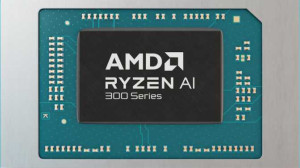
AMD Ryzen AI 7 350
Intel Core Ultra 9 285H

AMD Ryzen AI 7 350 Intel Core Ultra 9 285H

Overview

Welcome to our in-depth specification comparison between the AMD Ryzen AI 7 350 and the Intel Core Ultra 9 285H. These two mobile processors take notably different approaches across key areas such as thermal design, integrated graphics capability, multi-core performance, and memory support. Whether you are building a content creation rig or seeking an efficient everyday laptop, understanding how these chips stack up will help you make the right choice.

Common Features

  • Integrated graphics are available on both AMD Ryzen AI 7 350 and Intel Core Ultra 9 285H.
  • Both AMD Ryzen AI 7 350 and Intel Core Ultra 9 285H support 64-bit computing.
  • Both processors feature 16 CPU threads.
  • Neither AMD Ryzen AI 7 350 nor Intel Core Ultra 9 285H has an unlocked multiplier.
  • Both AMD Ryzen AI 7 350 and Intel Core Ultra 9 285H use big.LITTLE technology.
  • Both integrated graphics solutions support up to 4 displays simultaneously.
  • Both processors support OpenGL version 4.6.
  • Both AMD Ryzen AI 7 350 and Intel Core Ultra 9 285H use DDR5 memory.
  • Both processors feature a dual-channel memory configuration.
  • ECC memory support is not available on either AMD Ryzen AI 7 350 or Intel Core Ultra 9 285H.
  • Both processors share the same instruction sets: MMX, F16C, FMA3, AES, AVX, AVX2, SSE 4.1, and SSE 4.2.
  • The NX bit security feature is present on both AMD Ryzen AI 7 350 and Intel Core Ultra 9 285H.

Main Differences

  • The AMD Ryzen AI 7 350 is available for both laptop and desktop form factors, while the Intel Core Ultra 9 285H is designed for laptops only.
  • Thermal Design Power (TDP) is 28W on AMD Ryzen AI 7 350 and 45W on Intel Core Ultra 9 285H.
  • The semiconductor size is 4 nm on AMD Ryzen AI 7 350 and 3 nm on Intel Core Ultra 9 285H.
  • Maximum CPU temperature is 100 °C on AMD Ryzen AI 7 350 and 110 °C on Intel Core Ultra 9 285H.
  • PCI Express version is 4 on AMD Ryzen AI 7 350 and 5 on Intel Core Ultra 9 285H.
  • CPU base speed is 4 x 2 GHz & 4 x 2 GHz on AMD Ryzen AI 7 350 and 6 x 2.9 GHz & 8 x 2.7 GHz on Intel Core Ultra 9 285H.
  • Turbo clock speed is 5 GHz on AMD Ryzen AI 7 350 and 5.4 GHz on Intel Core Ultra 9 285H.
  • L3 cache is 16 MB on AMD Ryzen AI 7 350 and 24 MB on Intel Core Ultra 9 285H.
  • The clock multiplier is 20 on AMD Ryzen AI 7 350 and 29 on Intel Core Ultra 9 285H.
  • PassMark result (multi-core) is 34,459 on AMD Ryzen AI 7 350 and 33,969 on Intel Core Ultra 9 285H.
  • PassMark result (single-core) is 3,878 on AMD Ryzen AI 7 350 and 4,472 on Intel Core Ultra 9 285H.
  • Geekbench 6 multi-core result is 11,247 on AMD Ryzen AI 7 350 and 17,173 on Intel Core Ultra 9 285H.
  • Geekbench 6 single-core result is 2,467 on AMD Ryzen AI 7 350 and 2,897 on Intel Core Ultra 9 285H.
  • PassMark result (overclocked) is 24,477 on AMD Ryzen AI 7 350 and 34,411 on Intel Core Ultra 9 285H.
  • Integrated GPU base clock speed is 400 MHz on AMD Ryzen AI 7 350 and 300 MHz on Intel Core Ultra 9 285H.
  • The integrated GPU is the Radeon 860M on AMD Ryzen AI 7 350 and the Arc 140T on Intel Core Ultra 9 285H.
  • GPU turbo clock speed is 3,000 MHz on AMD Ryzen AI 7 350 and 2,350 MHz on Intel Core Ultra 9 285H.
  • GPU execution units number 8 on AMD Ryzen AI 7 350 and 128 on Intel Core Ultra 9 285H.
  • DirectX support is version 12 on AMD Ryzen AI 7 350 and DirectX 12 Ultimate on Intel Core Ultra 9 285H.
  • OpenCL version is 2.1 on AMD Ryzen AI 7 350 and 3 on Intel Core Ultra 9 285H.
  • Texture mapping units (TMUs) number 32 on AMD Ryzen AI 7 350 and 64 on Intel Core Ultra 9 285H.
  • Render output units (ROPs) number 8 on AMD Ryzen AI 7 350 and 32 on Intel Core Ultra 9 285H.
  • Shading units number 512 on AMD Ryzen AI 7 350 and 1,024 on Intel Core Ultra 9 285H.
  • Maximum RAM speed is 8,000 MHz on AMD Ryzen AI 7 350 and 8,400 MHz on Intel Core Ultra 9 285H.
  • Maximum memory capacity is 256 GB on AMD Ryzen AI 7 350 and 128 GB on Intel Core Ultra 9 285H.
  • Multithreading support is present on AMD Ryzen AI 7 350 but not available on Intel Core Ultra 9 285H.
Specs Comparison
AMD Ryzen AI 7 350

AMD Ryzen AI 7 350

Intel Core Ultra 9 285H

Intel Core Ultra 9 285H

General info:
Type Laptop, Desktop Laptop
Has integrated graphics
release date January 2025 January 2025
Thermal Design Power (TDP) 28W 45W
semiconductor size 4 nm 3 nm
CPU temperature 100 °C 110 °C
PCI Express (PCIe) version 4 5
Supports 64-bit

At a foundational level, both chips share the essentials — integrated graphics, 64-bit support — but their design philosophies diverge quickly. The most striking difference is thermal envelope: the AMD Ryzen AI 7 350 operates at a 28W TDP, while the Intel Core Ultra 9 285H is rated at 45W. That 17-watt gap is significant in a mobile context, as it directly shapes how aggressively a laptop can perform without excessive heat, fan noise, or battery drain. The Ryzen AI 7 350 is clearly tuned for efficiency-first designs, whereas the Core Ultra 9 285H is built for high-performance laptops willing to trade battery life and thermals for raw headroom.

On the silicon side, Intel holds a slight manufacturing edge with a 3nm process node versus AMD's 4nm, which in principle allows Intel to fit more transistors in the same area or run cooler at equivalent performance. Intel also steps ahead with PCIe 5.0 support compared to AMD's PCIe 4.0 — a meaningful advantage for users pairing the chip with next-generation NVMe SSDs or future high-bandwidth peripherals, where PCIe 5 can deliver roughly double the throughput. The higher maximum CPU temperature on the Intel (110°C vs. 100°C) further reflects its willingness to run hotter in pursuit of peak performance.

One quiet but practical advantage for AMD is platform flexibility: the Ryzen AI 7 350 is listed for both laptop and desktop deployment, while the Core Ultra 9 285H is laptop-only. Overall, the Intel Core Ultra 9 285H holds the edge in raw capability indicators — newer process node, faster PCIe generation, and higher thermal ceiling — but the AMD Ryzen AI 7 350 is the stronger choice for power-conscious or thermally constrained designs. Which is ″better″ depends entirely on the use case: sustained performance favors Intel; efficiency and versatility favor AMD.

Performance:
CPU speed 4 x 2 & 4 x 2 GHz 6 x 2.9 & 8 x 2.7 GHz
CPU threads 16 threads 16 threads
turbo clock speed 5GHz 5.4GHz
Has an unlocked multiplier
L3 cache 16 MB 24 MB
Uses big.LITTLE technology
clock multiplier 20 29

The AMD Ryzen AI 7 350 and Intel Core Ultra 9 285H have similar thread counts, with both featuring 16 threads. However, their CPU speeds differ significantly. The Ryzen AI 7 350 operates with a combination of 4 cores at 2 GHz and 4 cores at 2 GHz, while the Intel Core Ultra 9 285H has 6 cores at 2.9 GHz and 8 cores at 2.7 GHz. This gives the Intel processor a higher base CPU speed, potentially offering better overall performance in tasks requiring higher core speeds.

Both processors support turbo clock speeds of 5 GHz, but the Intel Core Ultra 9 285H can boost slightly higher to 5.4 GHz, which may give it a slight edge in performance when under heavy loads. Both CPUs use big.LITTLE technology to optimize performance and power efficiency, with the same clock multiplier of 20 for the Ryzen AI 7 350 and 29 for the Intel Core Ultra 9 285H, indicating different performance characteristics at higher clock speeds.

In terms of cache, the AMD Ryzen AI 7 350 comes with a 16 MB L3 cache, whereas the Intel Core Ultra 9 285H has a larger 24 MB L3 cache. The larger cache in the Intel processor may help with performance in applications that rely on faster access to frequently used data.

Benchmarks:
PassMark result 34459 33969
PassMark result (single) 3878 4472
Geekbench 6 result (multi) 11247 17173
Geekbench 6 result (single) 2467 2897
PassMark result (overclocked) 24477 34411

When comparing the benchmark results of the AMD Ryzen AI 7 350 and Intel Core Ultra 9 285H, the two processors show some differences in performance. The Ryzen AI 7 350 achieves a PassMark result of 34459, while the Intel Core Ultra 9 285H scores slightly lower at 33969. However, the Intel processor outperforms the Ryzen in single-core performance, with a PassMark result of 4472 compared to the Ryzen's 3878.

In terms of multi-core performance, the Intel Core Ultra 9 285H also leads with a Geekbench 6 result of 17173, significantly higher than the Ryzen AI 7 350's 11247. The single-core Geekbench 6 result shows a similar trend, with the Intel processor scoring 2897 compared to the Ryzen’s 2467.

Both processors have overclocked performance results, with the Ryzen AI 7 350 reaching 24477 and the Intel Core Ultra 9 285H achieving 34411. This demonstrates that the Intel chip has a larger performance boost when overclocked, potentially offering more headroom for users looking to push their systems further.

Integrated graphics:
GPU clock speed 400 MHz 300 MHz
GPU name Radeon 860M Arc 140T
GPU turbo 3000 MHz 2350 MHz
GPU execution units 8 128
DirectX version DirectX 12 DirectX 12 Ultimate
supported displays 4 4
OpenGL version 4.6 4.6
OpenCL version 2.1 3
texture mapping units (TMUs) 32 64
render output units (ROPs) 8 32
shading units 512 1024

The integrated graphics of the AMD Ryzen AI 7 350 and Intel Core Ultra 9 285H differ in several key aspects. The Ryzen AI 7 350 is equipped with the Radeon 860M GPU, featuring a base GPU clock speed of 400 MHz and a turbo boost of 3000 MHz. In comparison, the Intel Core Ultra 9 285H has the Arc 140T GPU, which starts at a lower 300 MHz clock speed but can turbo up to 2350 MHz.

The Ryzen GPU has 8 execution units, while the Intel GPU has significantly more at 128 execution units. This suggests that the Intel GPU may have a higher potential for parallel processing. Additionally, the Ryzen AI 7 350 has 32 texture mapping units (TMUs), 8 render output units (ROPs), and 512 shading units, while the Intel GPU boasts 64 TMUs, 32 ROPs, and 1024 shading units. These differences indicate that the Intel GPU may offer more robust performance in rendering and shading tasks.

Both GPUs support DirectX 12, though the Intel Core Ultra 9 285H supports the more advanced DirectX 12 Ultimate. Both processors also share the same OpenGL version (4.6) and OpenCL version (2.1 for Ryzen, 3 for Intel). Lastly, both products support up to 4 displays, ensuring similar multi-monitor capabilities.

Memory:
RAM speed (max) 8000 MHz 8400 MHz
DDR memory version 5 5
memory channels 2 2
maximum memory amount 256GB 128GB
Supports ECC memory

When comparing memory specifications, the AMD Ryzen AI 7 350 and Intel Core Ultra 9 285H show some key differences. The Ryzen AI 7 350 supports a maximum RAM speed of 8000 MHz, while the Intel Core Ultra 9 285H supports a slightly higher maximum RAM speed of 8400 MHz. Both processors use DDR5 memory and feature 2 memory channels, ensuring similar memory architecture.

The maximum supported memory for the Ryzen AI 7 350 is 256GB, significantly higher than the Intel Core Ultra 9 285H’s 128GB maximum. This means the Ryzen processor can handle larger memory configurations for more demanding workloads or applications that require extensive memory.

Neither processor supports ECC (Error-Correcting Code) memory, which is typically used in systems where data integrity is critical, such as servers or workstations.

Features:
instruction sets MMX, F16C, FMA3, AES, AVX, AVX2, SSE 4.1, SSE 4.2 MMX, F16C, FMA3, AES, AVX, AVX2, SSE 4.1, SSE 4.2
uses multithreading
Has NX bit

Both the AMD Ryzen AI 7 350 and Intel Core Ultra 9 285H share similar instruction sets, including MMX, F16C, FMA3, AES, AVX, AVX2, SSE 4.1, and SSE 4.2, ensuring compatibility with a wide range of modern software and applications. These instruction sets are designed to enhance performance in various computational tasks such as encryption, multimedia processing, and vector operations.

One key difference between the two processors is that the Ryzen AI 7 350 supports multithreading, allowing for better performance in multi-tasking and parallel workloads. In contrast, the Intel Core Ultra 9 285H does not support multithreading, which may limit its performance in multi-threaded applications.

Both processors include the NX bit feature, which enhances security by preventing the execution of malicious code in certain areas of memory, a common security feature in modern processors.

Comparison Summary & Verdict

After examining the full specification set, both processors have compelling strengths suited to different users. The AMD Ryzen AI 7 350 stands out with its lower 28W TDP, support for up to 256 GB of RAM, multithreading capability, and a higher overall PassMark multi-core score, making it an excellent pick for thermally constrained or memory-intensive workloads. The Intel Core Ultra 9 285H, on the other hand, excels in raw single-core speed, overclocked performance, and dramatically superior integrated graphics thanks to its Arc 140T GPU with 1,024 shading units and DirectX 12 Ultimate support, alongside stronger Geekbench scores. Users who rely on GPU-accelerated tasks or need peak single-threaded responsiveness will find the Intel chip more capable, while those prioritizing efficiency and maximum memory capacity should lean toward the AMD option.

AMD Ryzen AI 7 350
Buy AMD Ryzen AI 7 350 if...

Choose the AMD Ryzen AI 7 350 if you need a power-efficient processor with a lower 28W TDP, multithreading support, and the ability to address up to 256 GB of RAM.

Intel Core Ultra 9 285H
Buy Intel Core Ultra 9 285H if...

Choose the Intel Core Ultra 9 285H if you prioritize stronger integrated graphics performance, higher single-core speeds, and better overclocked benchmark results.