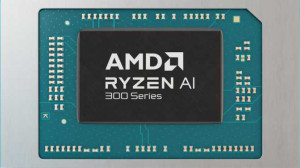
AMD Ryzen AI 7 H 350
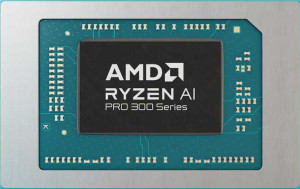
AMD Ryzen AI 7 Pro 350

AMD Ryzen AI 7 H 350 AMD Ryzen AI 7 Pro 350

Common Features

  • Both products have integrated graphics.
  • Both products have a thermal design power (TDP) of 28W.
  • Both products use a 4 nm semiconductor size.
  • Both products have a maximum CPU temperature of 100 °C.
  • Both products support PCI Express (PCIe) version 4.
  • Both products support 64-bit processing.
  • Both products have a CPU speed of 4 x 2 & 4 x 2 GHz.
  • Both products have 16 CPU threads.
  • Both products have a turbo clock speed of 5GHz.
  • Both products have an unlocked multiplier.
  • Both products use big.LITTLE technology.
  • Both products have a clock multiplier of 20.
  • Both products have a GPU clock speed of 600 MHz.
  • Both products have Radeon 860M graphics.
  • Both products have a GPU turbo of 3000 MHz.
  • Both products support DirectX version 12.
  • Both products support OpenGL version 4.6.
  • Both products support OpenCL version 2.1.
  • Both products support up to 4 displays.
  • Both products support DDR memory version 5.

Main Differences

  • The AMD Ryzen AI 7 H 350 is available for Laptop and Desktop, while the AMD Ryzen AI 7 Pro 350 is available for Desktop and Laptop.
  • The L2 cache is 8 MB on AMD Ryzen AI 7 H 350 and 16 MB on AMD Ryzen AI 7 Pro 350.
  • The L3 cache is 16 MB on AMD Ryzen AI 7 H 350 and 8 MB on AMD Ryzen AI 7 Pro 350.
  • The PassMark result is 27316 on AMD Ryzen AI 7 H 350 and 24010 on AMD Ryzen AI 7 Pro 350.
  • The PassMark single result is 3970 on AMD Ryzen AI 7 H 350 and 3941 on AMD Ryzen AI 7 Pro 350.
  • ECC memory is not supported on AMD Ryzen AI 7 H 350, but it is supported on AMD Ryzen AI 7 Pro 350.
Specs Comparison
AMD Ryzen AI 7 H 350

AMD Ryzen AI 7 H 350

AMD Ryzen AI 7 Pro 350

AMD Ryzen AI 7 Pro 350

General info:
Type Laptop, Desktop Desktop, Laptop
Has integrated graphics
release date July 2025 March 2025
Thermal Design Power (TDP) 28W 28W
semiconductor size 4 nm 4 nm
CPU temperature 100 °C 100 °C
PCI Express (PCIe) version 4 4
Supports 64-bit

Both the AMD Ryzen AI 7 H 350 and the AMD Ryzen AI 7 Pro 350 are designed for similar usage scenarios, with both being compatible with laptops and desktops. The specs for the type of devices they support are identical, with neither product favoring one over the other.

Both models come with integrated graphics, providing a boost to their overall versatility, whether you're using them in a laptop or desktop configuration. Regarding thermal management, both processors have a Thermal Design Power (TDP) of 28W, which indicates a similar power consumption and heat dissipation profile, making them comparable in this area.

On the semiconductor size front, both the Ryzen AI 7 H 350 and the Ryzen AI 7 Pro 350 feature a 4 nm process, ensuring efficient performance and power management. The maximum CPU temperature for both products is listed as 100°C, and both support PCI Express (PCIe) version 4 for fast data transfer. Additionally, both processors support 64-bit computing, making them suitable for modern applications and operating systems.

Performance:
CPU speed 4 x 2 & 4 x 2 GHz 4 x 2 & 4 x 2 GHz
CPU threads 16 threads 16 threads
turbo clock speed 5GHz 5GHz
Has an unlocked multiplier
L2 cache 8 MB 16 MB
L3 cache 16 MB 8 MB
Uses big.LITTLE technology
clock multiplier 20 20

When it comes to performance, the AMD Ryzen AI 7 H 350 and the AMD Ryzen AI 7 Pro 350 are quite similar. Both processors feature a CPU speed configuration of 4 x 2 GHz and 4 x 2 GHz, with 16 threads for multitasking efficiency. Turbo clock speed for both models is 5 GHz, providing an additional boost for demanding tasks. Both processors also use big.LITTLE technology, which optimizes performance by using different cores for power efficiency and high performance.

In terms of cache, there are differences: the Ryzen AI 7 H 350 has 8 MB of L2 cache and 16 MB of L3 cache, while the Ryzen AI 7 Pro 350 reverses these values, offering 16 MB of L2 cache and 8 MB of L3 cache. These differences in cache distribution could influence performance in specific workloads, but both configurations are designed for high efficiency and responsiveness.

Lastly, both processors have a clock multiplier of 20, and neither product has an unlocked multiplier, which means overclocking is not supported on either model. Overall, while the two processors are very similar in terms of core specifications, the cache configuration differs, which could slightly affect performance in certain scenarios.

Benchmarks:
PassMark result 27316 24010
PassMark result (single) 3970 3941

In terms of benchmark performance, the AMD Ryzen AI 7 H 350 and the AMD Ryzen AI 7 Pro 350 have notable differences. The Ryzen AI 7 H 350 scores a PassMark result of 27316, which is higher than the Ryzen AI 7 Pro 350's score of 24010. This indicates that the H 350 is likely to perform better in general tasks and multi-threaded applications.

When looking at the single-threaded performance, the Ryzen AI 7 H 350 scores 3970, while the Ryzen AI 7 Pro 350 scores 3941. The difference is minimal, with only a slight advantage for the H 350 in single-threaded tasks, but both scores suggest strong single-core performance.

Overall, while the H 350 leads in both overall and single-thread performance, the difference in benchmarks between the two processors is relatively small, with the Pro 350 still providing solid performance across the board.

Integrated graphics:
GPU clock speed 600 MHz 600 MHz
GPU name Radeon 860M Radeon 860M
GPU turbo 3000 MHz 3000 MHz
DirectX version DirectX 12 DirectX 12
supported displays 4 4
OpenGL version 4.6 4.6
OpenCL version 2.1 2.1
texture mapping units (TMUs) 32 32
render output units (ROPs) 8 8
shading units 512 512

The integrated graphics on the AMD Ryzen AI 7 H 350 and the AMD Ryzen AI 7 Pro 350 are identical. Both products feature the Radeon 860M GPU, with a GPU clock speed of 600 MHz and a turbo boost of 3000 MHz. These GPUs support DirectX 12, OpenGL version 4.6, and OpenCL version 2.1, ensuring compatibility with a wide range of modern applications and games.

Both processors are capable of supporting up to four displays, providing flexibility for multi-monitor setups. Additionally, the GPUs are equipped with 32 texture mapping units (TMUs), 8 render output units (ROPs), and 512 shading units, ensuring a solid graphics performance for tasks such as gaming, video editing, and general graphical workloads.

Since all the integrated graphics specs are exactly the same for both the Ryzen AI 7 H 350 and the Ryzen AI 7 Pro 350, there is no difference between the two products in this category.

Memory:
RAM speed (max) 8000 MHz 8000 MHz
DDR memory version 5 5
memory channels 2 2
maximum memory amount 256GB 256GB
Supports ECC memory

Both the AMD Ryzen AI 7 H 350 and the AMD Ryzen AI 7 Pro 350 support impressive memory configurations. Both processors feature a maximum RAM speed of 8000 MHz, and they support DDR5 memory, ensuring fast and efficient performance. They also both utilize two memory channels, which can help improve memory bandwidth.

Regarding maximum memory capacity, both processors support up to 256GB of RAM, providing ample room for demanding workloads. However, the key difference lies in the support for Error Correcting Code (ECC) memory. The Ryzen AI 7 H 350 does not support ECC memory, while the Ryzen AI 7 Pro 350 does. ECC memory is particularly useful in scenarios where data integrity is crucial, such as in servers or workstations handling sensitive data.

Overall, the memory specifications of both processors are quite similar, with the main distinction being the Ryzen AI 7 Pro 350's added support for ECC memory.

Features:
instruction sets MMX, F16C, FMA3, AES, AVX, AVX2, SSE 4.1, SSE 4.2 MMX, F16C, FMA3, AES, AVX, AVX2, SSE 4.1, SSE 4.2
uses multithreading
Has NX bit

When it comes to features, the AMD Ryzen AI 7 H 350 and the AMD Ryzen AI 7 Pro 350 are nearly identical. Both processors support the same instruction sets, including MMX, F16C, FMA3, AES, AVX, AVX2, SSE 4.1, and SSE 4.2, which ensure compatibility with a wide range of applications and workloads.

Both models also utilize multithreading, allowing for improved performance in tasks that benefit from parallel processing. Additionally, both processors have the NX bit, which provides security benefits by preventing the execution of code in certain areas of memory.

With identical feature sets, there is no difference between the Ryzen AI 7 H 350 and the Ryzen AI 7 Pro 350 in terms of supported instruction sets, multithreading, or security features.

Comparison Summary

This is a specification comparison between AMD Ryzen AI 7 H 350 and AMD Ryzen AI 7 Pro 350. Both products have integrated graphics, a thermal design power of 28W, and support PCIe version 4 and 64-bit processing. However, they differ in several key areas: the AMD Ryzen AI 7 H 350 has 8 MB of L2 cache and 16 MB of L3 cache, while the AMD Ryzen AI 7 Pro 350 has 16 MB of L2 cache and 8 MB of L3 cache. The PassMark result is 27316 for the H 350 and 24010 for the Pro 350, while ECC memory is not supported on the H 350 but is available on the Pro 350.