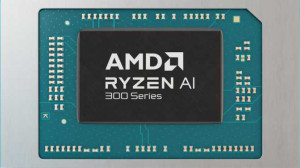
AMD Ryzen AI 7 H 350
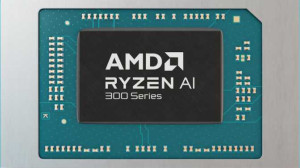
AMD Ryzen AI 9 H 365

AMD Ryzen AI 7 H 350 AMD Ryzen AI 9 H 365

Common Features

  • Both products are designed for laptop and desktop use.
  • Both products have integrated graphics.
  • Both products have a thermal design power of 28W.
  • Both products are built on a 4 nm semiconductor.
  • Both products have a CPU temperature of 100 °C.
  • Both products support PCI Express version 4.
  • Both products support 64-bit architecture.
  • Both products have a turbo clock speed of 5GHz.
  • Both products use big.LITTLE technology.
  • Both products have a clock multiplier of 20.
  • Both products support DirectX 12.
  • Both products support 4 displays.
  • Both products support OpenGL version 4.6.
  • Both products support OpenCL version 2.1.
  • Both products have a maximum RAM speed of 8000 MHz.
  • Both products use DDR5 memory.
  • Both products have 2 memory channels.
  • Both products support a maximum memory amount of 256GB.
  • Both products do not support ECC memory.
  • Both products have instruction sets including MMX, F16C, FMA3, AES, AVX, AVX2, SSE 4.1, and SSE 4.2.

Main Differences

  • CPU speed is 4 x 2 & 4 x 2 GHz on AMD Ryzen AI 7 H 350 and 4 x 2 & 6 x 2 GHz on AMD Ryzen AI 9 H 365.
  • AMD Ryzen AI 7 H 350 has 16 threads and AMD Ryzen AI 9 H 365 has 20 threads.
  • L2 cache is 8 MB on AMD Ryzen AI 7 H 350 and 10 MB on AMD Ryzen AI 9 H 365.
  • L3 cache is 16 MB on AMD Ryzen AI 7 H 350 and 24 MB on AMD Ryzen AI 9 H 365.
  • PassMark result is 27316 on AMD Ryzen AI 7 H 350 and 29245 on AMD Ryzen AI 9 H 365.
  • PassMark result (single) is 3970 on AMD Ryzen AI 7 H 350 and 3571 on AMD Ryzen AI 9 H 365.
  • GPU clock speed is 600 MHz on AMD Ryzen AI 7 H 350 and 400 MHz on AMD Ryzen AI 9 H 365.
  • GPU name is Radeon 860M on AMD Ryzen AI 7 H 350 and Radeon 880M on AMD Ryzen AI 9 H 365.
  • GPU turbo is 3000 MHz on AMD Ryzen AI 7 H 350 and 2900 MHz on AMD Ryzen AI 9 H 365.
  • Texture mapping units (TMUs) are 32 on AMD Ryzen AI 7 H 350 and 48 on AMD Ryzen AI 9 H 365.
  • Render output units (ROPs) are 8 on AMD Ryzen AI 7 H 350 and 16 on AMD Ryzen AI 9 H 365.
  • Shading units are 512 on AMD Ryzen AI 7 H 350 and 768 on AMD Ryzen AI 9 H 365.
Specs Comparison
AMD Ryzen AI 7 H 350

AMD Ryzen AI 7 H 350

AMD Ryzen AI 9 H 365

AMD Ryzen AI 9 H 365

General info:
Type Laptop, Desktop Laptop, Desktop
Has integrated graphics
release date July 2025 July 2025
Thermal Design Power (TDP) 28W 28W
semiconductor size 4 nm 4 nm
CPU temperature 100 °C 100 °C
PCI Express (PCIe) version 4 4
Supports 64-bit

Both the AMD Ryzen AI 7 H 350 and AMD Ryzen AI 9 H 365 are designed for use in laptops and desktops, offering similar general features. Both products include integrated graphics and support 64-bit architecture, making them compatible with modern software and applications.

In terms of thermal and power characteristics, both processors have a Thermal Design Power (TDP) of 28W and a maximum CPU temperature of 100°C. This indicates similar power consumption and heat management limits for both products.

The semiconductor size for both models is 4 nm, suggesting they are built on the same advanced manufacturing process. Additionally, both processors support PCI Express (PCIe) version 4, which offers faster data transfer rates, particularly beneficial for high-performance applications. No notable differences appear in these general specifications between the two products.

Performance:
CPU speed 4 x 2 & 4 x 2 GHz 4 x 2 & 6 x 2 GHz
CPU threads 16 threads 20 threads
turbo clock speed 5GHz 5GHz
Has an unlocked multiplier
L2 cache 8 MB 10 MB
L3 cache 16 MB 24 MB
Uses big.LITTLE technology
clock multiplier 20 20

The AMD Ryzen AI 7 H 350 and AMD Ryzen AI 9 H 365 differ in several performance-related aspects, particularly in terms of CPU speed, threads, and cache size. The AI 7 H 350 features a CPU speed configuration of 4 x 2 GHz and 4 x 2 GHz, while the AI 9 H 365 offers a slightly higher CPU speed with 4 x 2 GHz and 6 x 2 GHz.

In terms of processing threads, the AI 7 H 350 supports 16 threads, whereas the AI 9 H 365 supports 20 threads, allowing for more parallel processing capabilities in the latter. Both processors have the same turbo clock speed of 5GHz, which provides a performance boost when needed.

The L2 cache size on the AI 7 H 350 is 8 MB, while the AI 9 H 365 offers a larger 10 MB L2 cache. Similarly, the AI 7 H 350 has a 16 MB L3 cache, whereas the AI 9 H 365 comes with a 24 MB L3 cache, potentially offering more room for quick data retrieval. Both processors use big.LITTLE technology and have the same clock multiplier of 20, with no unlocked multiplier on either model.

Benchmarks:
PassMark result 27316 29245
PassMark result (single) 3970 3571

The PassMark benchmark scores show a performance difference between the AMD Ryzen AI 7 H 350 and AMD Ryzen AI 9 H 365. The AI 7 H 350 has a total PassMark result of 27316, while the AI 9 H 365 achieves a slightly higher score of 29245. This suggests a higher overall performance for the AI 9 H 365 in multi-threaded workloads.

For single-threaded performance, the AI 7 H 350 scores 3970, whereas the AI 9 H 365 scores 3571. Despite the AI 9 H 365 having a higher total PassMark score, the AI 7 H 350 performs better in single-threaded tasks based on these results.

These benchmark scores highlight that while both processors perform similarly in single-threaded tasks, the AI 9 H 365 shows a stronger performance in multi-threaded applications, as reflected in its higher total PassMark score.

Integrated graphics:
GPU clock speed 600 MHz 400 MHz
GPU name Radeon 860M Radeon 880M
GPU turbo 3000 MHz 2900 MHz
DirectX version DirectX 12 DirectX 12
supported displays 4 4
OpenGL version 4.6 4.6
OpenCL version 2.1 2.1
texture mapping units (TMUs) 32 48
render output units (ROPs) 8 16
shading units 512 768

The integrated graphics of the AMD Ryzen AI 7 H 350 and AMD Ryzen AI 9 H 365 differ in several key areas. The AI 7 H 350 is equipped with a Radeon 860M GPU, which has a GPU clock speed of 600 MHz and a turbo boost of 3000 MHz. In comparison, the AI 9 H 365 features a Radeon 880M GPU with a lower GPU clock speed of 400 MHz, but a similar turbo boost of 2900 MHz.

Both processors support DirectX 12, OpenGL 4.6, and OpenCL 2.1, meaning they can handle modern graphics and compute tasks with similar software compatibility. Additionally, both models can drive up to 4 supported displays, so they are well-suited for multi-monitor setups.

There are some differences in the underlying hardware of the GPUs as well. The AI 7 H 350's Radeon 860M has 32 texture mapping units (TMUs), 8 render output units (ROPs), and 512 shading units. On the other hand, the AI 9 H 365’s Radeon 880M has 48 TMUs, 16 ROPs, and 768 shading units, which indicates a more robust graphical capability for the AI 9 H 365.

Memory:
RAM speed (max) 8000 MHz 8000 MHz
DDR memory version 5 5
memory channels 2 2
maximum memory amount 256GB 256GB
Supports ECC memory

The memory specifications for the AMD Ryzen AI 7 H 350 and AMD Ryzen AI 9 H 365 are identical. Both processors support a maximum RAM speed of 8000 MHz, DDR memory version 5, and feature 2 memory channels. They also share the same maximum memory amount of 256GB, making them capable of handling large memory configurations.

Neither processor supports ECC (Error-Correcting Code) memory, so both are limited to standard memory configurations without built-in error correction.

With the same memory capabilities across both models, users can expect similar performance and memory compatibility, regardless of which processor they choose.

Features:
instruction sets MMX, F16C, FMA3, AES, AVX, AVX2, SSE 4.1, SSE 4.2 MMX, F16C, FMA3, AES, AVX, AVX2, SSE 4.1, SSE 4.2
uses multithreading
Has NX bit

The features of the AMD Ryzen AI 7 H 350 and AMD Ryzen AI 9 H 365 are identical. Both processors support a wide range of instruction sets, including MMX, F16C, FMA3, AES, AVX, AVX2, SSE 4.1, and SSE 4.2, ensuring compatibility with a broad spectrum of modern applications and workloads.

Additionally, both processors are capable of using multithreading, allowing them to handle multiple tasks simultaneously. Both models also feature the NX bit, which helps enhance security by preventing the execution of code from certain memory areas.

With matching specifications in this category, users can expect the same feature set from both the AI 7 H 350 and AI 9 H 365, offering similar performance in terms of supported instructions and security features.

Comparison Summary

This is a specification comparison between AMD Ryzen AI 7 H 350 and AMD Ryzen AI 9 H 365. Both products are designed for laptop and desktop use, have integrated graphics, and share a thermal design power of 28W and a 4 nm semiconductor size. The AMD Ryzen AI 7 H 350 features 16 threads, a PassMark result of 27316, and a GPU clock speed of 600 MHz, while the AMD Ryzen AI 9 H 365 offers 20 threads, a PassMark result of 29245, and a GPU clock speed of 400 MHz. Additionally, the L3 cache on the Ryzen AI 9 H 365 is 24 MB compared to 16 MB on the Ryzen AI 7 H 350, and the GPU turbo speed is 2900 MHz on the AMD Ryzen AI 9 H 365, while it reaches 3000 MHz on the Ryzen AI 7 H 350.