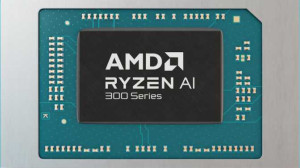
AMD Ryzen AI 9 H 365
Intel Core Ultra 5 225H

AMD Ryzen AI 9 H 365 Intel Core Ultra 5 225H

Overview

Welcome to our in-depth specification comparison between the AMD Ryzen AI 9 H 365 and the Intel Core Ultra 5 225H — two compelling mobile processors aimed at demanding users. While both chips share a 28W TDP and support DDR5 memory, they take notably different approaches in areas such as core configuration, integrated graphics capability, and memory support. Read on to explore how these two processors stack up across performance, benchmarks, and features.

Common Features

  • Both processors have integrated graphics.
  • Both have a Thermal Design Power (TDP) of 28W.
  • Both support 64-bit computing.
  • Neither processor has an unlocked multiplier.
  • Both use big.LITTLE technology.
  • Both support 4 displays.
  • Both support OpenGL version 4.6.
  • Both use DDR5 memory.
  • Both have 2 memory channels.
  • ECC memory is not supported on either processor.
  • Both share the same instruction sets: MMX, F16C, FMA3, AES, AVX, AVX2, SSE 4.1, SSE 4.2.
  • The NX bit security feature is present on both processors.

Main Differences

  • The AMD Ryzen AI 9 H 365 is available for both Laptop and Desktop, while the Intel Core Ultra 5 225H is for Laptop only.
  • The semiconductor size is 4 nm on AMD Ryzen AI 9 H 365 and 3 nm on Intel Core Ultra 5 225H.
  • The maximum CPU temperature is 100°C on AMD Ryzen AI 9 H 365 and 110°C on Intel Core Ultra 5 225H.
  • The PCIe version is 4 on AMD Ryzen AI 9 H 365 and 5 on Intel Core Ultra 5 225H.
  • CPU speed is 4×2 & 6×2 GHz on AMD Ryzen AI 9 H 365 and 4×1.7 & 8×1.3 GHz on Intel Core Ultra 5 225H.
  • CPU threads count is 20 on AMD Ryzen AI 9 H 365 and 14 on Intel Core Ultra 5 225H.
  • Turbo clock speed is 5 GHz on AMD Ryzen AI 9 H 365 and 4.9 GHz on Intel Core Ultra 5 225H.
  • The clock multiplier is 20 on AMD Ryzen AI 9 H 365 and 17 on Intel Core Ultra 5 225H.
  • The PassMark multi-core result is 29245 on AMD Ryzen AI 9 H 365 and 29204 on Intel Core Ultra 5 225H.
  • The PassMark single-core result is 3571 on AMD Ryzen AI 9 H 365 and 4365 on Intel Core Ultra 5 225H.
  • GPU turbo speed is 2900 MHz on AMD Ryzen AI 9 H 365 and 2200 MHz on Intel Core Ultra 5 225H.
  • The DirectX version is DirectX 12 on AMD Ryzen AI 9 H 365 and DirectX 12 Ultimate on Intel Core Ultra 5 225H.
  • OpenCL version is 2.1 on AMD Ryzen AI 9 H 365 and 3 on Intel Core Ultra 5 225H.
  • Maximum RAM speed is 8000 MHz on AMD Ryzen AI 9 H 365 and 8400 MHz on Intel Core Ultra 5 225H.
  • Maximum memory capacity is 256GB on AMD Ryzen AI 9 H 365 and 128GB on Intel Core Ultra 5 225H.
  • Multithreading support is present on AMD Ryzen AI 9 H 365 but not available on Intel Core Ultra 5 225H.
Specs Comparison
AMD Ryzen AI 9 H 365

AMD Ryzen AI 9 H 365

Intel Core Ultra 5 225H

Intel Core Ultra 5 225H

General info:
Type Laptop, Desktop Laptop
Has integrated graphics
release date July 2025 January 2025
Thermal Design Power (TDP) 28W 28W
semiconductor size 4 nm 3 nm
CPU temperature 100 °C 110 °C
PCI Express (PCIe) version 4 5
Supports 64-bit

Both the AMD Ryzen AI 9 H 365 and the Intel Core Ultra 5 225H share a handful of important fundamentals: both carry a 28W TDP, include integrated graphics, and support 64-bit computing — meaning neither has an inherent thermal or power envelope advantage for laptop use cases, and both are capable of modern workloads out of the box.

Where they diverge is in manufacturing and connectivity. Intel's chip is built on a 3 nm process versus AMD's 4 nm, which in theory allows for greater transistor density and potential efficiency gains — though real-world impact depends heavily on workload and platform implementation. Intel also steps ahead with PCIe 5.0 support compared to AMD's PCIe 4.0, which matters most if you intend to pair the chip with next-generation NVMe SSDs or discrete GPUs that can leverage the doubled bandwidth. AMD counters with a higher rated max CPU temperature headroom — 100 °C versus Intel's 110 °C — meaning Intel's chip technically sustains boosted performance slightly longer under sustained thermal load before throttling.

Intel holds a modest but meaningful edge here for forward-looking builds, thanks to its newer process node and PCIe 5.0 support. AMD's chip, however, is notable for its broader deployment flexibility — it is rated for both laptop and desktop form factors, unlike Intel's laptop-only positioning. For pure platform modernity, Intel wins; for versatility and reuse across system types, AMD has a practical advantage.

Performance:
CPU speed 4 x 2 & 6 x 2 GHz 4 x 1.7 & 8 x 1.3 GHz
CPU threads 20 threads 14 threads
turbo clock speed 5GHz 4.9GHz
Has an unlocked multiplier
Uses big.LITTLE technology
clock multiplier 20 17

The AMD Ryzen AI 9 H 365 and Intel Core Ultra 5 225H differ in their CPU speed configurations. The Ryzen AI 9 H 365 features a combination of 4 cores running at 2 GHz and 6 cores at 2 GHz, giving a balanced multi-core performance, while the Intel Core Ultra 5 225H has 4 cores running at 1.7 GHz and 8 cores at 1.3 GHz, indicating a higher number of slower cores for multi-tasking. In terms of total threads, the AMD processor supports 20 threads, whereas the Intel processor supports 14 threads.

Both processors are capable of turbo clock speeds, with the AMD Ryzen AI 9 H 365 reaching up to 5 GHz, slightly higher than the 4.9 GHz turbo speed of the Intel Core Ultra 5 225H. Neither processor features an unlocked multiplier, limiting users' ability to manually overclock.

Both processors utilize big.LITTLE technology, which helps optimize power consumption by using high-performance cores for demanding tasks and energy-efficient cores for lighter workloads. The AMD Ryzen AI 9 H 365 has a clock multiplier of 20, whereas the Intel Core Ultra 5 225H has a slightly lower multiplier of 17.

Benchmarks:
PassMark result 29245 29204
PassMark result (single) 3571 4365

When it comes to overall performance benchmarks, the AMD Ryzen AI 9 H 365 and Intel Core Ultra 5 225H show very similar results. The AMD processor has a PassMark result of 29245, while the Intel processor is slightly lower at 29204, indicating a marginal difference in multi-core performance.

However, the two processors differ more noticeably in single-threaded performance. The AMD Ryzen AI 9 H 365 achieves a single-thread PassMark result of 3571, whereas the Intel Core Ultra 5 225H surpasses it with a score of 4365, showing that the Intel chip performs better in single-thread tasks.

Despite these differences, both processors exhibit strong overall performance, with the AMD chip leading in multi-core tests and the Intel chip having an advantage in single-threaded workloads.

Integrated graphics:
GPU turbo 2900 MHz 2200 MHz
DirectX version DirectX 12 DirectX 12 Ultimate
supported displays 4 4
OpenGL version 4.6 4.6
OpenCL version 2.1 3

The integrated graphics of the AMD Ryzen AI 9 H 365 and Intel Core Ultra 5 225H are fairly comparable, with both processors supporting 4 displays. The AMD Ryzen AI 9 H 365 has a GPU turbo speed of 2900 MHz, which is faster than the Intel Core Ultra 5 225H's GPU turbo speed of 2200 MHz.

Both processors support DirectX 12, but the Intel chip goes a step further with support for DirectX 12 Ultimate, a more advanced version that includes additional features like ray tracing and variable rate shading. Both processors also support OpenGL version 4.6.

In terms of OpenCL support, the AMD Ryzen AI 9 H 365 supports OpenCL version 2.1, while the Intel Core Ultra 5 225H supports the newer version 3, which may allow for more advanced parallel computing capabilities.

Memory:
RAM speed (max) 8000 MHz 8400 MHz
DDR memory version 5 5
memory channels 2 2
maximum memory amount 256GB 128GB
Supports ECC memory

The AMD Ryzen AI 9 H 365 and Intel Core Ultra 5 225H both support DDR5 memory, but their memory specifications differ in a few areas. The Ryzen AI 9 H 365 supports a maximum RAM speed of 8000 MHz, while the Intel Core Ultra 5 225H can handle slightly faster RAM at 8400 MHz.

Both processors feature dual memory channels, which should provide efficient data transfer between the CPU and memory. The maximum supported memory for the Ryzen AI 9 H 365 is significantly higher, at 256GB, compared to the Intel chip's 128GB maximum.

Neither processor supports ECC (Error-Correcting Code) memory, which means they don't offer built-in error correction for memory data, a feature typically used in more critical or high-availability environments.

Features:
instruction sets MMX, F16C, FMA3, AES, AVX, AVX2, SSE 4.1, SSE 4.2 MMX, F16C, FMA3, AES, AVX, AVX2, SSE 4.1, SSE 4.2
uses multithreading
Has NX bit

Both the AMD Ryzen AI 9 H 365 and Intel Core Ultra 5 225H support the same set of instruction sets, including MMX, F16C, FMA3, AES, AVX, AVX2, SSE 4.1, and SSE 4.2, meaning they offer similar capabilities in terms of processing various data types and optimizing performance for modern applications.

In terms of multithreading, the AMD Ryzen AI 9 H 365 supports it, allowing for better handling of parallel tasks. The Intel Core Ultra 5 225H, however, does not support multithreading, which means it can handle fewer simultaneous tasks compared to the AMD processor.

Both processors include the NX bit (No Execute Bit) feature, which helps improve security by preventing the execution of code in certain regions of memory, but this is a common feature in both models.

Comparison Summary & Verdict

After a thorough review of the specifications, both processors prove competitive in their own right. The AMD Ryzen AI 9 H 365 stands out with its higher thread count of 20, larger maximum memory support of 256GB, a faster GPU turbo of 2900 MHz, and multithreading support — making it well-suited for heavily multi-threaded workloads and memory-intensive applications. On the other hand, the Intel Core Ultra 5 225H excels in single-core performance with a PassMark single score of 4365, offers a more modern PCIe 5.0 interface, supports DirectX 12 Ultimate and OpenCL 3, and reaches a slightly higher maximum RAM speed of 8400 MHz — advantages that benefit gaming, modern I/O, and graphics-dependent tasks. Neither chip is an outright winner; the right choice depends entirely on your specific workload priorities.

AMD Ryzen AI 9 H 365
Buy AMD Ryzen AI 9 H 365 if...

Choose the AMD Ryzen AI 9 H 365 if you need strong multi-threaded performance, support for up to 256GB of RAM, and a faster integrated GPU turbo for graphics workloads.

Intel Core Ultra 5 225H
Buy Intel Core Ultra 5 225H if...

Choose the Intel Core Ultra 5 225H if you prioritize higher single-core performance, PCIe 5.0 connectivity, and more advanced graphics API support with DirectX 12 Ultimate and OpenCL 3.