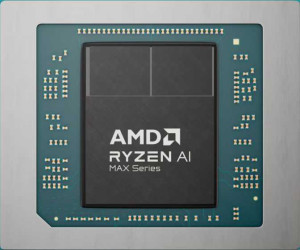
AMD Ryzen AI Max 385
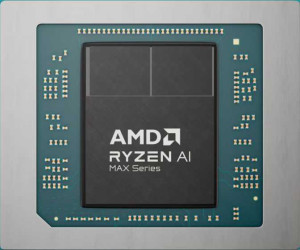
AMD Ryzen AI Max Plus 395

AMD Ryzen AI Max 385 AMD Ryzen AI Max Plus 395

Overview

Choosing between the AMD Ryzen AI Max 385 and the AMD Ryzen AI Max Plus 395 is not as straightforward as a spec sheet glance might suggest. Both chips share the same 4 nm architecture, a 55W thermal envelope, and a capable DDR5 memory platform, yet they diverge meaningfully in core count, cache hierarchy, integrated GPU identity, and raw benchmark performance. This side-by-side breakdown covers every measurable specification to help you determine which processor is the right match for your computing needs.

Common Features

  • Both products are designed for Laptop and Desktop use.
  • Integrated graphics are available on both products.
  • Both products have a Thermal Design Power (TDP) of 55W.
  • Both products are manufactured on a 4 nm semiconductor process.
  • Both products have a maximum CPU temperature of 100 °C.
  • Both products use PCIe version 4.
  • 64-bit support is available on both products.
  • Neither product has an unlocked multiplier.
  • Both products have an L2 cache of 1 MB per core.
  • Both products have an L3 cache of 4 MB per core.
  • Neither product uses big.LITTLE technology.
  • Both products support up to 4 displays via integrated graphics.
  • Both products support OpenGL version 4.6.
  • Both products support OpenCL version 3.
  • Both products support a maximum RAM speed of 8000 MHz.
  • Both products use DDR5 memory.
  • Both products feature 4 memory channels.
  • Both products support a maximum memory amount of 128 GB.
  • ECC memory support is available on both products.
  • Both products support the same instruction sets: MMX, F16C, FMA3, AES, AVX, AVX2, SSE 4.1, and SSE 4.2.
  • Multithreading is supported on both products.
  • NX bit support is available on both products.

Main Differences

  • CPU speed is 8 x 3.6 GHz on AMD Ryzen AI Max 385 and 16 x 3 GHz on AMD Ryzen AI Max Plus 395.
  • CPU threads count is 16 on AMD Ryzen AI Max 385 and 32 on AMD Ryzen AI Max Plus 395.
  • Turbo clock speed is 5 GHz on AMD Ryzen AI Max 385 and 5.1 GHz on AMD Ryzen AI Max Plus 395.
  • L2 cache is 8 MB on AMD Ryzen AI Max 385 and 16 MB on AMD Ryzen AI Max Plus 395.
  • L3 cache is 32 MB on AMD Ryzen AI Max 385 and 64 MB on AMD Ryzen AI Max Plus 395.
  • L1 cache is 640 KB on AMD Ryzen AI Max 385 and 1280 KB on AMD Ryzen AI Max Plus 395.
  • Clock multiplier is 36 on AMD Ryzen AI Max 385 and 30 on AMD Ryzen AI Max Plus 395.
  • PassMark result is 18441 on AMD Ryzen AI Max 385 and 54021 on AMD Ryzen AI Max Plus 395.
  • PassMark single-core result is 2056 on AMD Ryzen AI Max 385 and 4142 on AMD Ryzen AI Max Plus 395.
  • GPU clock speed is 2800 MHz on AMD Ryzen AI Max 385 and 1295 MHz on AMD Ryzen AI Max Plus 395.
  • GPU name is Radeon 8050S on AMD Ryzen AI Max 385 and Radeon 8060S on AMD Ryzen AI Max Plus 395.
  • GPU turbo speed is 2800 MHz on AMD Ryzen AI Max 385 and 2900 MHz on AMD Ryzen AI Max Plus 395.
  • DirectX version is DirectX 12 Ultimate on AMD Ryzen AI Max 385 and DirectX 12 on AMD Ryzen AI Max Plus 395.
Specs Comparison
AMD Ryzen AI Max 385

AMD Ryzen AI Max 385

AMD Ryzen AI Max Plus 395

AMD Ryzen AI Max Plus 395

General info:
Type Laptop, Desktop Laptop, Desktop
Has integrated graphics
release date January 2025 January 2025
Thermal Design Power (TDP) 55W 55W
semiconductor size 4 nm 4 nm
CPU temperature 100 °C 100 °C
PCI Express (PCIe) version 4 4
Supports 64-bit

In terms of general characteristics, the AMD Ryzen AI Max 385 and AMD Ryzen AI Max Plus 395 are completely identical across every spec in this group. Both are designed for Laptop and Desktop form factors, feature integrated graphics, share a 55W TDP, are built on a 4 nm process node, max out at a 100 °C CPU temperature ceiling, support PCIe 4.0, and are fully 64-bit compatible.

The shared 4 nm semiconductor size is noteworthy — it places both chips in the modern efficiency tier, enabling a relatively compact die with strong performance-per-watt. The 55W TDP positions them as high-performance mobile processors that can also serve in compact desktop applications, striking a balance between sustained throughput and thermal manageability. PCIe 4.0 support ensures compatibility with current-generation NVMe storage and discrete add-in cards without being a bandwidth bottleneck for typical workloads.

For this specific group, these two processors are in a dead tie — there is no differentiator whatsoever. Users comparing them solely on general platform characteristics will find no reason to prefer one over the other; the distinction between these chips must be sought in other spec groups such as CPU cores, GPU configuration, or memory support.

Performance:
CPU speed 8 x 3.6 GHz 16 x 3 GHz
CPU threads 16 threads 32 threads
turbo clock speed 5GHz 5.1GHz
Has an unlocked multiplier
L2 cache 8 MB 16 MB
L3 cache 32 MB 64 MB
L1 cache 640 KB 1280 KB
L2 core 1 MB/core 1 MB/core
L3 core 4 MB/core 4 MB/core
Uses big.LITTLE technology
clock multiplier 36 30

The AMD Ryzen AI Max 385 and AMD Ryzen AI Max Plus 395 differ significantly in their performance specifications. The Ryzen AI Max 385 has a CPU speed of 8 x 3.6 GHz and 16 threads, whereas the Ryzen AI Max Plus 395 boasts a higher CPU speed with 16 x 3 GHz and 32 threads. This indicates that the Max Plus 395 has a greater number of threads, which could suggest better multitasking performance, despite a slightly lower individual core clock speed compared to the Max 385.

When it comes to turbo clock speed, the Max 385 can reach 5 GHz, while the Max Plus 395 slightly exceeds this with a turbo clock speed of 5.1 GHz. Both processors have the same clock multiplier of 36 for the Max 385 and 30 for the Max Plus 395, which directly affects how their cores scale under load.

As for cache, the Max 385 features 8 MB of L2 cache, 32 MB of L3 cache, and 640 KB of L1 cache. In comparison, the Max Plus 395 comes with 16 MB of L2 cache, 64 MB of L3 cache, and 1280 KB of L1 cache. This shows that the Max Plus 395 has a clear advantage in cache size, which could enhance its performance in memory-intensive tasks. Both models use a 1 MB/core allocation for L2 cache and a 4 MB/core allocation for L3 cache. Neither product uses big.LITTLE technology, and both have an unlocked multiplier setting as false.

Benchmarks:
PassMark result 18441 54021
PassMark result (single) 2056 4142

The AMD Ryzen AI Max 385 and AMD Ryzen AI Max Plus 395 show a significant difference in benchmark results. The Max 385 has a PassMark result of 18,441 and a single-threaded result of 2,056. In comparison, the Max Plus 395 achieves a much higher PassMark result of 54,021, with a single-threaded result of 4,142. This indicates that the Max Plus 395 performs considerably better in both overall and single-threaded tasks, with its PassMark result being nearly three times higher than that of the Max 385.

Both processors demonstrate strong performance, but the larger disparity in the multi-core PassMark result highlights the Max Plus 395's superior performance in workloads that can take advantage of its additional threads and cores.

Overall, these benchmark scores emphasize a clear performance gap between the two models, with the AMD Ryzen AI Max Plus 395 significantly outperforming the Max 385 in both multi-core and single-core tests.

Integrated graphics:
GPU clock speed 2800 MHz 1295 MHz
GPU name Radeon 8050S Radeon 8060S
GPU turbo 2800 MHz 2900 MHz
DirectX version DirectX 12 Ultimate DirectX 12
supported displays 4 4
OpenGL version 4.6 4.6
OpenCL version 3 3

The integrated graphics in the AMD Ryzen AI Max 385 and AMD Ryzen AI Max Plus 395 show some key differences. The Max 385 features a GPU clock speed of 2800 MHz with the Radeon 8050S, while the Max Plus 395 has a lower GPU clock speed of 1295 MHz but comes with the Radeon 8060S. Both processors have the same number of supported displays, at 4, and support the same OpenGL (4.6) and OpenCL (3) versions. The Max 385 and Max Plus 395 both support DirectX, but the Max 385 supports DirectX 12 Ultimate, while the Max Plus 395 supports DirectX 12.

The Max 385’s GPU turbo frequency is 2800 MHz, matching its base GPU clock speed, while the Max Plus 395 has a slightly higher GPU turbo speed of 2900 MHz. This suggests the Max Plus 395 may offer a slightly higher peak graphics performance during intensive tasks, although its base GPU clock speed is significantly lower.

In summary, while both processors offer solid integrated graphics, the Max 385 stands out with its higher GPU clock speed and DirectX 12 Ultimate support, while the Max Plus 395 compensates with a higher GPU turbo speed and the newer Radeon 8060S GPU.

Memory:
RAM speed (max) 8000 MHz 8000 MHz
DDR memory version 5 5
memory channels 4 4
maximum memory amount 128GB 128GB
Supports ECC memory

The memory specifications for the AMD Ryzen AI Max 385 and AMD Ryzen AI Max Plus 395 are identical across all key aspects. Both processors support a maximum RAM speed of 8000 MHz and are compatible with DDR5 memory. They also feature four memory channels and support a maximum memory capacity of 128GB. Additionally, both products support ECC memory (Error Correcting Code), which helps ensure data integrity in memory-intensive applications.

As both models share the same memory configuration, there are no differences between the two in this specification group.

Overall, the memory capabilities of the AMD Ryzen AI Max 385 and the AMD Ryzen AI Max Plus 395 are effectively identical, offering the same maximum speed, capacity, and support for ECC memory.

Features:
instruction sets MMX, F16C, FMA3, AES, AVX, AVX2, SSE 4.1, SSE 4.2 MMX, F16C, FMA3, AES, AVX, AVX2, SSE 4.1, SSE 4.2
uses multithreading
Has NX bit

The AMD Ryzen AI Max 385 and AMD Ryzen AI Max Plus 395 are identical in terms of features. Both processors support the same instruction sets, including MMX, F16C, FMA3, AES, AVX, AVX2, SSE 4.1, and SSE 4.2. Additionally, both models utilize multithreading and include the NX bit, which provides protection against certain types of malware.

There are no differences in the feature sets between the two models in this group, as both products offer the same capabilities for instruction sets, multithreading, and security features.

In summary, the AMD Ryzen AI Max 385 and AMD Ryzen AI Max Plus 395 are equivalent in terms of the features provided, with no variation in supported instruction sets or additional features.

Comparison Summary & Verdict

After a thorough review of all available specifications, these two processors clearly target distinct audiences. The AMD Ryzen AI Max 385 delivers an 8-core, 16-thread design with a higher base clock of 3.6 GHz and DirectX 12 Ultimate support via its Radeon 8050S GPU, making it a well-rounded option for users who prioritize single-threaded responsiveness and a richer graphics API tier. The AMD Ryzen AI Max Plus 395 doubles the core and thread count to 16 cores and 32 threads, offers twice the cache at every level, and posts a PassMark score of 54021 against 18441 on the 385, reflecting a commanding advantage in multi-threaded throughput. Both share a 55W TDP, 4 nm process, and support up to 128 GB of DDR5 memory across four channels, so their platform fundamentals are equal. The 385 suits everyday and lightly parallel workloads, while the 395 is purpose-built for users with demanding parallel compute needs.

AMD Ryzen AI Max 385
Buy AMD Ryzen AI Max 385 if...

Choose the AMD Ryzen AI Max 385 if you want DirectX 12 Ultimate support from the integrated Radeon 8050S GPU and a higher base clock speed in a more compact core configuration.

AMD Ryzen AI Max Plus 395
Buy AMD Ryzen AI Max Plus 395 if...

Choose the AMD Ryzen AI Max Plus 395 if you need maximum multi-threaded performance, with double the cores, threads, and cache at every level, supported by dramatically higher PassMark benchmark scores.