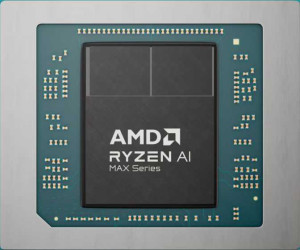
AMD Ryzen AI Max 385
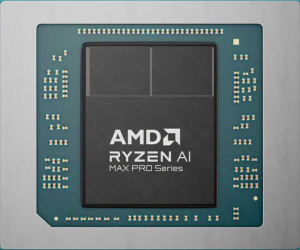
AMD Ryzen AI Max Pro 385

AMD Ryzen AI Max 385 AMD Ryzen AI Max Pro 385

Overview

Welcome to our in-depth specification comparison between the AMD Ryzen AI Max 385 and the AMD Ryzen AI Max Pro 385. Both processors share an impressive foundation: the same 4 nm architecture, identical CPU speeds, and a unified memory platform — yet they diverge in ways that matter for real-world workloads. In this comparison, we explore their key battlegrounds, including benchmark performance and integrated graphics capabilities, to help you determine which chip is the right fit for your needs.

Common Features

  • Both processors have integrated graphics.
  • Both processors have a Thermal Design Power (TDP) of 55W.
  • Both processors are built on a 4 nm semiconductor process.
  • Both processors have a maximum CPU temperature of 100 °C.
  • Both processors support PCI Express (PCIe) version 4.
  • Both processors support 64-bit computing.
  • Both processors have a CPU speed of 8 x 3.6 GHz.
  • Both processors have 16 CPU threads.
  • Both processors have a turbo clock speed of 5 GHz.
  • Neither processor has an unlocked multiplier.
  • Both processors have 8 MB of L2 cache.
  • Both processors have 32 MB of L3 cache.
  • Both processors have 640 KB of L1 cache.
  • Both processors have 1 MB/core of L2 cache per core.
  • Both processors feature the Radeon 8050S integrated GPU.
  • Both processors have a GPU turbo frequency of 2800 MHz.
  • Both processors support up to 4 displays.
  • Both processors support OpenGL version 4.6.
  • Both processors support OpenCL version 3.
  • Both processors support a maximum RAM speed of 8000 MHz.
  • Both processors use DDR5 memory.
  • Both processors have 4 memory channels.
  • Both processors support a maximum memory amount of 128 GB.
  • Both processors support ECC memory.
  • Both processors support the same instruction sets: MMX, F16C, FMA3, AES, AVX, AVX2, SSE 4.1, and SSE 4.2.
  • Both processors support multithreading.
  • Both processors have the NX bit security feature.

Main Differences

  • The PassMark result is 18441 on AMD Ryzen AI Max 385 and 33441 on AMD Ryzen AI Max Pro 385.
  • The PassMark single-core result is 2056 on AMD Ryzen AI Max 385 and 4052 on AMD Ryzen AI Max Pro 385.
  • The integrated GPU supports DirectX 12 Ultimate on AMD Ryzen AI Max 385, while it supports DirectX 12 on AMD Ryzen AI Max Pro 385.
Specs Comparison
AMD Ryzen AI Max 385

AMD Ryzen AI Max 385

AMD Ryzen AI Max Pro 385

AMD Ryzen AI Max Pro 385

General info:
Type Laptop, Desktop Desktop, Laptop
Has integrated graphics
release date January 2025 January 2025
Thermal Design Power (TDP) 55W 55W
semiconductor size 4 nm 4 nm
CPU temperature 100 °C 100 °C
PCI Express (PCIe) version 4 4
Supports 64-bit

Looking at the general specifications for the AMD Ryzen AI Max 385 and the AMD Ryzen AI Max Pro 385, the two processors are, for all practical purposes, identical in this category. Both are designed for Laptop and Desktop form factors, share the same 4nm semiconductor process, operate under a 55W TDP, top out at a 100°C junction temperature, support PCIe 4.0, include integrated graphics, and are fully 64-bit compatible.

The 4nm node is worth highlighting: it reflects a modern, efficient manufacturing process that balances transistor density with power consumption, which is particularly meaningful in the context of a 55W envelope shared across both laptop and desktop deployments. The PCIe 4.0 interface ensures compatibility with current-generation NVMe storage and discrete GPUs without being a bandwidth bottleneck in typical workloads.

Based strictly on the general info specs provided, these two processors are evenly matched — there is no measurable advantage for either chip in this category. The only observable difference is the listing order of supported form factors (Laptop/Desktop vs. Desktop/Laptop), which carries no technical significance. Users should look to other spec groups — such as CPU performance, memory, or AI acceleration — to find meaningful differentiators between the two.

Performance:
CPU speed 8 x 3.6 GHz 8 x 3.6 GHz
CPU threads 16 threads 16 threads
turbo clock speed 5GHz 5GHz
Has an unlocked multiplier
L2 cache 8 MB 8 MB
L3 cache 32 MB 32 MB
L1 cache 640 KB 640 KB
L2 core 1 MB/core 1 MB/core
L3 core 4 MB/core 4 MB/core
Uses big.LITTLE technology
clock multiplier 36 36

The AMD Ryzen AI Max 385 and AMD Ryzen AI Max Pro 385 are identical in terms of performance specifications. Both products feature a CPU speed of 8 x 3.6 GHz, with 16 threads and a turbo clock speed of 5GHz. Neither product has an unlocked multiplier, and both use a clock multiplier of 36. The L2 cache for both is 8 MB, with each core having 1 MB of L2 cache. Similarly, both products feature an L3 cache of 32 MB, with 4 MB of L3 cache per core. The L1 cache is 640 KB for both products.

Additionally, neither product supports big.LITTLE technology. The cache distribution between L2 and L3 is also exactly the same in both, with no differentiation in core or overall cache size.

In conclusion, based on the provided performance data, there is no difference between the AMD Ryzen AI Max 385 and AMD Ryzen AI Max Pro 385. Both products offer the same processing capabilities and architecture.

Benchmarks:
PassMark result 18441 33441
PassMark result (single) 2056 4052

The AMD Ryzen AI Max 385 and AMD Ryzen AI Max Pro 385 show significant differences in their benchmark results. The PassMark result for the Ryzen AI Max 385 is 18,441, while the Ryzen AI Max Pro 385 scores a much higher 33,441. In terms of single-threaded performance, the Ryzen AI Max 385 has a score of 2,056, while the Ryzen AI Max Pro 385 achieves 4,052.

This indicates that the Ryzen AI Max Pro 385 delivers a substantially higher performance, both in overall multi-threaded and single-threaded tests, compared to the Ryzen AI Max 385.

In summary, the AMD Ryzen AI Max Pro 385 outperforms the AMD Ryzen AI Max 385 by a significant margin in both PassMark and single-threaded benchmarks, as reflected in their respective scores.

Integrated graphics:
GPU name Radeon 8050S Radeon 8050S
GPU turbo 2800 MHz 2800 MHz
DirectX version DirectX 12 Ultimate DirectX 12
supported displays 4 4
OpenGL version 4.6 4.6
OpenCL version 3 3

The AMD Ryzen AI Max 385 and AMD Ryzen AI Max Pro 385 feature the same integrated graphics setup. Both use the Radeon 8050S GPU with a turbo frequency of 2800 MHz. The two products also support the same number of displays, with both capable of supporting up to 4 displays.

Regarding software support, the AMD Ryzen AI Max 385 supports DirectX 12 Ultimate, while the AMD Ryzen AI Max Pro 385 supports DirectX 12, which is a slightly earlier version. Both products support OpenGL version 4.6 and OpenCL version 3, with no differences between them in these areas.

In summary, the only difference between the two products in the integrated graphics category is the DirectX version, with the Ryzen AI Max 385 supporting the more advanced DirectX 12 Ultimate, while the Ryzen AI Max Pro 385 supports DirectX 12.

Memory:
RAM speed (max) 8000 MHz 8000 MHz
DDR memory version 5 5
memory channels 4 4
maximum memory amount 128GB 128GB
Supports ECC memory

The AMD Ryzen AI Max 385 and AMD Ryzen AI Max Pro 385 are identical in terms of memory specifications. Both products support a maximum RAM speed of 8000 MHz, DDR5 memory, and feature four memory channels. They also both support a maximum memory amount of 128GB and are compatible with ECC (Error-Correcting Code) memory.

There are no differences in the memory configuration, speed, or capacity between the two products.

In conclusion, the memory specifications are exactly the same for both the AMD Ryzen AI Max 385 and the AMD Ryzen AI Max Pro 385.

Features:
instruction sets MMX, F16C, FMA3, AES, AVX, AVX2, SSE 4.1, SSE 4.2 MMX, F16C, FMA3, AES, AVX, AVX2, SSE 4.1, SSE 4.2
uses multithreading
Has NX bit

The AMD Ryzen AI Max 385 and AMD Ryzen AI Max Pro 385 have identical features in this group. Both products support the same instruction sets, including MMX, F16C, FMA3, AES, AVX, AVX2, SSE 4.1, and SSE 4.2. They both also support multithreading, which allows for more efficient parallel processing.

Additionally, both products have the NX bit feature, which provides enhanced security by helping prevent certain types of attacks.

In conclusion, there are no differences in the features between the AMD Ryzen AI Max 385 and the AMD Ryzen AI Max Pro 385, as all specifications match exactly.

Comparison Summary & Verdict

After examining the full specification profile of both processors, a clear picture emerges. The AMD Ryzen AI Max 385 and AMD Ryzen AI Max Pro 385 are virtually identical in their core architecture — sharing the same CPU speed, thread count, cache hierarchy, memory support, and TDP — making either a solid choice for most everyday computing tasks. However, the differences are significant when performance headroom is required: the Pro 385 delivers a PassMark multi-core score of 33441 versus just 18441 on the standard model, and a single-core score of 4052 compared to 2056. Additionally, the standard Ryzen AI Max 385 stands out with DirectX 12 Ultimate support in its integrated GPU, which is an advantage for graphics-intensive workloads. Choose the AMD Ryzen AI Max 385 if DirectX 12 Ultimate compatibility is a priority; opt for the AMD Ryzen AI Max Pro 385 if raw processing power and benchmark performance are your primary concern.

AMD Ryzen AI Max 385
Buy AMD Ryzen AI Max 385 if...

Buy the AMD Ryzen AI Max 385 if DirectX 12 Ultimate support for your integrated graphics workloads is a priority and you do not require top-tier benchmark performance.

AMD Ryzen AI Max Pro 385
Buy AMD Ryzen AI Max Pro 385 if...

Buy the AMD Ryzen AI Max Pro 385 if you need significantly higher multi-core and single-core processing power, as it nearly doubles the PassMark scores of the standard model.