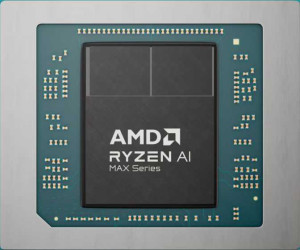
AMD Ryzen AI Max 385
AMD Ryzen Z2 Extreme

AMD Ryzen AI Max 385 AMD Ryzen Z2 Extreme

Overview

Welcome to our in-depth comparison between the AMD Ryzen AI Max 385 and the AMD Ryzen Z2 Extreme — two powerful 4 nm processors aimed at demanding users. While they share a common foundation of 16 threads, DDR5 memory support, and a 5 GHz turbo clock speed, their approaches to thermal design, base clock performance, and integrated graphics set them apart in meaningful ways. Read on to explore which chip best suits your specific workload.

Common Features

  • Both products feature integrated graphics.
  • Both products are manufactured using a 4 nm semiconductor process.
  • Both products support PCI Express version 4.
  • Both products support 64-bit computing.
  • Both products have 16 CPU threads.
  • Both products reach a turbo clock speed of 5 GHz.
  • Both products have a total L2 cache of 8 MB.
  • Both products offer 1 MB of L2 cache per core.
  • Neither product uses big.LITTLE technology.
  • Both products support DirectX 12 Ultimate.
  • Both products support OpenGL version 4.6.
  • Both products support a maximum RAM speed of 8000 MHz.
  • Both products use DDR5 memory.
  • Both products support the same instruction sets: MMX, F16C, FMA3, AES, AVX, AVX2, SSE 4.1, and SSE 4.2.
  • Multithreading is supported on both products.
  • The NX bit security feature is present on both products.

Main Differences

  • Thermal Design Power (TDP) is 55W on the AMD Ryzen AI Max 385 and 28W on the AMD Ryzen Z2 Extreme.
  • Base CPU speed is 8 x 3.6 GHz on the AMD Ryzen AI Max 385 and 8 x 2 GHz on the AMD Ryzen Z2 Extreme.
  • L3 cache is 32 MB on the AMD Ryzen AI Max 385 and 16 MB on the AMD Ryzen Z2 Extreme.
  • L3 cache per core is 4 MB on the AMD Ryzen AI Max 385 and 2 MB on the AMD Ryzen Z2 Extreme.
  • PassMark multi-core result is 18441 on the AMD Ryzen AI Max 385 and 26313 on the AMD Ryzen Z2 Extreme.
  • PassMark single-core result is 2056 on the AMD Ryzen AI Max 385 and 4155 on the AMD Ryzen Z2 Extreme.
  • GPU base clock speed is 2800 MHz on the AMD Ryzen AI Max 385 and 400 MHz on the AMD Ryzen Z2 Extreme.
  • The integrated GPU is the Radeon 8050S on the AMD Ryzen AI Max 385 and the Radeon 880M on the AMD Ryzen Z2 Extreme.
  • GPU turbo clock speed is 2800 MHz on the AMD Ryzen AI Max 385 and 2900 MHz on the AMD Ryzen Z2 Extreme.
  • OpenCL version is 3 on the AMD Ryzen AI Max 385 and 2.1 on the AMD Ryzen Z2 Extreme.
Specs Comparison
AMD Ryzen AI Max 385

AMD Ryzen AI Max 385

AMD Ryzen Z2 Extreme

AMD Ryzen Z2 Extreme

General info:
Has integrated graphics
release date January 2025 January 2025
Thermal Design Power (TDP) 55W 28W
semiconductor size 4 nm 4 nm
PCI Express (PCIe) version 4 4
Supports 64-bit

At the foundational level, the AMD Ryzen AI Max 385 and the AMD Ryzen Z2 Extreme share a remarkably similar architectural baseline: both are built on a 4 nm process node, support 64-bit computing, include integrated graphics, and implement PCIe 4. This means users of either chip benefit from modern fabrication efficiency, broad software compatibility, and solid bandwidth for connected peripherals and storage.

The single most important differentiator in this group is Thermal Design Power. The Ryzen AI Max 385 carries a 55W TDP, while the Z2 Extreme operates at just 28W. In practical terms, TDP is a proxy for both peak performance headroom and thermal/power demands. A 55W envelope allows the AI Max 385 to sustain higher clock speeds and heavier workloads for longer, but it requires more robust cooling and draws more battery in mobile scenarios. The Z2 Extreme's 28W ceiling makes it a far better fit for compact, fanless, or handheld devices — trading raw sustained performance for significantly lower heat output and better power efficiency.

For users prioritizing sustained performance and workstation-class tasks, the Ryzen AI Max 385 holds a clear edge. If the target platform is a portable or thermally constrained device — such as a handheld gaming PC or thin ultrabook — the Z2 Extreme's lower TDP is a decisive advantage. Neither chip is objectively superior here; the right choice depends entirely on the intended form factor and use case.

Performance:
CPU speed 8 x 3.6 GHz 8 x 2 GHz
CPU threads 16 threads 16 threads
turbo clock speed 5GHz 5GHz
L2 cache 8 MB 8 MB
L3 cache 32 MB 16 MB
L2 core 1 MB/core 1 MB/core
L3 core 4 MB/core 2 MB/core
Uses big.LITTLE technology

The AMD Ryzen AI Max 385 and the AMD Ryzen Z2 Extreme both feature 16 CPU threads, ensuring multi-tasking and high efficiency for demanding workloads. However, the CPU speed differs significantly between the two: the Ryzen AI Max 385 operates at 8 x 3.6 GHz, whereas the Ryzen Z2 Extreme runs at 8 x 2 GHz, providing a noticeable difference in base clock speed, with the Ryzen AI Max 385 offering higher performance in this area.

Both processors can reach a turbo clock speed of 5 GHz, which allows for temporary boosts in performance during demanding tasks. When it comes to cache, the Ryzen AI Max 385 has 8 MB of L2 cache and 32 MB of L3 cache, while the Ryzen Z2 Extreme has the same 8 MB of L2 cache, but only 16 MB of L3 cache, offering a larger cache on the Ryzen AI Max 385 for potentially improved performance in data-heavy applications.

In terms of cache per core, both processors have 1 MB of L2 cache per core, but the L3 cache per core differs: the Ryzen AI Max 385 has 4 MB of L3 cache per core, while the Ryzen Z2 Extreme has 2 MB per core. Despite these differences, neither processor uses big.LITTLE technology, meaning both rely on traditional core designs without the energy-efficient small cores that are used in big.LITTLE setups.

Benchmarks:
PassMark result 18441 26313
PassMark result (single) 2056 4155

When comparing the benchmark results of the AMD Ryzen AI Max 385 and the AMD Ryzen Z2 Extreme, there is a clear difference in performance. The Ryzen AI Max 385 has a PassMark result of 18,441, while the Ryzen Z2 Extreme achieves a higher PassMark result of 26,313. This indicates that the Ryzen Z2 Extreme performs better in overall benchmarking tasks.

In terms of single-threaded performance, the Ryzen AI Max 385 scores 2,056, whereas the Ryzen Z2 Extreme scores 4,155. Again, the Ryzen Z2 Extreme demonstrates a significantly higher single-threaded performance, suggesting it may excel in tasks requiring higher clock speeds and responsiveness.

These benchmarks suggest that while both processors perform well, the Ryzen Z2 Extreme outperforms the Ryzen AI Max 385 in both overall and single-threaded tasks, making it a stronger option for users prioritizing performance.

Integrated graphics:
GPU clock speed 2800 MHz 400 MHz
GPU name Radeon 8050S Radeon 880M
GPU turbo 2800 MHz 2900 MHz
DirectX version DirectX 12 Ultimate DirectX 12 Ultimate
OpenGL version 4.6 4.6
OpenCL version 3 2.1

The integrated graphics of the AMD Ryzen AI Max 385 and the AMD Ryzen Z2 Extreme differ in several key aspects. The Ryzen AI Max 385 features the Radeon 8050S GPU, with a GPU clock speed of 2,800 MHz and a GPU turbo of 2,800 MHz. In contrast, the Ryzen Z2 Extreme uses the Radeon 880M GPU, which has a much lower base GPU clock speed of 400 MHz, but can turbo boost to 2,900 MHz, providing a slightly higher turbo clock speed than the Ryzen AI Max 385.

Both processors support DirectX 12 Ultimate and OpenGL version 4.6, meaning they offer similar compatibility with modern gaming and graphics applications. However, there is a difference in OpenCL support: the Ryzen AI Max 385 supports OpenCL version 3, while the Ryzen Z2 Extreme supports OpenCL version 2.1, which indicates the Ryzen AI Max 385 offers more advanced OpenCL functionality.

Overall, the key differences lie in the GPU clock speeds, with the Ryzen AI Max 385 having a higher base clock, and the Ryzen Z2 Extreme having a higher turbo clock speed. Additionally, the Ryzen AI Max 385 supports the more recent version of OpenCL.

Memory:
RAM speed (max) 8000 MHz 8000 MHz
DDR memory version 5 5

Both the AMD Ryzen AI Max 385 and the AMD Ryzen Z2 Extreme support the same RAM specifications. Both processors are capable of handling a maximum RAM speed of 8,000 MHz, ensuring fast memory performance. Additionally, both models use DDR5 memory, which is the latest generation of DDR memory, offering improved performance and efficiency compared to older versions.

As both processors have identical RAM speed and DDR memory version, there are no differences between them in terms of memory capabilities in this group.

In conclusion, both the Ryzen AI Max 385 and Ryzen Z2 Extreme offer the same memory support, making them equal in this aspect.

Features:
instruction sets MMX, F16C, FMA3, AES, AVX, AVX2, SSE 4.1, SSE 4.2 MMX, F16C, FMA3, AES, AVX, AVX2, SSE 4.1, SSE 4.2
uses multithreading
Has NX bit

Both the AMD Ryzen AI Max 385 and the AMD Ryzen Z2 Extreme feature identical instruction sets, which include MMX, F16C, FMA3, AES, AVX, AVX2, SSE 4.1, and SSE 4.2. These instruction sets enable efficient processing for various computational tasks, making both processors capable of handling modern software and applications with ease.

Both processors also support multithreading, allowing them to handle multiple threads simultaneously, which is beneficial for multitasking and parallel processing tasks. Additionally, both the Ryzen AI Max 385 and the Ryzen Z2 Extreme have the NX bit, providing a hardware-based security feature that helps prevent certain types of malware from executing.

Overall, the Ryzen AI Max 385 and Ryzen Z2 Extreme are identical in terms of features, with no differences in their instruction sets, multithreading capabilities, or NX bit support.

Comparison Summary & Verdict

After reviewing all available specifications, a clear picture emerges for each processor. The AMD Ryzen AI Max 385 brings a notably higher base CPU clock speed of 8 x 3.6 GHz, a larger 32 MB L3 cache, a stronger OpenCL 3 compute platform, and a higher GPU base clock — making it a compelling choice for sustained, cache-sensitive workloads and GPU compute tasks. The AMD Ryzen Z2 Extreme, on the other hand, dominates in both multi-core and single-core PassMark scores, operates at a much lower 28W TDP, and achieves a slightly higher GPU turbo clock, pointing to superior efficiency and peak responsiveness. Both chips share DDR5 support, identical instruction sets, and DirectX 12 Ultimate graphics compatibility, making the decision a matter of matching priorities to use case.

AMD Ryzen AI Max 385
Buy AMD Ryzen AI Max 385 if...

Choose the AMD Ryzen AI Max 385 if you need a higher base CPU clock speed, a larger L3 cache, and stronger GPU compute performance via OpenCL 3 for demanding workloads.

AMD Ryzen Z2 Extreme
Buy AMD Ryzen Z2 Extreme if...

Choose the AMD Ryzen Z2 Extreme if you prioritize power efficiency with its 28W TDP alongside superior single-core and multi-core benchmark results for peak responsiveness.