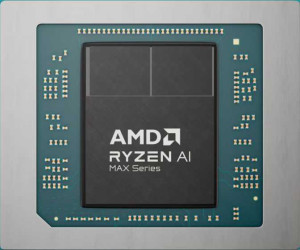
AMD Ryzen AI Max Plus 395
AMD Ryzen Z2 Extreme

AMD Ryzen AI Max Plus 395 AMD Ryzen Z2 Extreme

Overview

Welcome to our in-depth specification comparison between the AMD Ryzen AI Max Plus 395 and the AMD Ryzen Z2 Extreme. Both chips share a 4 nm manufacturing process and DDR5 memory support, yet they diverge sharply when it comes to multi-core performance, integrated graphics capability, and thermal envelope. Whether you are focused on raw processing power or energy-efficient computing, this comparison will walk you through every key specification to help you make an informed decision.

Common Features

  • Both processors include integrated graphics.
  • Both are manufactured using a 4 nm semiconductor process.
  • Both support PCI Express version 4.
  • Both support 64-bit computing.
  • Both have an L2 cache of 1 MB per core.
  • Neither processor uses big.LITTLE technology.
  • Both have a maximum RAM speed of 8000 MHz.
  • Both use DDR5 memory.
  • The integrated GPU on both reaches a turbo clock speed of 2900 MHz.
  • Both integrated GPUs support OpenGL version 4.6.
  • Both processors support the same instruction sets: MMX, F16C, FMA3, AES, AVX, AVX2, SSE 4.1, and SSE 4.2.
  • Multithreading is supported on both processors.
  • The NX bit security feature is present on both processors.

Main Differences

  • Thermal Design Power (TDP) is 55W on AMD Ryzen AI Max Plus 395 and 28W on AMD Ryzen Z2 Extreme.
  • CPU speed is 16 x 3 GHz on AMD Ryzen AI Max Plus 395 and 8 x 2 GHz on AMD Ryzen Z2 Extreme.
  • CPU threads number 32 on AMD Ryzen AI Max Plus 395 and 16 on AMD Ryzen Z2 Extreme.
  • Turbo clock speed is 5.1 GHz on AMD Ryzen AI Max Plus 395 and 5 GHz on AMD Ryzen Z2 Extreme.
  • L2 cache is 16 MB on AMD Ryzen AI Max Plus 395 and 8 MB on AMD Ryzen Z2 Extreme.
  • L3 cache is 64 MB on AMD Ryzen AI Max Plus 395 and 16 MB on AMD Ryzen Z2 Extreme.
  • L3 cache per core is 4 MB/core on AMD Ryzen AI Max Plus 395 and 2 MB/core on AMD Ryzen Z2 Extreme.
  • PassMark multi-core result is 54021 on AMD Ryzen AI Max Plus 395 and 26313 on AMD Ryzen Z2 Extreme.
  • PassMark single-core result is 4142 on AMD Ryzen AI Max Plus 395 and 4155 on AMD Ryzen Z2 Extreme.
  • GPU base clock speed is 1295 MHz on AMD Ryzen AI Max Plus 395 and 400 MHz on AMD Ryzen Z2 Extreme.
  • The integrated GPU is the Radeon 8060S on AMD Ryzen AI Max Plus 395 and the Radeon 880M on AMD Ryzen Z2 Extreme.
  • DirectX 12 Ultimate support is present on AMD Ryzen Z2 Extreme but AMD Ryzen AI Max Plus 395 supports DirectX 12 only.
  • OpenCL version is 3 on AMD Ryzen AI Max Plus 395 and 2.1 on AMD Ryzen Z2 Extreme.
  • Texture mapping units (TMUs) number 160 on AMD Ryzen AI Max Plus 395 and 32 on AMD Ryzen Z2 Extreme.
  • Render output units (ROPs) number 64 on AMD Ryzen AI Max Plus 395 and 16 on AMD Ryzen Z2 Extreme.
  • Shading units number 2560 on AMD Ryzen AI Max Plus 395 and 512 on AMD Ryzen Z2 Extreme.
Specs Comparison
AMD Ryzen AI Max Plus 395

AMD Ryzen AI Max Plus 395

AMD Ryzen Z2 Extreme

AMD Ryzen Z2 Extreme

General info:
Has integrated graphics
release date January 2025 January 2025
Thermal Design Power (TDP) 55W 28W
semiconductor size 4 nm 4 nm
PCI Express (PCIe) version 4 4
Supports 64-bit

At the foundational level, the AMD Ryzen AI Max Plus 395 and the AMD Ryzen Z2 Extreme share a strong common baseline: both are built on a 4 nm manufacturing process, support 64-bit computing, include integrated graphics, and implement PCIe 4 connectivity. This means neither chip holds an architectural advantage in terms of fabrication efficiency or platform compatibility — they are peers on every structural dimension except one.

That one exception is decisive: Thermal Design Power. The Ryzen AI Max Plus 395 is rated at 55W, while the Ryzen Z2 Extreme operates at just 28W — less than half the thermal envelope. In practice, TDP is a proxy for both peak performance headroom and power draw. A higher TDP means the chip can sustain more aggressive compute and graphics workloads for longer before thermal throttling kicks in, but it also demands more robust cooling and draws more from the battery. The Z2 Extreme's lower TDP makes it inherently better suited for compact, thermally constrained devices — such as handheld gaming consoles — where sustained battery life and a slim thermal solution are non-negotiable.

For this spec group, the Ryzen AI Max Plus 395 holds the performance edge due to its significantly higher TDP ceiling, which translates to more sustained computational throughput. However, the Z2 Extreme has a clear efficiency and thermal advantage, making it the stronger fit for portable, power-sensitive applications. The ″right″ chip here depends entirely on the use case: raw sustained performance favors the Max Plus 395, while mobility and efficiency favor the Z2 Extreme.

Performance:
CPU speed 16 x 3 GHz 8 x 2 GHz
CPU threads 32 threads 16 threads
turbo clock speed 5.1GHz 5GHz
L2 cache 16 MB 8 MB
L3 cache 64 MB 16 MB
L2 core 1 MB/core 1 MB/core
L3 core 4 MB/core 2 MB/core
Uses big.LITTLE technology

The AMD Ryzen AI Max Plus 395 and the AMD Ryzen Z2 Extreme differ significantly in their core performance specifications. The Ryzen AI Max Plus 395 features a higher CPU speed with 16 cores running at 3 GHz, whereas the Ryzen Z2 Extreme has only 8 cores at 2 GHz. This gives the Ryzen AI Max Plus 395 a clear advantage in terms of overall processing power, as it offers 32 threads compared to the 16 threads of the Ryzen Z2 Extreme. Both processors support turbo boost, but the Ryzen AI Max Plus 395 reaches a slightly higher turbo clock speed of 5.1 GHz, compared to the 5 GHz of the Ryzen Z2 Extreme.

In terms of cache, the Ryzen AI Max Plus 395 comes with 16 MB of L2 cache and 64 MB of L3 cache, with a 1 MB L2 cache per core and 4 MB of L3 cache per core. The Ryzen Z2 Extreme, on the other hand, has 8 MB of L2 cache and 16 MB of L3 cache, with a 1 MB L2 cache per core and 2 MB of L3 cache per core. This means the AI Max Plus 395 provides more cache capacity overall, which can benefit certain workloads that are cache-sensitive.

Neither processor uses big.LITTLE technology, which means both rely on a uniform core architecture for all their threads. In summary, while both products offer similar architectural features, the Ryzen AI Max Plus 395 has superior raw performance in terms of core count, clock speed, and cache size.

Benchmarks:
PassMark result 54021 26313
PassMark result (single) 4142 4155

In terms of PassMark benchmark results, the AMD Ryzen AI Max Plus 395 significantly outperforms the AMD Ryzen Z2 Extreme. The AI Max Plus 395 achieves a total PassMark result of 54021, while the Z2 Extreme scores 26313. This shows a clear difference in overall multi-threaded performance between the two processors.

For single-threaded performance, the results are much closer. The Ryzen AI Max Plus 395 has a single-thread PassMark result of 4142, whereas the Ryzen Z2 Extreme is slightly ahead with a result of 4155. Despite this small difference, both processors perform similarly in single-threaded tasks, with the Z2 Extreme having a marginal advantage.

Overall, the Ryzen AI Max Plus 395 delivers much higher multi-threaded performance, while the Z2 Extreme is only slightly ahead in single-threaded tasks.

Integrated graphics:
GPU clock speed 1295 MHz 400 MHz
GPU name Radeon 8060S Radeon 880M
GPU turbo 2900 MHz 2900 MHz
DirectX version DirectX 12 DirectX 12 Ultimate
OpenGL version 4.6 4.6
OpenCL version 3 2.1
texture mapping units (TMUs) 160 32
render output units (ROPs) 64 16
shading units 2560 512

The AMD Ryzen AI Max Plus 395 and the AMD Ryzen Z2 Extreme both feature integrated graphics, but with notable differences. The Ryzen AI Max Plus 395 uses the Radeon 8060S GPU, which has a base GPU clock speed of 1295 MHz and can turbo up to 2900 MHz. In contrast, the Ryzen Z2 Extreme is equipped with the Radeon 880M GPU, which operates at a much lower base GPU clock speed of 400 MHz, although it also reaches a turbo clock speed of 2900 MHz, matching the AI Max Plus 395 in this regard.

In terms of graphics capabilities, the Ryzen AI Max Plus 395 offers significantly more power. It has 160 texture mapping units (TMUs), 64 render output units (ROPs), and 2560 shading units. On the other hand, the Ryzen Z2 Extreme's Radeon 880M GPU is less powerful, with only 32 TMUs, 16 ROPs, and 512 shading units. These differences suggest that the Ryzen AI Max Plus 395 is better suited for graphics-intensive tasks.

Both processors support DirectX 12, but the Ryzen Z2 Extreme supports the more advanced DirectX 12 Ultimate, while the AI Max Plus 395 only supports DirectX 12. For OpenGL, both processors support version 4.6, and for OpenCL, the Ryzen AI Max Plus 395 supports version 3, while the Z2 Extreme supports version 2.1. These distinctions reflect the Ryzen AI Max Plus 395's overall stronger graphics performance compared to the Z2 Extreme.

Memory:
RAM speed (max) 8000 MHz 8000 MHz
DDR memory version 5 5

Both the AMD Ryzen AI Max Plus 395 and the AMD Ryzen Z2 Extreme support the same RAM specifications. Both processors have a maximum RAM speed of 8000 MHz and support DDR5 memory. This ensures that both products are compatible with the latest memory technology, providing high-speed data transfer and improved performance for memory-intensive applications.

Since the memory specifications are identical for both processors, there are no differences in terms of RAM speed or memory version between the two. Users can expect similar memory performance from both the AI Max Plus 395 and the Z2 Extreme when it comes to supported RAM speeds and types.

Overall, the memory capabilities of both processors align perfectly, making them equivalent in this respect.

Features:
instruction sets MMX, F16C, FMA3, AES, AVX, AVX2, SSE 4.1, SSE 4.2 MMX, F16C, FMA3, AES, AVX, AVX2, SSE 4.1, SSE 4.2
uses multithreading
Has NX bit

Both the AMD Ryzen AI Max Plus 395 and the AMD Ryzen Z2 Extreme share identical feature sets. Both processors support the same instruction sets, including MMX, F16C, FMA3, AES, AVX, AVX2, SSE 4.1, and SSE 4.2, ensuring they are capable of handling a wide range of modern computational tasks efficiently.

Additionally, both processors support multithreading, which allows them to execute multiple threads simultaneously for improved performance in multi-core workloads. Both the AI Max Plus 395 and the Z2 Extreme also include the NX bit, a security feature that helps protect against certain types of malicious attacks.

Overall, the feature sets of the two processors are identical, meaning they offer the same capabilities in terms of supported instruction sets, multithreading, and security features.

Comparison Summary & Verdict

After examining every specification, a clear picture emerges for each processor. The AMD Ryzen AI Max Plus 395 dominates in workload-heavy scenarios: its 16-core, 32-thread design, 64 MB L3 cache, and a PassMark multi-core score of 54021 make it the obvious choice for demanding productivity tasks and content creation. Its Radeon 8060S GPU with 2560 shading units also provides a substantially more powerful integrated graphics experience. The AMD Ryzen Z2 Extreme, on the other hand, operates within a lean 28W TDP and supports DirectX 12 Ultimate, making it better suited for compact, power-constrained devices where efficiency and battery longevity are the priority. Single-core performance is virtually identical between the two, so everyday responsiveness is comparable. Choose based on whether your workload demands raw multi-threaded muscle or restrained, efficient computing.

AMD Ryzen AI Max Plus 395
Buy AMD Ryzen AI Max Plus 395 if...

Buy the AMD Ryzen AI Max Plus 395 if you need maximum multi-core performance and powerful integrated graphics for demanding workloads, with its 32 threads, 64 MB L3 cache, and 2560 shading units delivering a decisive edge.

AMD Ryzen Z2 Extreme
Buy AMD Ryzen Z2 Extreme if...

Buy the AMD Ryzen Z2 Extreme if you prioritize energy efficiency and compact device compatibility, as its 28W TDP and DirectX 12 Ultimate support make it ideal for thin, power-conscious systems without sacrificing single-core responsiveness.