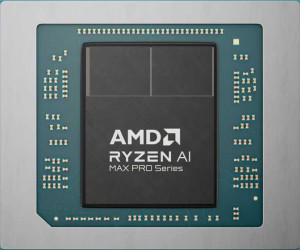
At the platform level, one of the most telling differences is Thermal Design Power: the Ryzen AI Max Pro 390 is rated at 55W, nearly double the Intel Core Ultra 7 255H's 28W. In practice, this means AMD is willing to consume significantly more energy to deliver its performance — a trade-off that can translate to higher sustained throughput in demanding workloads, but at the cost of battery life and thermal headroom in thin laptops. The Intel chip, by contrast, is architected for efficiency-first mobile designs where thermals and endurance are primary constraints.
On the silicon side, the Core Ultra 7 255H is built on a 3 nm process versus the Ryzen AI Max Pro 390's 4 nm, giving Intel a slight manufacturing edge that typically contributes to better power efficiency per transistor. Intel also steps ahead with PCIe 5 support compared to AMD's PCIe 4, which matters for users pairing the chip with next-generation NVMe SSDs or discrete GPUs that can saturate PCIe 5 bandwidth — though real-world bottlenecks at PCIe 4 speeds are rare today. The Intel chip also supports a slightly higher maximum CPU temperature at 110 °C versus AMD's 100 °C, giving it marginally more thermal headroom before throttling.
One notable exclusive for the Ryzen AI Max Pro 390 is its compatibility with both laptop and desktop platforms, while the Core Ultra 7 255H is laptop-only. Overall, neither chip dominates across the board: Intel holds a modest edge in process node, PCIe generation, and power efficiency, making it the stronger fit for ultraportables; AMD's higher TDP ceiling and platform flexibility give it an advantage where raw sustained performance and deployment versatility matter more than frugality.