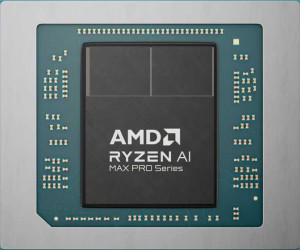
AMD Ryzen AI Max Pro 390
Intel Core Ultra 7 255U

AMD Ryzen AI Max Pro 390 Intel Core Ultra 7 255U

Overview

When choosing between the AMD Ryzen AI Max Pro 390 and the Intel Core Ultra 7 255U, buyers face a compelling crossroads of raw processing power and energy-efficient design. These two processors take notably different approaches to core count, thermal output, and memory architecture, making the choice far from straightforward. Whether you prioritize multi-threaded workloads, battery-friendly performance, or graphics capability, this detailed spec comparison will help you navigate the key battlegrounds between these two modern CPUs.

Common Features

  • Both products feature integrated graphics.
  • Both products support PCI Express (PCIe) version 4.
  • Both products support 64-bit computing.
  • Neither product has an unlocked multiplier.
  • Both products support up to 4 displays.
  • Both products have an OpenGL version of 4.6.
  • Both products have an OpenCL version of 3.
  • Both products use DDR5 memory.
  • Both products support a maximum memory amount of 128GB.
  • Both products support multithreading.
  • Both products have the NX bit feature.
  • Both products share the same instruction sets: MMX, F16C, FMA3, AES, AVX, AVX2, SSE 4.1, and SSE 4.2.

Main Differences

  • The AMD Ryzen AI Max Pro 390 is available for Laptop and Desktop, while the Intel Core Ultra 7 255U is available for Laptop only.
  • Thermal Design Power (TDP) is 55W on AMD Ryzen AI Max Pro 390 and 15W on Intel Core Ultra 7 255U.
  • Semiconductor size is 4nm on AMD Ryzen AI Max Pro 390 and 3nm on Intel Core Ultra 7 255U.
  • Maximum CPU temperature is 100°C on AMD Ryzen AI Max Pro 390 and 110°C on Intel Core Ultra 7 255U.
  • CPU speed is 12 x 3.2 GHz on AMD Ryzen AI Max Pro 390 and 2 x 2 GHz & 8 x 1.7 GHz on Intel Core Ultra 7 255U.
  • CPU threads count is 24 on AMD Ryzen AI Max Pro 390 and 14 on Intel Core Ultra 7 255U.
  • Turbo clock speed is 5 GHz on AMD Ryzen AI Max Pro 390 and 5.2 GHz on Intel Core Ultra 7 255U.
  • big.LITTLE technology is present on Intel Core Ultra 7 255U but not available on AMD Ryzen AI Max Pro 390.
  • Clock multiplier is 32 on AMD Ryzen AI Max Pro 390 and 20 on Intel Core Ultra 7 255U.
  • PassMark result (multi-core) is 43189 on AMD Ryzen AI Max Pro 390 and 18555 on Intel Core Ultra 7 255U.
  • PassMark result (single-core) is 3997 on AMD Ryzen AI Max Pro 390 and 3732 on Intel Core Ultra 7 255U.
  • GPU turbo speed is 2800 MHz on AMD Ryzen AI Max Pro 390 and 2100 MHz on Intel Core Ultra 7 255U.
  • DirectX version is DirectX 12 on AMD Ryzen AI Max Pro 390 and DirectX 12 Ultimate on Intel Core Ultra 7 255U.
  • Maximum RAM speed is 8000 MHz on AMD Ryzen AI Max Pro 390 and 8400 MHz on Intel Core Ultra 7 255U.
  • Memory channels count is 4 on AMD Ryzen AI Max Pro 390 and 2 on Intel Core Ultra 7 255U.
  • ECC memory support is present on AMD Ryzen AI Max Pro 390 but not available on Intel Core Ultra 7 255U.
Specs Comparison
AMD Ryzen AI Max Pro 390

AMD Ryzen AI Max Pro 390

Intel Core Ultra 7 255U

Intel Core Ultra 7 255U

General info:
Type Laptop, Desktop Laptop
Has integrated graphics
release date January 2025 January 2025
Thermal Design Power (TDP) 55W 15W
semiconductor size 4 nm 3 nm
CPU temperature 100 °C 110 °C
PCI Express (PCIe) version 4 4
Supports 64-bit

The most telling difference in this group is Thermal Design Power: the Ryzen AI Max Pro 390 operates at 55W while the Core Ultra 7 255U is rated at just 15W. TDP is a proxy for both sustained performance ceiling and heat output — a higher TDP means the processor can maintain heavier workloads for longer, but demands more robust cooling and draws significantly more power. The 255U's ultra-low 15W envelope is purpose-built for thin-and-light laptops where battery life and passive or near-passive cooling matter most, whereas the 390 targets configurations where sustained compute throughput is the priority over efficiency.

On manufacturing process, the 255U has a slight edge with a 3 nm node versus the 390's 4 nm. A smaller node generally yields better transistor density and energy efficiency at equivalent performance levels — which partly explains how Intel keeps its TDP so low. That said, process node alone does not determine real-world performance; architecture and TDP headroom are equally critical factors. Both chips share PCIe 4 support and integrated graphics, placing them on equal footing for connectivity and display output fundamentals.

The AMD Ryzen AI Max Pro 390 also supports Desktop deployment in addition to laptops, giving it broader platform versatility. Overall, these are processors designed for fundamentally different use cases: the 255U holds a clear efficiency advantage for portable, battery-sensitive scenarios, while the 390's higher TDP gives it a raw performance headroom advantage for demanding workloads in plugged-in or desktop contexts.

Performance:
CPU speed 12 x 3.2 GHz 2 x 2 & 8 x 1.7 GHz
CPU threads 24 threads 14 threads
turbo clock speed 5GHz 5.2GHz
Has an unlocked multiplier
Uses big.LITTLE technology
clock multiplier 32 20

The AMD Ryzen AI Max Pro 390 and Intel Core Ultra 7 255U exhibit differences in CPU speed and architecture. The Ryzen processor has a base CPU speed of 12 cores running at 3.2 GHz, while the Intel processor uses a hybrid configuration with 2 cores at 2 GHz and 8 cores at 1.7 GHz, offering a combined architecture. This difference highlights the distinct approaches each processor takes to balance performance and power efficiency.

In terms of threads, the Ryzen AI Max Pro 390 offers 24 threads, more than the Intel Core Ultra 7 255U, which has 14 threads. This difference may suggest that the Ryzen processor could handle more parallel tasks or demanding workloads simultaneously. Both processors are capable of turbo clock speeds of 5 GHz, with the Intel processor achieving a slightly higher turbo speed of 5.2 GHz.

Neither processor features an unlocked multiplier, limiting overclocking potential. The Ryzen model does not use big.LITTLE technology, while the Intel processor does. This means the Intel chip can dynamically adjust between high-performance and low-power cores based on workload, which could provide more power efficiency in certain scenarios. Lastly, the Ryzen has a clock multiplier of 32, while the Intel processor has a multiplier of 20, which may reflect differences in their overall architecture and design choices.

Benchmarks:
PassMark result 43189 18555
PassMark result (single) 3997 3732

The AMD Ryzen AI Max Pro 390 and Intel Core Ultra 7 255U show a noticeable difference in their PassMark benchmark results. The Ryzen processor achieves a total PassMark score of 43189, which is significantly higher than the Intel Core Ultra 7 255U’s score of 18555. This indicates that, based on these benchmarks, the AMD processor may offer superior overall performance.

Looking at the single-threaded performance, the Ryzen AI Max Pro 390 also leads with a single-core PassMark result of 3997, compared to the Intel processor’s 3732. While both processors show strong single-core performance, the Ryzen has a clear advantage in this regard as well.

In summary, based on the provided benchmark results, the AMD Ryzen AI Max Pro 390 demonstrates a stronger performance in both overall and single-threaded tests compared to the Intel Core Ultra 7 255U.

Integrated graphics:
GPU turbo 2800 MHz 2100 MHz
DirectX version DirectX 12 DirectX 12 Ultimate
supported displays 4 4
OpenGL version 4.6 4.6
OpenCL version 3 3

The AMD Ryzen AI Max Pro 390 and Intel Core Ultra 7 255U both come with integrated graphics, but there are some key differences in their specifications. The Ryzen processor has a GPU turbo speed of 2800 MHz, while the Intel processor's GPU turbo speed is slightly lower at 2100 MHz.

Both processors support DirectX 12, but the Intel Core Ultra 7 255U supports DirectX 12 Ultimate, which is a more advanced version offering additional features like hardware-accelerated ray tracing. Both models support up to 4 displays, so there's no difference in that regard. Additionally, both processors share the same OpenGL version (4.6) and OpenCL version (3), meaning they offer similar capabilities for those APIs.

Overall, the main differences between the two are in the GPU turbo speed and the DirectX version, with the Intel processor having the advantage in DirectX support, while the Ryzen offers a higher GPU turbo speed.

Memory:
RAM speed (max) 8000 MHz 8400 MHz
DDR memory version 5 5
memory channels 4 2
maximum memory amount 128GB 128GB
Supports ECC memory

The AMD Ryzen AI Max Pro 390 and Intel Core Ultra 7 255U both support DDR5 memory, but there are some differences in their memory specifications. The Ryzen processor supports a maximum RAM speed of 8000 MHz, while the Intel processor can handle a slightly faster maximum RAM speed of 8400 MHz.

When it comes to memory channels, the Ryzen supports 4 memory channels, which could provide better memory bandwidth for certain tasks, whereas the Intel processor supports only 2 memory channels. However, both processors support a maximum memory amount of 128GB, ensuring similar capacity for high-memory demands.

One significant difference is that the AMD Ryzen AI Max Pro 390 supports ECC memory (Error-Correcting Code), which helps detect and correct memory errors, offering enhanced reliability. The Intel Core Ultra 7 255U does not support ECC memory, which could be a consideration in environments where data integrity is critical.

Features:
instruction sets MMX, F16C, FMA3, AES, AVX, AVX2, SSE 4.1, SSE 4.2 F16C, MMX, FMA3, AES, AVX, AVX2, SSE 4.1, SSE 4.2
uses multithreading
Has NX bit

The AMD Ryzen AI Max Pro 390 and Intel Core Ultra 7 255U share many similar features when it comes to instruction sets, multithreading, and security features. Both processors support the same set of instruction sets: F16C, MMX, FMA3, AES, AVX, AVX2, SSE 4.1, and SSE 4.2, which ensure compatibility with a wide range of software and applications.

Both processors also use multithreading, allowing them to handle multiple tasks simultaneously, improving performance in multi-threaded workloads. Additionally, both models have the NX bit, a security feature that helps protect against certain types of attacks.

The only slight difference between the two products is that the Ryzen AI Max Pro 390 includes one extra instruction set, MMX, compared to the Intel Core Ultra 7 255U, which could offer specific benefits for legacy applications relying on that technology.

Comparison Summary & Verdict

After examining all available specifications, a clear picture emerges for each processor. The AMD Ryzen AI Max Pro 390 is the stronger choice for users who demand serious computational muscle — its 24-thread configuration, 43189 PassMark score, and quad-channel memory support make it ideal for power users running demanding workloads on laptops or desktops, especially those who need ECC memory support for reliability-critical tasks. On the other hand, the Intel Core Ultra 7 255U excels in efficiency-focused scenarios: its 15W TDP and big.LITTLE architecture make it a natural fit for ultraportable laptops where battery longevity matters most, while its DirectX 12 Ultimate support gives it a slight edge in modern graphics feature compatibility. Neither chip is universally superior — the right choice depends entirely on your use case and platform priorities.

AMD Ryzen AI Max Pro 390
Buy AMD Ryzen AI Max Pro 390 if...

Buy the AMD Ryzen AI Max Pro 390 if you need maximum multi-threaded performance, quad-channel memory bandwidth, or ECC memory support for professional and demanding workloads.

Intel Core Ultra 7 255U
Buy Intel Core Ultra 7 255U if...

Buy the Intel Core Ultra 7 255U if you prioritize energy efficiency and longer battery life in an ultraportable laptop, thanks to its significantly lower 15W TDP and big.LITTLE architecture.