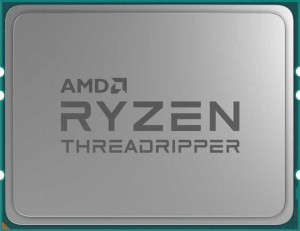
AMD Ryzen Threadripper 9960X
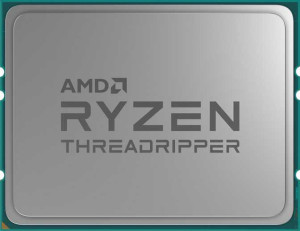
AMD Ryzen Threadripper 9980X

AMD Ryzen Threadripper 9960X AMD Ryzen Threadripper 9980X

Common Features

  • Both products are Desktop type CPUs.
  • Integrated graphics are not available on either product.
  • Both CPUs have a Thermal Design Power (TDP) of 350W.
  • The semiconductor size is 4 nm for both products.
  • Both CPUs have a maximum CPU temperature of 95 °C.
  • Both products support PCI Express version 5.
  • Both CPUs support 64-bit computing.
  • Both CPUs have a turbo clock speed of 5.4GHz.
  • Both CPUs have an unlocked multiplier.
  • The L2 cache per core is 1 MB on both CPUs.
  • Both CPUs do not use big.LITTLE technology.
  • The maximum RAM speed supported is 6400 MHz on both CPUs.
  • Both CPUs use DDR5 memory.
  • Both CPUs have 4 memory channels.
  • Both CPUs support a maximum memory amount of 1000GB.
  • ECC memory support is available on both CPUs.
  • Both CPUs support multithreading.
  • Both CPUs have the NX bit feature.
  • Both CPUs support the instruction sets MMX, F16C, FMA3, AES, AVX, AVX2, SSE 4.1, and SSE 4.2.

Main Differences

  • CPU speed is 24 x 4.2 GHz on AMD Ryzen Threadripper 9960X and 64 x 3.2 GHz on AMD Ryzen Threadripper 9980X.
  • CPU threads are 48 threads on AMD Ryzen Threadripper 9960X and 128 threads on AMD Ryzen Threadripper 9980X.
  • L2 cache is 24 MB on AMD Ryzen Threadripper 9960X and 64 MB on AMD Ryzen Threadripper 9980X.
  • L3 cache is 128 MB on AMD Ryzen Threadripper 9960X and 256 MB on AMD Ryzen Threadripper 9980X.
  • L1 cache is 1920 KB on AMD Ryzen Threadripper 9960X and 5120 KB on AMD Ryzen Threadripper 9980X.
  • L3 cache per core is 5.33 MB/core on AMD Ryzen Threadripper 9960X and 4 MB/core on AMD Ryzen Threadripper 9980X.
  • Clock multiplier is 42 on AMD Ryzen Threadripper 9960X and 32 on AMD Ryzen Threadripper 9980X.
  • PassMark result is 92632 on AMD Ryzen Threadripper 9960X and 153564 on AMD Ryzen Threadripper 9980X.
  • PassMark result (single) is 4536 on AMD Ryzen Threadripper 9960X and 4591 on AMD Ryzen Threadripper 9980X.
Specs Comparison
AMD Ryzen Threadripper 9960X

AMD Ryzen Threadripper 9960X

AMD Ryzen Threadripper 9980X

AMD Ryzen Threadripper 9980X

General info:
Type Desktop Desktop
Has integrated graphics
release date May 2025 May 2025
Thermal Design Power (TDP) 350W 350W
semiconductor size 4 nm 4 nm
CPU temperature 95 °C 95 °C
PCI Express (PCIe) version 5 5
Supports 64-bit

Both the AMD Ryzen Threadripper 9960X and 9980X are desktop processors with very similar specifications. Neither model includes integrated graphics, and both have a Thermal Design Power (TDP) of 350W. These processors are built on a 4 nm semiconductor, which contributes to their energy efficiency and performance potential. In terms of CPU temperature, both models run at 95 °C, suggesting similar thermal behavior under load.

Both the 9960X and 9980X support 64-bit architecture, allowing them to handle modern software and applications efficiently. Additionally, both models support PCI Express (PCIe) version 5, ensuring fast data transfer speeds for compatible devices like graphics cards and storage solutions.

In summary, when it comes to the general specifications, the AMD Ryzen Threadripper 9960X and 9980X are essentially identical, with no differences in their key features such as type, thermal power, semiconductor size, CPU temperature, and support for 64-bit and PCIe 5.0.

Performance:
CPU speed 24 x 4.2 GHz 64 x 3.2 GHz
CPU threads 48 threads 128 threads
turbo clock speed 5.4GHz 5.4GHz
Has an unlocked multiplier
L2 cache 24 MB 64 MB
L3 cache 128 MB 256 MB
L1 cache 1920 KB 5120 KB
L2 core 1 MB/core 1 MB/core
L3 core 5.33 MB/core 4 MB/core
Uses big.LITTLE technology
clock multiplier 42 32

The AMD Ryzen Threadripper 9960X and 9980X differ significantly in their performance specifications. The 9960X has a CPU speed of 24 x 4.2 GHz and supports 48 threads, whereas the 9980X has a CPU speed of 64 x 3.2 GHz, with 128 threads. While the 9960X offers a higher base clock speed per core, the 9980X compensates with double the number of threads, which may improve parallel processing capabilities for certain workloads.

Both processors feature a turbo clock speed of 5.4 GHz, meaning they can achieve the same peak performance under load. The 9960X has a total of 24 MB of L2 cache, 128 MB of L3 cache, and 1920 KB of L1 cache, while the 9980X offers much larger caches: 64 MB of L2 cache, 256 MB of L3 cache, and 5120 KB of L1 cache. These differences could affect memory access speed, with the 9980X potentially benefiting from its larger cache sizes for data-intensive tasks.

Both processors have an unlocked multiplier, allowing users to overclock for additional performance. Additionally, neither processor utilizes big.LITTLE technology, meaning they do not employ a heterogeneous core setup. The clock multiplier of the 9960X is set to 42, while the 9980X has a lower multiplier of 32, which corresponds with their respective base clock speeds.

Benchmarks:
PassMark result 92632 153564
PassMark result (single) 4536 4591

The AMD Ryzen Threadripper 9960X and 9980X show a significant difference in their overall PassMark benchmark results. The 9960X achieves a score of 92,632, while the 9980X scores much higher at 153,564. This indicates that the 9980X performs notably better in general computing tasks that are reflected by the PassMark test.

When considering the single-threaded PassMark results, the difference is smaller but still present. The 9960X has a score of 4,536, while the 9980X is slightly ahead with a score of 4,591. While the 9980X again comes out ahead, the gap is less pronounced in single-threaded tasks compared to the overall benchmark results.

In summary, the 9980X outperforms the 9960X in both overall and single-threaded PassMark benchmarks, with a more substantial lead in the overall score and a slight edge in single-threaded performance.

Memory:
RAM speed (max) 6400 MHz 6400 MHz
DDR memory version 5 5
memory channels 4 4
maximum memory amount 1000GB 1000GB
Supports ECC memory

When it comes to memory specifications, the AMD Ryzen Threadripper 9960X and 9980X are identical. Both processors support a maximum RAM speed of 6400 MHz and use DDR5 memory. They are also equipped with four memory channels, which allows for better bandwidth and faster data transfer between the CPU and RAM.

In terms of maximum memory capacity, both the 9960X and 9980X can handle up to 1000GB of RAM, providing ample space for demanding tasks such as heavy workloads, virtual machines, or high-performance computing.

Additionally, both models support Error-Correcting Code (ECC) memory, which helps detect and correct internal data corruption, ensuring a higher level of stability and reliability in critical applications.

Features:
instruction sets MMX, F16C, FMA3, AES, AVX, AVX2, SSE 4.1, SSE 4.2 MMX, F16C, FMA3, AES, AVX, AVX2, SSE 4.1, SSE 4.2
uses multithreading
Has NX bit

Both the AMD Ryzen Threadripper 9960X and 9980X feature the same set of instruction sets, including MMX, F16C, FMA3, AES, AVX, AVX2, SSE 4.1, and SSE 4.2. These instruction sets enable both processors to efficiently handle a variety of tasks, from multimedia processing to cryptographic operations.

Both models also support multithreading, allowing for improved parallel processing and better multitasking performance. Additionally, both the 9960X and 9980X include an NX bit, which helps protect against certain types of malware by marking memory pages as non-executable.

In summary, there are no differences in features between the two processors, with both offering identical instruction sets, multithreading support, and the NX bit for enhanced security.

Comparison Summary

This is a specification comparison between AMD Ryzen Threadripper 9960X and AMD Ryzen Threadripper 9980X. Both CPUs are Desktop type processors without integrated graphics, support PCI Express 5 and 64-bit computing, and offer DDR5 memory up to 6400 MHz across 4 channels with ECC support. Key differences include CPU speed of 24 x 4.2 GHz on AMD Ryzen Threadripper 9960X versus 64 x 3.2 GHz on AMD Ryzen Threadripper 9980X, CPU threads of 48 versus 128, L3 cache of 128 MB versus 256 MB, L1 cache of 1920 KB versus 5120 KB, and PassMark result of 92632 versus 153564. Both CPUs have a turbo clock speed of 5.4GHz, an unlocked multiplier, and multithreading support.