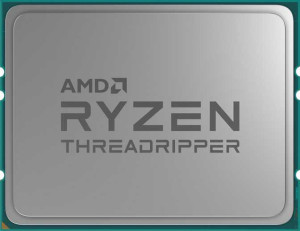
AMD Ryzen Threadripper 9970X
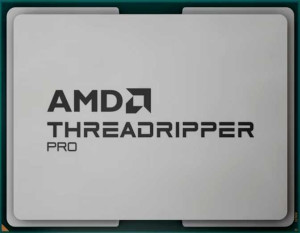
AMD Ryzen Threadripper Pro 9965WX

AMD Ryzen Threadripper 9970X AMD Ryzen Threadripper Pro 9965WX

Overview

Welcome to our in-depth specification comparison between the AMD Ryzen Threadripper 9970X and the AMD Ryzen Threadripper Pro 9965WX. Both processors share a powerful 4 nm foundation, a 350W TDP, and DDR5 memory support, yet they take distinctly different approaches when it comes to core configuration, memory capacity, and benchmark performance. Whether you are building a high-end workstation or a multi-threaded computing powerhouse, understanding these key battlegrounds will help you make the right choice.

Common Features

  • Both products are desktop type processors.
  • Neither product has integrated graphics.
  • Both products have a Thermal Design Power (TDP) of 350W.
  • Both products are manufactured using a 4 nm semiconductor size.
  • Both products have a maximum CPU temperature of 95 °C.
  • Both products support PCI Express (PCIe) version 5.
  • Both products support 64-bit processing.
  • Both products have a turbo clock speed of 5.4 GHz.
  • Both products have an unlocked multiplier.
  • Both products feature 128 MB of L3 cache.
  • Both products have 1 MB of L2 cache per core.
  • Neither product uses big.LITTLE technology.
  • Both products support a maximum RAM speed of 6400 MHz.
  • Both products use DDR5 memory.
  • ECC memory is supported on both products.
  • Both products support the same instruction sets: MMX, F16C, FMA3, AES, AVX, AVX2, SSE 4.1, and SSE 4.2.
  • Multithreading is supported on both products.
  • The NX bit security feature is present on both products.

Main Differences

  • CPU speed is 32 x 4 GHz on AMD Ryzen Threadripper 9970X and 24 x 4.2 GHz on AMD Ryzen Threadripper Pro 9965WX.
  • CPU threads total 64 on AMD Ryzen Threadripper 9970X and 48 on AMD Ryzen Threadripper Pro 9965WX.
  • L2 cache is 32 MB on AMD Ryzen Threadripper 9970X and 24 MB on AMD Ryzen Threadripper Pro 9965WX.
  • L1 cache is 2560 KB on AMD Ryzen Threadripper 9970X and 1920 KB on AMD Ryzen Threadripper Pro 9965WX.
  • L3 cache per core is 4 MB/core on AMD Ryzen Threadripper 9970X and 5.33 MB/core on AMD Ryzen Threadripper Pro 9965WX.
  • Clock multiplier is 40 on AMD Ryzen Threadripper 9970X and 42 on AMD Ryzen Threadripper Pro 9965WX.
  • PassMark result (multi-core) is 111454 on AMD Ryzen Threadripper 9970X and 95346 on AMD Ryzen Threadripper Pro 9965WX.
  • PassMark result (single-core) is 4583 on AMD Ryzen Threadripper 9970X and 4555 on AMD Ryzen Threadripper Pro 9965WX.
  • Memory channels number 4 on AMD Ryzen Threadripper 9970X and 8 on AMD Ryzen Threadripper Pro 9965WX.
  • Maximum memory amount is 1000 GB on AMD Ryzen Threadripper 9970X and 2000 GB on AMD Ryzen Threadripper Pro 9965WX.
Specs Comparison
AMD Ryzen Threadripper 9970X

AMD Ryzen Threadripper 9970X

AMD Ryzen Threadripper Pro 9965WX

AMD Ryzen Threadripper Pro 9965WX

General info:
Type Desktop Desktop
Has integrated graphics
release date May 2025 May 2025
Thermal Design Power (TDP) 350W 350W
semiconductor size 4 nm 4 nm
CPU temperature 95 °C 95 °C
PCI Express (PCIe) version 5 5
Supports 64-bit

In terms of general specifications, the AMD Ryzen Threadripper 9970X and the AMD Ryzen Threadripper Pro 9965WX are essentially identical across every metric in this group. Both are desktop-class processors built on a 4 nm semiconductor process, carry a 350W TDP, top out at a 95 °C maximum CPU temperature, support PCIe 5.0, and offer full 64-bit computing with no integrated graphics.

The shared 350W TDP is a critical real-world consideration: both chips demand robust power delivery and high-end cooling solutions, making them unsuitable for anything but purpose-built workstation or enthusiast desktop platforms. The 4 nm node ensures competitive power efficiency relative to their performance tier, while PCIe 5.0 support future-proofs both processors for the latest high-bandwidth storage and GPU connectivity.

Based solely on this spec group, these two processors are in a complete tie — there is no differentiating factor here. Users comparing them on general platform characteristics will need to look beyond this group, to specs such as core count, memory support, or platform (TRX50 vs. WRX90), to find meaningful distinctions.

Performance:
CPU speed 32 x 4 GHz 24 x 4.2 GHz
CPU threads 64 threads 48 threads
turbo clock speed 5.4GHz 5.4GHz
Has an unlocked multiplier
L2 cache 32 MB 24 MB
L3 cache 128 MB 128 MB
L1 cache 2560 KB 1920 KB
L2 core 1 MB/core 1 MB/core
L3 core 4 MB/core 5.33 MB/core
Uses big.LITTLE technology
clock multiplier 40 42

The most defining split in this group comes down to core count versus per-core efficiency. The Threadripper 9970X offers 32 cores and 64 threads against the Pro 9965WX's 24 cores and 48 threads — a 33% advantage in raw parallelism. For workloads that scale across many threads, such as 3D rendering, video encoding, or large-scale compilation, the 9970X's additional cores translate directly into faster completion times. The 9965WX counters with a slightly higher base clock of 4.2 GHz versus 4.0 GHz, reflected in its higher clock multiplier of 42 vs. 40, giving it a modest edge in lightly-threaded or clock-sensitive tasks.

Cache architecture tells an interesting story. Both chips share an identical 128 MB L3 pool, but because the 9965WX has fewer cores, each core effectively enjoys 5.33 MB of L3 compared to 4 MB/core on the 9970X. This means the 9965WX's cores see lower cache contention per-core, which can benefit latency-sensitive professional applications. The 9970X, however, leads in total L2 cache with 32 MB vs. 24 MB, proportional to its larger core count at the same 1 MB/core rate. Both chips share an identical peak turbo of 5.4 GHz and an unlocked multiplier, so overclocking headroom is nominally equal.

The performance edge in this group depends entirely on workload type. For massively parallel tasks, the 9970X holds a clear advantage thanks to its higher core and thread count. For workloads with strong single- or low-thread scaling, the 9965WX's higher base clock and better per-core L3 cache give it a competitive answer. Users with heavily multi-threaded pipelines should favor the 9970X; those prioritizing per-core throughput or running mixed workloads may find the 9965WX's profile more efficient.

Benchmarks:
PassMark result 111454 95346
PassMark result (single) 4583 4555

Benchmark results here confirm and quantify the performance narrative established by the raw specs. The Threadripper 9970X scores 111,454 in PassMark's multi-threaded test, versus 95,346 for the Pro 9965WX — a gap of roughly 17%. This is a meaningful, real-world difference: in CPU-bound parallel workloads like rendering farms, scientific simulations, or large media transcoding pipelines, that margin translates into noticeably faster job completion and higher throughput over a full working day.

Single-threaded performance tells a very different story. The 9970X scores 4,583 against the 9965WX's 4,555 — a gap of less than 0.6%. For practical purposes, this is a statistical dead heat. Applications that rely heavily on single-core speed, such as certain CAD tools, scripting environments, or lightly-threaded simulations, will perform identically on either chip.

The verdict from this group is straightforward: the 9970X holds a clear multi-threaded advantage, making it the stronger choice for throughput-heavy professional workflows. However, anyone whose workload leans predominantly single-threaded will see no meaningful benefit from it, and the 9965WX is effectively its equal in that dimension.

Memory:
RAM speed (max) 6400 MHz 6400 MHz
DDR memory version 5 5
memory channels 4 8
maximum memory amount 1000GB 2000GB
Supports ECC memory

Memory subsystem is where the Threadripper Pro 9965WX pulls decisively ahead. It supports 8 memory channels compared to the 9970X's 4 channels — double the memory bandwidth pathways. In practice, this means the 9965WX can feed its cores with significantly more data per clock cycle, a critical advantage in memory-bandwidth-sensitive workloads such as large dataset analytics, in-memory databases, fluid dynamics simulations, and professional visualization pipelines where the CPU is frequently waiting on data rather than compute.

The capacity gap reinforces this advantage. The 9965WX supports up to 2000 GB of RAM, versus the 9970X's ceiling of 1000 GB. For workloads that require holding massive datasets entirely in memory — think large-scale machine learning model training, genomics processing, or enterprise virtualization hosting dozens of concurrent VMs — this difference is not merely academic. Both chips share the same DDR5 at 6400 MHz maximum speed and both support ECC memory, ensuring data integrity in mission-critical environments.

This group has a clear winner: the 9965WX holds a substantial memory advantage on every capacity and bandwidth dimension. The 9970X's memory configuration is respectable, but for any professional workload that is memory-bound or requires extreme RAM capacity, the Pro 9965WX is the significantly stronger platform.

Features:
instruction sets MMX, F16C, FMA3, AES, AVX, AVX2, SSE 4.1, SSE 4.2 MMX, F16C, FMA3, AES, AVX, AVX2, SSE 4.1, SSE 4.2
uses multithreading
Has NX bit

Across every feature listed in this group, the Threadripper 9970X and Threadripper Pro 9965WX are perfectly matched. Both support the same instruction set suite — including AVX2 for wide vector math, FMA3 for fused multiply-add operations, and AES hardware acceleration for cryptographic workloads — meaning software optimized for one chip will run identically on the other without any recompilation or compatibility concerns.

Both processors implement multithreading and carry the NX bit security feature, the latter being a hardware-level memory protection mechanism that helps prevent certain classes of malicious code execution. These are baseline expectations for any modern workstation CPU, and their presence here confirms both chips meet current professional and security standards without distinction.

This group results in a complete tie. There is no feature-level differentiator between these two processors — any software ecosystem, development toolchain, or security requirement satisfied by one will be equally satisfied by the other. Buyers should look to other specification groups to find the meaningful distinctions between these chips.

Comparison Summary & Verdict

After examining the full specification breakdown, both CPUs are elite performers built on the same 4 nm architecture with identical TDP and turbo speeds. The AMD Ryzen Threadripper 9970X stands out with its 32 cores and 64 threads, delivering a significantly higher multi-core PassMark score of 111,454, making it the stronger choice for massively parallel workloads. The AMD Ryzen Threadripper Pro 9965WX, on the other hand, counters with 8 memory channels and support for up to 2000 GB of RAM, alongside a slightly higher clock multiplier, making it the clear winner for memory-intensive professional applications such as large dataset processing, simulation, and enterprise-grade workstation tasks. Choose the 9970X for raw threaded compute power; choose the 9965WX for memory scalability and professional platform features.

AMD Ryzen Threadripper 9970X
Buy AMD Ryzen Threadripper 9970X if...

Buy the AMD Ryzen Threadripper 9970X if you need maximum multi-threaded performance, as it offers 32 cores, 64 threads, and a superior multi-core PassMark score of 111,454.

AMD Ryzen Threadripper Pro 9965WX
Buy AMD Ryzen Threadripper Pro 9965WX if...

Buy the AMD Ryzen Threadripper Pro 9965WX if your workload demands massive memory capacity and bandwidth, thanks to its 8 memory channels and support for up to 2000 GB of RAM.