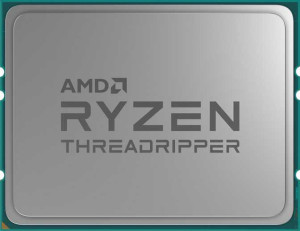
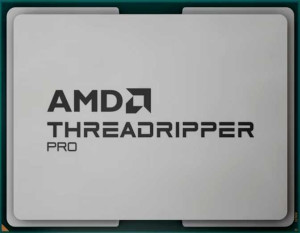
The most dramatic split in this group comes down to core count and total cache. The Threadripper 9980X packs 64 cores and 128 threads, while the Threadripper Pro 9955WX offers 16 cores and 32 threads — a 4x difference that fundamentally changes the workload profile each chip is suited for. For massively parallel tasks like 3D rendering, video transcoding, scientific simulation, or large compilation jobs, the 9980X's core density is a commanding advantage that no clock speed delta can overcome.
Where the Pro 9955WX fights back is in per-core responsiveness. Its base clock of 4.5 GHz versus the 9980X's 3.2 GHz — reflected in the clock multiplier of 45 vs. 32 — means single-threaded and lightly-threaded workloads will feel snappier on the 9955WX. Both chips reach the same 5.4 GHz turbo ceiling, so peak burst performance is equal, but the 9955WX sustains a higher floor. The per-core cache ratio is also identical (1 MB/core L2, 4 MB/core L3), meaning neither chip is cache-starved on a per-core basis — the 9980X simply scales those ratios across four times as many cores, yielding 256 MB of L3 versus just 64 MB on the 9955WX.
The 9980X holds a clear performance edge for throughput-oriented, multi-threaded workloads, which is the primary use case this class of processor targets. The 9955WX's higher base clock makes it more competitive in scenarios where thread count matters less, but within the performance specs provided, the 9980X's sheer parallelism gives it the broader and more decisive advantage.