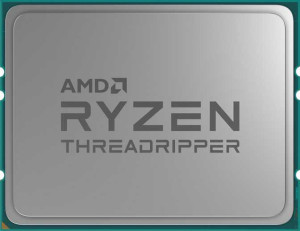
AMD Ryzen Threadripper 9980X
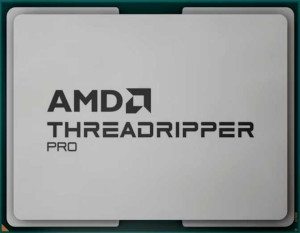
AMD Ryzen Threadripper Pro 9975WX

AMD Ryzen Threadripper 9980X AMD Ryzen Threadripper Pro 9975WX

Overview

Welcome to our in-depth specification comparison between the AMD Ryzen Threadripper 9980X and the AMD Ryzen Threadripper Pro 9975WX — two of AMD's most powerful high-end desktop processors. While both chips share a common 4 nm foundation, a 350W TDP, and DDR5 ECC memory support, they take distinctly different approaches to core count, memory capacity, and overall workload positioning. Read on to discover how their architectures and benchmark results set them apart.

Common Features

  • Both products are Desktop type processors.
  • Neither product has integrated graphics.
  • Both products have a Thermal Design Power (TDP) of 350W.
  • Both products are built on a 4 nm semiconductor process.
  • Both products have a maximum CPU temperature of 95 °C.
  • Both products support PCI Express (PCIe) version 5.
  • Both products support 64-bit computing.
  • Both products have a turbo clock speed of 5.4 GHz.
  • Both products have an unlocked multiplier.
  • Both products have an L2 cache per core of 1 MB/core.
  • Both products have an L3 cache per core of 4 MB/core.
  • Neither product uses big.LITTLE technology.
  • Both products support a maximum RAM speed of 6400 MHz.
  • Both products use DDR5 memory.
  • Both products support ECC memory.
  • Both products support the same instruction sets: MMX, F16C, FMA3, AES, AVX, AVX2, SSE 4.1, and SSE 4.2.
  • Both products use multithreading.
  • Both products have the NX bit security feature.

Main Differences

  • CPU speed is 64 x 3.2 GHz on AMD Ryzen Threadripper 9980X and 32 x 4 GHz on AMD Ryzen Threadripper Pro 9975WX.
  • CPU threads total 128 on AMD Ryzen Threadripper 9980X and 64 on AMD Ryzen Threadripper Pro 9975WX.
  • L2 cache is 64 MB on AMD Ryzen Threadripper 9980X and 32 MB on AMD Ryzen Threadripper Pro 9975WX.
  • L3 cache is 256 MB on AMD Ryzen Threadripper 9980X and 128 MB on AMD Ryzen Threadripper Pro 9975WX.
  • L1 cache is 5120 KB on AMD Ryzen Threadripper 9980X and 2560 KB on AMD Ryzen Threadripper Pro 9975WX.
  • The clock multiplier is 32 on AMD Ryzen Threadripper 9980X and 40 on AMD Ryzen Threadripper Pro 9975WX.
  • The PassMark multi-core result is 153564 on AMD Ryzen Threadripper 9980X and 110143 on AMD Ryzen Threadripper Pro 9975WX.
  • The PassMark single-core result is 4591 on AMD Ryzen Threadripper 9980X and 4409 on AMD Ryzen Threadripper Pro 9975WX.
  • Memory channels number 4 on AMD Ryzen Threadripper 9980X and 8 on AMD Ryzen Threadripper Pro 9975WX.
  • Maximum memory capacity is 1000 GB on AMD Ryzen Threadripper 9980X and 2000 GB on AMD Ryzen Threadripper Pro 9975WX.
Specs Comparison
AMD Ryzen Threadripper 9980X

AMD Ryzen Threadripper 9980X

AMD Ryzen Threadripper Pro 9975WX

AMD Ryzen Threadripper Pro 9975WX

General info:
Type Desktop Desktop
Has integrated graphics
release date May 2025 May 2025
Thermal Design Power (TDP) 350W 350W
semiconductor size 4 nm 4 nm
CPU temperature 95 °C 95 °C
PCI Express (PCIe) version 5 5
Supports 64-bit

In terms of general platform characteristics, the AMD Ryzen Threadripper 9980X and the AMD Ryzen Threadripper Pro 9975WX are effectively identical across every provided spec. Both are desktop-class processors built on a 4 nm semiconductor process, meaning they benefit from the same manufacturing efficiency, transistor density, and power-per-performance characteristics that this node offers.

Both carry a 350W TDP and a maximum CPU temperature of 95 °C, which signals that neither chip has a thermal or power envelope advantage over the other — both demand serious cooling solutions and robust power delivery. They also share PCIe 5.0 support and full 64-bit compatibility, ensuring equivalent I/O bandwidth potential and software compatibility at the platform level. Neither integrates onboard graphics, so a discrete GPU is mandatory in any build with either chip.

Based solely on this spec group, these two processors are in a complete tie. There is no differentiator here — every general platform attribute is identical. Buyers looking to distinguish between the 9980X and the Pro 9975WX will need to look beyond general specs, toward core counts, memory support, and workstation-specific features to find meaningful separation.

Performance:
CPU speed 64 x 3.2 GHz 32 x 4 GHz
CPU threads 128 threads 64 threads
turbo clock speed 5.4GHz 5.4GHz
Has an unlocked multiplier
L2 cache 64 MB 32 MB
L3 cache 256 MB 128 MB
L1 cache 5120 KB 2560 KB
L2 core 1 MB/core 1 MB/core
L3 core 4 MB/core 4 MB/core
Uses big.LITTLE technology
clock multiplier 32 40

The most consequential divide in this group comes down to core architecture philosophy. The Ryzen Threadripper 9980X doubles down on parallelism with 64 cores and 128 threads, while the Threadripper Pro 9975WX offers 32 cores and 64 threads at a notably higher base clock of 4.0 GHz versus 3.2 GHz. Both chips reach the same 5.4 GHz turbo ceiling, meaning single-threaded peak performance is equivalent — but the 9975WX sustains a higher frequency floor across all its cores, which benefits workloads that are sensitive to base clock consistency rather than raw thread count.

Cache follows the core count ratio exactly. The 9980X carries 256 MB of L3 and 64 MB of L2, versus 128 MB L3 and 32 MB L2 on the 9975WX — but since per-core cache allocation is identical at 1 MB/core L2 and 4 MB/core L3, neither chip is more cache-starved per core. This means the 9980X′s larger absolute cache pool is purely a function of having more cores, not a design advantage in how efficiently each core is served.

The clear edge here depends on the workload. For massively parallel tasks — 3D rendering, large-scale simulation, video encoding, or scientific computing — the 9980X′s 64-core advantage is decisive and commands a significant lead. For applications that scale poorly across many threads and favor higher sustained clocks, the 9975WX′s higher base frequency gives it the upper hand. On balance, the 9980X holds the broader performance advantage for the high-throughput workloads these chips are designed for.

Benchmarks:
PassMark result 153564 110143
PassMark result (single) 4591 4409

PassMark benchmark results put concrete numbers behind the architectural differences seen in the performance group. The Ryzen Threadripper 9980X scores 153,564 in the multi-threaded test compared to 110,143 for the Threadripper Pro 9975WX — a gap of roughly 39%. This is almost perfectly consistent with the 9980X having twice the core count, confirming that the workloads PassMark uses to measure multi-threaded throughput scale well with core count and that neither chip has a hidden efficiency advantage over the other per core.

Single-threaded performance tells a tighter story: 4,591 for the 9980X versus 4,409 for the 9975WX — a difference of less than 5%. Given that both chips share the same 5.4 GHz turbo ceiling, this narrow gap is expected and largely falls within the margin of normal benchmark variation. For everyday responsiveness, application launch times, and any task that runs predominantly on a single thread, these two processors are functionally equivalent.

The verdict from benchmarks firmly mirrors the spec sheet: the 9980X holds a commanding lead in multi-threaded workloads, making it the stronger choice wherever thread scaling is the bottleneck. For single-threaded use cases, neither chip offers a meaningful real-world advantage over the other.

Memory:
RAM speed (max) 6400 MHz 6400 MHz
DDR memory version 5 5
memory channels 4 8
maximum memory amount 1000GB 2000GB
Supports ECC memory

Memory architecture is where the Threadripper Pro 9975WX establishes its clearest advantage in this entire comparison. While both chips support DDR5 at 6400 MHz and ECC memory, the 9975WX doubles the 9980X on two critical dimensions: 8 memory channels versus 4, and a maximum capacity of 2000 GB versus 1000 GB. These are not incremental differences — they represent a fundamentally wider memory subsystem.

The channel count gap has direct throughput implications. With twice as many active memory channels, the 9975WX can theoretically deliver up to twice the peak memory bandwidth at the same clock speed. For workloads that are memory-bandwidth-bound — such as large dataset analytics, in-memory databases, fluid simulations, or AI inference with large models — this advantage translates into tangible performance headroom that no amount of extra CPU cores on the 9980X can compensate for. The doubled maximum capacity of 2000 GB further underscores the 9975WX′s positioning as a platform built for memory-intensive professional and enterprise workloads.

The 9975WX wins this group unambiguously. Both processors share the same memory standard and speed ceiling, so the 9975WX sacrifices nothing in raw frequency while gaining a structural bandwidth and capacity advantage that will be decisive in memory-constrained environments. For workloads where raw core count matters most, the 9980X remains competitive overall — but on memory subsystem alone, the Pro chip is in a different class.

Features:
instruction sets MMX, F16C, FMA3, AES, AVX, AVX2, SSE 4.1, SSE 4.2 MMX, F16C, FMA3, AES, AVX, AVX2, SSE 4.1, SSE 4.2
uses multithreading
Has NX bit

Across every feature spec in this group, the Ryzen Threadripper 9980X and the Threadripper Pro 9975WX are a perfect match. Both support the same instruction set extensions — including AVX2, FMA3, and AES — which collectively cover the most performance-critical acceleration paths in modern workloads: floating-point compute, vectorized data processing, and hardware-accelerated cryptography.

Multithreading support and the NX bit are shared as well, though these are effectively baseline expectations for any current-generation desktop processor and carry no differentiating weight here. The instruction set parity is the more substantive point: software compiled to exploit AVX2 or AES-NI will behave identically on both chips at the instruction level, meaning application compatibility and acceleration capability are equivalent regardless of which chip is chosen.

This group is a complete tie. There is no feature available on one chip that is absent on the other, and no instruction set gap that would steer a software-compatibility decision in either direction. Buyers focused on feature support alone have no reason to prefer one over the other based on this data.

Comparison Summary & Verdict

After a thorough review of the specifications, it is clear that both processors are exceptional, yet each targets a distinct user profile. The AMD Ryzen Threadripper 9980X stands out with its 64 cores and 128 threads, a massive 256 MB L3 cache, and a significantly higher PassMark multi-core score of 153,564 — making it the stronger choice for heavily parallelized workloads like 3D rendering, video encoding, and scientific simulation. On the other hand, the AMD Ryzen Threadripper Pro 9975WX counters with 8 memory channels and a maximum memory capacity of 2000 GB, alongside a higher base clock multiplier, giving it a decisive edge in memory-bandwidth-intensive professional workstation tasks such as large dataset processing and enterprise-grade applications. Both chips share the same turbo speed, PCIe 5 support, and ECC memory compatibility, ensuring a premium experience on either platform.

AMD Ryzen Threadripper 9980X
Buy AMD Ryzen Threadripper 9980X if...

Choose the AMD Ryzen Threadripper 9980X if you need maximum multi-threaded performance, as its 64 cores, 128 threads, and 256 MB L3 cache deliver a significantly higher multi-core benchmark score for heavily parallelized workloads.

AMD Ryzen Threadripper Pro 9975WX
Buy AMD Ryzen Threadripper Pro 9975WX if...

Choose the AMD Ryzen Threadripper Pro 9975WX if your workflows demand exceptional memory bandwidth and capacity, thanks to its 8 memory channels and support for up to 2000 GB of RAM — ideal for enterprise and data-intensive professional applications.