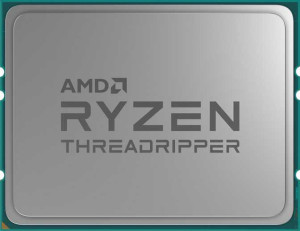
AMD Ryzen Threadripper 9980X
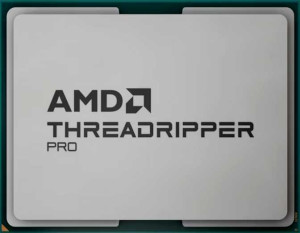
AMD Ryzen Threadripper Pro 9995WX

AMD Ryzen Threadripper 9980X AMD Ryzen Threadripper Pro 9995WX

Overview

Welcome to our in-depth specification comparison between the AMD Ryzen Threadripper 9980X and the AMD Ryzen Threadripper Pro 9995WX. Both processors share the same 4 nm architecture, 350W TDP, and PCIe 5 platform, yet they diverge sharply when it comes to core count, memory capacity, and overall multi-threaded muscle. Whether you are building a high-end workstation or a content creation powerhouse, understanding where these two CPUs differ is essential to making the right investment.

Common Features

  • Both are Desktop-type processors.
  • Neither product includes integrated graphics.
  • Both have a Thermal Design Power (TDP) of 350W.
  • Both are manufactured using a 4 nm semiconductor process.
  • Both have a maximum CPU temperature of 95 °C.
  • Both support PCI Express (PCIe) version 5.
  • Both support 64-bit computing.
  • Both share a turbo clock speed of 5.4 GHz.
  • Both have an unlocked multiplier.
  • Both feature 1 MB of L2 cache per core.
  • Both feature 4 MB of L3 cache per core.
  • Neither product uses big.LITTLE technology.
  • Both support a maximum RAM speed of 6400 MHz.
  • Both use DDR5 memory.
  • Both support ECC memory.
  • Both support the same instruction sets: MMX, F16C, FMA3, AES, AVX, AVX2, SSE 4.1, and SSE 4.2.
  • Both processors use multithreading.
  • Both processors have the NX bit feature.

Main Differences

  • CPU speed is 64 x 3.2 GHz on AMD Ryzen Threadripper 9980X and 96 x 2.5 GHz on AMD Ryzen Threadripper Pro 9995WX.
  • CPU threads total 128 on AMD Ryzen Threadripper 9980X and 192 on AMD Ryzen Threadripper Pro 9995WX.
  • L2 cache is 64 MB on AMD Ryzen Threadripper 9980X and 96 MB on AMD Ryzen Threadripper Pro 9995WX.
  • L3 cache is 256 MB on AMD Ryzen Threadripper 9980X and 384 MB on AMD Ryzen Threadripper Pro 9995WX.
  • L1 cache is 5120 KB on AMD Ryzen Threadripper 9980X and 7680 KB on AMD Ryzen Threadripper Pro 9995WX.
  • The clock multiplier is 32 on AMD Ryzen Threadripper 9980X and 25 on AMD Ryzen Threadripper Pro 9995WX.
  • The PassMark multi-core result is 153564 on AMD Ryzen Threadripper 9980X and 176341 on AMD Ryzen Threadripper Pro 9995WX.
  • The PassMark single-core result is 4591 on AMD Ryzen Threadripper 9980X and 4575 on AMD Ryzen Threadripper Pro 9995WX.
  • Memory channels number 4 on AMD Ryzen Threadripper 9980X and 8 on AMD Ryzen Threadripper Pro 9995WX.
  • Maximum memory capacity is 1000 GB on AMD Ryzen Threadripper 9980X and 2000 GB on AMD Ryzen Threadripper Pro 9995WX.
Specs Comparison
AMD Ryzen Threadripper 9980X

AMD Ryzen Threadripper 9980X

AMD Ryzen Threadripper Pro 9995WX

AMD Ryzen Threadripper Pro 9995WX

General info:
Type Desktop Desktop
Has integrated graphics
release date May 2025 May 2025
Thermal Design Power (TDP) 350W 350W
semiconductor size 4 nm 4 nm
CPU temperature 95 °C 95 °C
PCI Express (PCIe) version 5 5
Supports 64-bit

In terms of general platform characteristics, the AMD Ryzen Threadripper 9980X and the AMD Ryzen Threadripper Pro 9995WX are remarkably alike. Both are desktop-class processors built on a 4 nm semiconductor process, operate without integrated graphics, support 64-bit computing, and share an identical PCIe 5.0 interface — meaning both can take full advantage of the latest generation of high-bandwidth storage and GPU connectivity.

From a thermal and power standpoint, the two chips are again indistinguishable at this level: both carry a 350W TDP and a maximum CPU temperature of 95 °C. This signals that both processors are designed for high-performance workstation and enthusiast desktop environments that demand robust cooling solutions and substantial power delivery infrastructure. Neither chip makes any concessions to efficiency in this regard.

Based strictly on the general info specs provided, these two processors are in a complete tie. Every metric in this category — process node, power envelope, thermal ceiling, PCIe generation, and platform type — is identical. To differentiate them, one must look beyond general specs to areas such as core count, memory support, or platform-specific features.

Performance:
CPU speed 64 x 3.2 GHz 96 x 2.5 GHz
CPU threads 128 threads 192 threads
turbo clock speed 5.4GHz 5.4GHz
Has an unlocked multiplier
L2 cache 64 MB 96 MB
L3 cache 256 MB 384 MB
L1 cache 5120 KB 7680 KB
L2 core 1 MB/core 1 MB/core
L3 core 4 MB/core 4 MB/core
Uses big.LITTLE technology
clock multiplier 32 25

The most consequential difference here is core count. The Threadripper Pro 9995WX delivers 96 cores and 192 threads, versus 64 cores and 128 threads on the Threadripper 9980X — a 50% advantage in raw parallelism. For workloads that scale across many threads, such as 3D rendering, video encoding, large-scale simulations, or scientific computing, that gap translates directly into substantially faster completion times. The 9995WX also carries proportionally larger cache at every level — 384 MB L3 versus 256 MB, and 96 MB L2 versus 64 MB — which helps feed its larger core array with data and reduces costly memory latency under heavy parallel workloads.

Where the 9980X pushes back is on base clock frequency. At 3.2 GHz base versus the 9995WX's 2.5 GHz, the 9980X has a meaningful advantage in lightly-threaded or clock-sensitive tasks — applications that cannot distribute work across many cores will benefit from that higher sustained frequency. Critically, both chips share an identical 5.4 GHz turbo ceiling, so peak single-core burst performance is evenly matched.

For the performance category overall, the Threadripper Pro 9995WX holds a clear edge for the multi-threaded, professional workloads these chips are designed for. The 9980X is the stronger choice only in scenarios dominated by single-threaded or lightly-threaded execution, where its higher base clock provides a tangible benefit. Anyone prioritizing maximum throughput and scalability will find the 9995WX's 96-core configuration decisively ahead.

Benchmarks:
PassMark result 153564 176341
PassMark result (single) 4591 4575

The PassMark benchmark results reinforce the performance picture established by the raw specs. The Threadripper Pro 9995WX scores 176,341 in the multi-threaded test compared to 153,564 for the Threadripper 9980X — a roughly 15% advantage that directly reflects the 9995WX's additional 32 cores doing real, measurable work. In practice, this margin means noticeably faster throughput in CPU-bound professional applications that scale well across threads.

Single-core performance, however, tells the opposite story — and a remarkably close one. The 9980X posts 4,591 versus the 9995WX's 4,575, a difference of just 16 points, or less than 0.4%. For all practical purposes, this is a dead heat. Single-threaded responsiveness — which governs everyday application snappiness, UI fluidity, and tasks like gaming or compiling individual files — is functionally identical between the two chips.

The Threadripper Pro 9995WX wins the benchmark category, but with an important nuance: its advantage is entirely confined to multi-threaded workloads. Users whose workflows are parallelizable will see real gains, while those primarily running single-threaded tasks will find zero meaningful difference between the two processors.

Memory:
RAM speed (max) 6400 MHz 6400 MHz
DDR memory version 5 5
memory channels 4 8
maximum memory amount 1000GB 2000GB
Supports ECC memory

Memory bandwidth is where the gap between these two processors becomes especially significant for professional users. The Threadripper Pro 9995WX features 8 memory channels compared to just 4 channels on the Threadripper 9980X — double the theoretical bandwidth pipeline. Since both chips top out at the same 6400 MHz DDR5 speed, the 9995WX's advantage comes entirely from width rather than frequency. For workloads that are memory-bandwidth-bound — such as large dataset processing, in-memory databases, or high-resolution video workflows — this architectural difference can be a decisive factor in sustained throughput.

The capacity story is equally stark. The 9995WX supports up to 2000 GB of RAM versus the 9980X's 1000 GB ceiling. While most users will never approach either limit, that headroom matters enormously in specialized professional environments: running massive virtual machine clusters, handling terabyte-scale in-memory analytics, or future-proofing a workstation investment over many years. Both chips support ECC memory, which is a critical shared feature for mission-critical and enterprise deployments where data integrity under continuous load is non-negotiable.

The Threadripper Pro 9995WX wins the memory category decisively, with twice the channel count and twice the maximum capacity. Users whose workloads are memory-intensive will find the 9995WX's architecture meaningfully more capable, while the 9980X's memory subsystem, though substantial in its own right, is clearly the more constrained of the two platforms.

Features:
instruction sets MMX, F16C, FMA3, AES, AVX, AVX2, SSE 4.1, SSE 4.2 MMX, F16C, FMA3, AES, AVX, AVX2, SSE 4.1, SSE 4.2
uses multithreading
Has NX bit

Across every feature listed in this category, the Threadripper 9980X and the Threadripper Pro 9995WX are completely identical. Both support the same instruction set extensions — including AVX2 for accelerated floating-point and vector operations, AES for hardware-accelerated encryption, and FMA3 for fused multiply-add operations critical in scientific and machine learning workloads — ensuring that any software optimized for these extensions will run equivalently on either chip.

Both processors also support multithreading and carry the NX bit, a hardware security feature that marks memory regions as non-executable to help prevent certain classes of malicious code injection. These are table-stakes capabilities for modern workstation CPUs rather than differentiators, but their presence confirms that both chips meet the full baseline expectations of enterprise and professional software environments.

This category results in a complete tie. There is no feature-level distinction between the two processors based on the provided data — software compatibility, instruction set support, and hardware security features are identical across both. A decision between these two chips cannot be made on the basis of features alone and must rely on the differences surfaced in other specification groups.

Comparison Summary & Verdict

After examining the full specification breakdown, both processors are formidable choices built on the same 4 nm foundation with DDR5 support, ECC memory compatibility, and a shared 5.4 GHz turbo clock speed. However, the differences are meaningful. The AMD Ryzen Threadripper 9980X, with its 64 cores, higher base clock of 3.2 GHz per core, and a stronger single-core PassMark score of 4591, is an excellent fit for workloads that benefit from higher per-core performance. The AMD Ryzen Threadripper Pro 9995WX, on the other hand, dominates in sheer scale: 96 cores, 192 threads, 384 MB of L3 cache, 8 memory channels, and up to 2000 GB of RAM make it the clear choice for the most demanding professional and enterprise-grade workloads requiring massive parallelism and memory throughput.

AMD Ryzen Threadripper 9980X
Buy AMD Ryzen Threadripper 9980X if...

Choose the AMD Ryzen Threadripper 9980X if you want higher per-core clock speeds and stronger single-core performance for tasks that are not heavily reliant on extreme core counts or large memory capacity.

AMD Ryzen Threadripper Pro 9995WX
Buy AMD Ryzen Threadripper Pro 9995WX if...

Choose the AMD Ryzen Threadripper Pro 9995WX if your workloads demand maximum parallelism, with 96 cores, 192 threads, 8 memory channels, and support for up to 2000 GB of RAM for the most intensive professional applications.