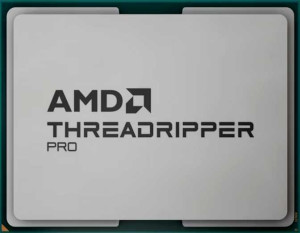
AMD Ryzen Threadripper Pro 9945WX
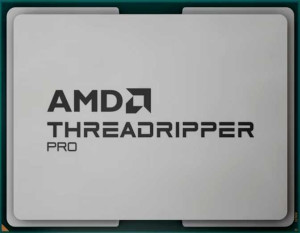
AMD Ryzen Threadripper Pro 9955WX

AMD Ryzen Threadripper Pro 9945WX AMD Ryzen Threadripper Pro 9955WX

Overview

Welcome to our in-depth spec comparison between the AMD Ryzen Threadripper Pro 9945WX and the AMD Ryzen Threadripper Pro 9955WX — two powerhouse workstation processors built on the same 4 nm architecture. While they share a common foundation of DDR5 support, PCIe 5, and an 350W TDP, the key battlegrounds lie in their core and thread counts, cache configurations, and multi-threaded benchmark performance. Read on to find out which one fits your workload best.

Common Features

  • Both are Desktop type processors.
  • Neither product includes integrated graphics.
  • Both have a Thermal Design Power (TDP) of 350W.
  • Both are manufactured using a 4 nm semiconductor process.
  • Both have a maximum CPU temperature of 95 °C.
  • Both support PCI Express (PCIe) version 5.
  • Both support 64-bit computing.
  • Both share a turbo clock speed of 5.4 GHz.
  • Both feature an unlocked multiplier.
  • Both have an L3 cache of 64 MB.
  • Both have an L2 cache of 1 MB per core.
  • Neither product uses big.LITTLE technology.
  • Both support a maximum RAM speed of 6400 MHz.
  • Both use DDR5 memory.
  • Both feature 8 memory channels.
  • Both support a maximum memory amount of 2000 GB.
  • ECC memory is supported on both products.
  • Both share the same instruction sets: MMX, F16C, FMA3, AES, AVX, AVX2, SSE 4.1, and SSE 4.2.
  • Multithreading is supported on both products.
  • The NX bit security feature is present on both products.

Main Differences

  • CPU speed is 12 x 4.7 GHz on AMD Ryzen Threadripper Pro 9945WX and 16 x 4.5 GHz on AMD Ryzen Threadripper Pro 9955WX.
  • CPU threads count is 24 on AMD Ryzen Threadripper Pro 9945WX and 32 on AMD Ryzen Threadripper Pro 9955WX.
  • L2 cache is 12 MB on AMD Ryzen Threadripper Pro 9945WX and 16 MB on AMD Ryzen Threadripper Pro 9955WX.
  • L1 cache is 960 KB on AMD Ryzen Threadripper Pro 9945WX and 1280 KB on AMD Ryzen Threadripper Pro 9955WX.
  • L3 cache per core is 5.33 MB on AMD Ryzen Threadripper Pro 9945WX and 4 MB on AMD Ryzen Threadripper Pro 9955WX.
  • Clock multiplier is 47 on AMD Ryzen Threadripper Pro 9945WX and 45 on AMD Ryzen Threadripper Pro 9955WX.
  • PassMark multi-core result is 56854 on AMD Ryzen Threadripper Pro 9945WX and 69993 on AMD Ryzen Threadripper Pro 9955WX.
  • PassMark single-core result is 4573 on AMD Ryzen Threadripper Pro 9945WX and 4561 on AMD Ryzen Threadripper Pro 9955WX.
Specs Comparison
AMD Ryzen Threadripper Pro 9945WX

AMD Ryzen Threadripper Pro 9945WX

AMD Ryzen Threadripper Pro 9955WX

AMD Ryzen Threadripper Pro 9955WX

General info:
Type Desktop Desktop
Has integrated graphics
release date May 2025 May 2025
Thermal Design Power (TDP) 350W 350W
semiconductor size 4 nm 4 nm
CPU temperature 95 °C 95 °C
PCI Express (PCIe) version 5 5
Supports 64-bit

At the general level, the AMD Ryzen Threadripper Pro 9945WX and AMD Ryzen Threadripper Pro 9955WX are built on an identical foundation. Both are desktop-class processors fabricated on a 4nm process node, share a 350W TDP, top out at a 95°C maximum CPU temperature, support PCIe 5.0, and offer full 64-bit computing with no integrated graphics.

The shared 350W TDP is a critical real-world consideration: both chips demand robust workstation cooling solutions and power delivery infrastructure — these are not chips for compact or budget builds. The 4nm fabrication node means both benefit from the same efficiency and density advantages of TSMC's modern process, and PCIe 5.0 support ensures neither will bottleneck cutting-edge NVMe storage or high-bandwidth accelerators.

Based strictly on the general specs provided, these two processors are completely tied. There is no differentiator in this group — platform requirements, thermal envelope, process technology, and feature support are identical. Users choosing between them will need to look beyond general info, to core counts, clock speeds, or cache specifications, to find meaningful distinctions.

Performance:
CPU speed 12 x 4.7 GHz 16 x 4.5 GHz
CPU threads 24 threads 32 threads
turbo clock speed 5.4GHz 5.4GHz
Has an unlocked multiplier
L2 cache 12 MB 16 MB
L3 cache 64 MB 64 MB
L1 cache 960 KB 1280 KB
L2 core 1 MB/core 1 MB/core
L3 core 5.33 MB/core 4 MB/core
Uses big.LITTLE technology
clock multiplier 47 45

The core count gap is the headline story here. The 9955WX fields 16 cores and 32 threads versus the 9945WX's 12 cores and 24 threads — a 33% advantage in raw parallelism. For workloads that scale across threads, such as 3D rendering, video encoding, or large compilation jobs, the 9955WX will deliver meaningfully higher throughput at the same power envelope.

Where the 9945WX pushes back is on per-core performance. Its 4.7 GHz base clock edges out the 9955WX's 4.5 GHz, and — critically — it retains a 5.33 MB of L3 cache per core compared to just 4 MB per core on the 9955WX, since both share the same 64 MB total L3 across more cores on the latter chip. This means the 9945WX can be more cache-efficient for workloads that are sensitive to per-core data locality, such as certain simulations or latency-sensitive tasks. Both chips hit the same 5.4 GHz turbo, so peak single-core burst performance is equal.

The 9955WX holds a clear overall performance edge in this group for the multi-threaded professional workloads these processors are designed for. The 9945WX carves out a niche for users who prioritize higher sustained base clocks and better per-core cache density over raw thread count — but for the majority of demanding workstation use cases, more cores and threads win.

Benchmarks:
PassMark result 56854 69993
PassMark result (single) 4573 4561

The PassMark results bring the performance picture into sharp empirical focus. The 9955WX scores 69,993 in the multi-threaded benchmark versus 56,854 for the 9945WX — a gap of roughly 23%. In practical terms, this is a substantial real-world difference: multi-threaded PassMark scores correlate directly with throughput in parallel workloads like rendering, encoding, and compilation, meaning the 9955WX will complete those tasks significantly faster.

Single-core results tell a different story. The 9945WX posts 4,573 against the 9955WX's 4,561 — a difference of just 12 points, or roughly 0.3%. This is statistically negligible and confirms what the clock speed specs suggested: in any task that runs predominantly on a single thread, these two processors perform identically in practice.

The 9955WX wins this group decisively on the strength of its multi-threaded score. Users whose workflows are thread-heavy will see a tangible throughput advantage, while those focused on single-threaded responsiveness — such as certain CAD or lightly-threaded applications — will find no meaningful difference between the two chips.

Memory:
RAM speed (max) 6400 MHz 6400 MHz
DDR memory version 5 5
memory channels 8 8
maximum memory amount 2000GB 2000GB
Supports ECC memory

Memory capability is identical across both processors, and the shared specifications are genuinely impressive. Both the 9945WX and 9955WX support 8-channel DDR5 at up to 6400 MHz, which is the widest memory bus available on consumer-adjacent workstation platforms. Eight channels mean memory bandwidth scales dramatically compared to the 2- or 4-channel configurations found in mainstream desktop chips — a critical advantage for bandwidth-hungry workloads like large dataset processing, in-memory databases, or scientific computing.

The 2000 GB maximum memory capacity and mandatory ECC support further cement the workstation positioning of both chips. 2TB of addressable RAM is territory reserved for serious professional and server-class use cases — think massive virtual machine deployments, large-scale simulation, or deep learning training with enormous datasets loaded in memory. ECC (Error-Correcting Code) memory, meanwhile, detects and corrects single-bit memory errors on the fly, which is essential for data integrity in mission-critical or long-running computational tasks.

This group is a complete tie. Every memory specification — bandwidth, channel count, DDR generation, capacity ceiling, and ECC support — is identical between the two processors. Platform and memory configuration will not be a deciding factor when choosing between them.

Features:
instruction sets MMX, F16C, FMA3, AES, AVX, AVX2, SSE 4.1, SSE 4.2 MMX, F16C, FMA3, AES, AVX, AVX2, SSE 4.1, SSE 4.2
uses multithreading
Has NX bit

Feature parity is total between these two processors. Both the 9945WX and 9955WX carry an identical instruction set suite — AVX2, FMA3, AES, F16C, and the full SSE 4.x stack — which collectively cover the accelerated math, cryptographic, and media-processing instructions that modern professional software relies on. Notably, AVX2 and FMA3 are particularly relevant for scientific computing, machine learning inference, and signal processing workloads, as they allow the CPU to operate on wider data vectors and perform fused multiply-add operations in a single clock cycle.

The hardware-level AES instruction support deserves a mention in a workstation context: it offloads encryption and decryption tasks directly to dedicated silicon, keeping cryptographic overhead negligible even when working with encrypted storage volumes or secure network transfers at high throughput. Combined with the NX bit — a security feature that marks memory regions as non-executable to help prevent certain classes of malware exploits — both chips are equally well-equipped for security-conscious enterprise environments.

There is no differentiator to declare here; this group is a complete tie. Both processors offer the same instruction set capabilities, multithreading support, and security features. Software compatibility and workload acceleration potential are identical across both chips.

Comparison Summary & Verdict

Both the AMD Ryzen Threadripper Pro 9945WX and the AMD Ryzen Threadripper Pro 9955WX are exceptionally capable workstation processors that share an identical memory platform, the same 5.4 GHz turbo clock, and support for up to 2000 GB of ECC DDR5 RAM. The core distinction comes down to scale: the 9955WX offers 16 cores and 32 threads with a significantly higher PassMark multi-core score of 69,993, making it the clear pick for heavily parallelized workloads such as 3D rendering, large-scale simulation, or video encoding pipelines. The 9945WX, with its 12 cores at a higher 4.7 GHz base clock and a superior L3 cache-per-core ratio of 5.33 MB, edges ahead in per-core efficiency and single-threaded responsiveness, making it better suited for workflows that rely on strong single-thread performance alongside moderate multi-threading.

AMD Ryzen Threadripper Pro 9945WX
Buy AMD Ryzen Threadripper Pro 9945WX if...

Buy the AMD Ryzen Threadripper Pro 9945WX if you prioritize higher per-core clock speeds and a greater L3 cache-per-core ratio for workloads that benefit from strong single-threaded performance.

AMD Ryzen Threadripper Pro 9955WX
Buy AMD Ryzen Threadripper Pro 9955WX if...

Buy the AMD Ryzen Threadripper Pro 9955WX if your workloads demand maximum multi-threaded throughput, as its 16 cores, 32 threads, and significantly higher PassMark multi-core score give it a decisive edge in heavily parallelized tasks.