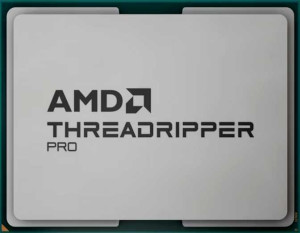
Both the AMD Ryzen Threadripper Pro 9945WX and the Intel Core Ultra 9 285 are desktop-class processors built on modern process nodes, supporting PCIe 5.0 and 64-bit computing — so at a foundational level, they share a contemporary platform. The most immediately practical difference in this group is that the Core Ultra 9 285 includes integrated graphics, while the Threadripper Pro 9945WX does not. For workstation builders, this matters: the Intel chip can drive a display without a discrete GPU, which is useful for headless server setups, troubleshooting scenarios, or cost-sensitive configurations, whereas the AMD chip mandates a dedicated graphics card.
On the manufacturing side, the Core Ultra 9 285 edges ahead with a 3 nm process node versus the Threadripper Pro's 4 nm, a gap that typically translates to modest improvements in power efficiency and transistor density. However, the thermal picture partially offsets this: the Intel chip carries a higher maximum CPU temperature of 105 °C compared to AMD's 95 °C, meaning the Core Ultra 9 285 operates closer to its thermal ceiling and may demand more robust cooling to sustain peak performance safely.
In summary, neither chip dominates this category outright. The Core Ultra 9 285 holds a tangible edge with its integrated graphics and slightly newer process node, making it more self-contained out of the box. The Threadripper Pro 9945WX counters with a lower thermal ceiling, which may translate to more thermal headroom under sustained heavy loads — a meaningful consideration in demanding workstation environments where cooling margin is critical.