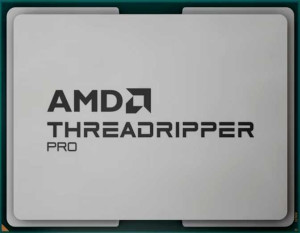
At the foundational level, both processors target desktop workstation use cases, but their design philosophies diverge sharply. The most striking contrast is power consumption: the Threadripper Pro 9955WX carries a 350W TDP, while the M3 Ultra operates at just 80W. This is not a minor gap — it represents a fundamentally different approach to performance delivery. AMD's chip demands robust cooling infrastructure and substantial PSU headroom, whereas Apple's silicon achieves its workload targets at a fraction of the thermal budget, which matters enormously in thermally constrained or energy-sensitive environments.
On the silicon front, the M3 Ultra's 3 nm process node gives it a slight manufacturing edge over the Threadripper Pro's 4 nm node, generally translating to better transistor density and efficiency potential. The M3 Ultra also integrates a GPU directly on-die, eliminating the need for a discrete graphics card for many workflows — a meaningful all-in-one advantage. The Threadripper Pro 9955WX, by contrast, has no integrated graphics, so a dedicated GPU is mandatory for any display output or GPU-accelerated tasks, adding cost and power draw.
The one area where the Threadripper Pro 9955WX holds a clear edge is PCIe 5.0 support versus the M3 Ultra's PCIe 4.0. For users planning to attach next-generation NVMe storage or high-bandwidth expansion cards, this translates to up to double the theoretical bandwidth on compatible devices. Overall, for raw expandability and I/O headroom, AMD leads; but for power efficiency and out-of-the-box graphics capability, the M3 Ultra has a decisive structural advantage.