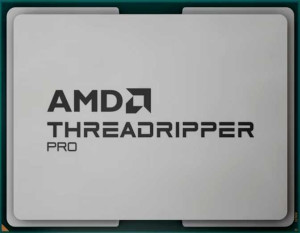
The most decisive difference here is core and thread count. The Threadripper Pro 9955WX fields 16 cores and 32 threads, all running at up to 4.5 GHz — a homogeneous, high-clock configuration built to saturate heavily threaded workstation workloads like 3D rendering, simulation, and video encoding. The M5, by contrast, uses big.LITTLE technology, pairing 4 performance cores at 4.6 GHz with 6 efficiency cores at 3.2 GHz across just 10 threads total. This asymmetric design is optimized for balancing responsiveness with power efficiency in a laptop, not for raw parallel throughput.
Cache architecture further separates them. Both share an identical 16 MB L2 cache, which is a genuine tie at that level. But the Threadripper Pro carries a substantially larger L1 cache at 1280 KB versus the M5's 320 KB — a four-fold difference that reflects the Threadripper's greater number of cores, each with its own L1 allocation. A larger L1 cache reduces latency for frequently accessed data, benefiting workloads with high instruction throughput across many threads simultaneously. The unlocked multiplier on the Threadripper Pro also allows overclocking, an option entirely absent on the M5.
For multi-threaded performance at scale, the Threadripper Pro 9955WX holds a commanding advantage — more cores, more threads, and a larger aggregate cache simply enable more parallel work. The M5's big.LITTLE architecture is intelligently designed for its laptop context, delivering strong single-core bursts while conserving energy on lighter tasks, but it cannot compete in raw throughput at this tier. The edge in this group goes clearly to the Threadripper Pro 9955WX for any workload that can exploit parallelism.