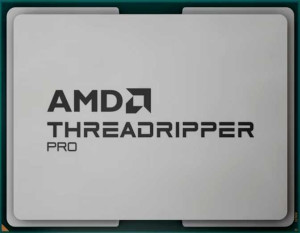
AMD Ryzen Threadripper Pro 9965WX
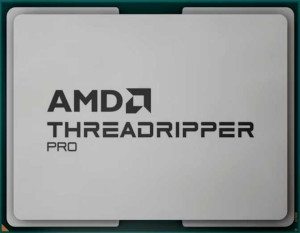
AMD Ryzen Threadripper Pro 9975WX

AMD Ryzen Threadripper Pro 9965WX AMD Ryzen Threadripper Pro 9975WX

Overview

Welcome to our in-depth specification comparison between the AMD Ryzen Threadripper Pro 9965WX and the AMD Ryzen Threadripper Pro 9975WX. Both processors share a remarkable amount of common ground, including a 350W TDP, 4 nm manufacturing, and DDR5 support with eight memory channels, but they diverge in meaningful ways when it comes to core and thread counts, cache configurations, and multi-core benchmark performance. Read on to explore exactly where each chip stands.

Common Features

  • Both are desktop processors.
  • Neither product includes integrated graphics.
  • Both have a Thermal Design Power (TDP) of 350W.
  • Both are manufactured on a 4 nm semiconductor process.
  • Both have a maximum CPU temperature of 95 °C.
  • Both support PCI Express (PCIe) version 5.
  • Both support 64-bit computing.
  • Both have a turbo clock speed of 5.4 GHz.
  • Both feature an unlocked multiplier.
  • Both have 128 MB of L3 cache.
  • Both have 1 MB of L2 cache per core.
  • Neither product uses big.LITTLE technology.
  • Both support a maximum RAM speed of 6400 MHz.
  • Both use DDR5 memory.
  • Both feature 8 memory channels.
  • Both support a maximum memory amount of 2000 GB.
  • Both support ECC memory.
  • Both support the same instruction sets: MMX, F16C, FMA3, AES, AVX, AVX2, SSE 4.1, and SSE 4.2.
  • Both use multithreading.
  • Both have the NX bit security feature.

Main Differences

  • CPU speed is 24 x 4.2 GHz on AMD Ryzen Threadripper Pro 9965WX and 32 x 4 GHz on AMD Ryzen Threadripper Pro 9975WX.
  • CPU threads count is 48 on AMD Ryzen Threadripper Pro 9965WX and 64 on AMD Ryzen Threadripper Pro 9975WX.
  • L2 cache is 24 MB on AMD Ryzen Threadripper Pro 9965WX and 32 MB on AMD Ryzen Threadripper Pro 9975WX.
  • L1 cache is 1920 KB on AMD Ryzen Threadripper Pro 9965WX and 2560 KB on AMD Ryzen Threadripper Pro 9975WX.
  • L3 cache per core is 5.33 MB/core on AMD Ryzen Threadripper Pro 9965WX and 4 MB/core on AMD Ryzen Threadripper Pro 9975WX.
  • Clock multiplier is 42 on AMD Ryzen Threadripper Pro 9965WX and 40 on AMD Ryzen Threadripper Pro 9975WX.
  • PassMark multi-core result is 95346 on AMD Ryzen Threadripper Pro 9965WX and 110143 on AMD Ryzen Threadripper Pro 9975WX.
  • PassMark single-core result is 4555 on AMD Ryzen Threadripper Pro 9965WX and 4409 on AMD Ryzen Threadripper Pro 9975WX.
Specs Comparison
AMD Ryzen Threadripper Pro 9965WX

AMD Ryzen Threadripper Pro 9965WX

AMD Ryzen Threadripper Pro 9975WX

AMD Ryzen Threadripper Pro 9975WX

General info:
Type Desktop Desktop
Has integrated graphics
release date May 2025 May 2025
Thermal Design Power (TDP) 350W 350W
semiconductor size 4 nm 4 nm
CPU temperature 95 °C 95 °C
PCI Express (PCIe) version 5 5
Supports 64-bit

In terms of general platform characteristics, the AMD Ryzen Threadripper Pro 9965WX and the AMD Ryzen Threadripper Pro 9975WX are effectively identical. Both are desktop-class processors built on a 4 nm semiconductor process, operate without integrated graphics, carry a 350W TDP, and share the same maximum junction temperature of 95 °C and PCIe 5.0 support with full 64-bit compatibility.

The shared 350W TDP is a critical real-world consideration: both chips demand robust workstation-grade cooling and power delivery, and neither offers a thermal or power-efficiency advantage over the other at the platform level. The 4 nm node ensures both deliver strong performance-per-watt relative to older process generations, and PCIe 5.0 means both can fully exploit the latest high-bandwidth storage and expansion cards.

Based strictly on this spec group, these two processors are completely tied — there is no differentiator here whatsoever. Any meaningful distinction between the 9965WX and the 9975WX will lie in other specification groups, such as core count, cache, or memory support.

Performance:
CPU speed 24 x 4.2 GHz 32 x 4 GHz
CPU threads 48 threads 64 threads
turbo clock speed 5.4GHz 5.4GHz
Has an unlocked multiplier
L2 cache 24 MB 32 MB
L3 cache 128 MB 128 MB
L1 cache 1920 KB 2560 KB
L2 core 1 MB/core 1 MB/core
L3 core 5.33 MB/core 4 MB/core
Uses big.LITTLE technology
clock multiplier 42 40

The most consequential difference here is core and thread count. The 9975WX fields 32 cores and 64 threads, while the 9965WX offers 24 cores and 48 threads — a 33% advantage in raw parallelism for the 9975WX. For heavily multithreaded workloads like 3D rendering, video transcoding, large-scale simulations, or virtualization, that extra headroom translates directly into faster completion times and greater throughput.

The 9965WX counters with a modestly higher base clock of 4.2 GHz versus 4.0 GHz, though both chips reach the same 5.4 GHz turbo. This means the 9965WX holds a slight edge in lightly-threaded or single-core-sensitive tasks. Cache tells a nuanced story: total L3 remains equal at 128 MB across both, but the 9965WX enjoys 5.33 MB of L3 per core compared to 4 MB per core on the 9975WX. More cache per core can reduce memory latency in per-core workloads, partially offsetting the clock deficit of the 9975WX in those scenarios. L2 scales proportionally with core count at 1 MB per core on both, so no advantage there.

Overall, the 9975WX has the clear performance edge for this spec group. Its substantial lead in parallelism will dominate in the professional workstation workloads these chips are designed for. The 9965WX is the better fit only in scenarios that prize single-threaded speed or cache-per-core density — a narrower use case at this market tier.

Benchmarks:
PassMark result 95346 110143
PassMark result (single) 4555 4409

The PassMark results confirm and quantify what the specs suggest. The 9975WX scores 110,143 in the multi-threaded benchmark versus 95,346 for the 9965WX — a lead of roughly 15%. In practice, this gap maps directly to faster render times, quicker compilation, and higher throughput in any workload that can distribute work across many cores simultaneously.

The single-core picture flips, though only marginally. The 9965WX scores 4,555 against the 9975WX's 4,409 — a difference of about 3%. This is consistent with the 9965WX's higher base clock, but the gap is narrow enough that most users would not perceive it in day-to-day interactive tasks. It matters mainly in strictly serialized workloads where parallelism offers no relief.

The 9975WX holds the clear overall advantage in this benchmark group. Its multi-threaded lead is substantial and highly relevant to the professional workstation context both chips occupy, while the 9965WX's single-core edge is real but too slim to be a deciding factor for most buyers.

Memory:
RAM speed (max) 6400 MHz 6400 MHz
DDR memory version 5 5
memory channels 8 8
maximum memory amount 2000GB 2000GB
Supports ECC memory

On memory, these two processors are completely indistinguishable. Both support DDR5 at up to 6400 MHz across 8 memory channels, with a maximum capacity of 2000 GB and full ECC support — and every one of those figures is shared identically between the 9965WX and the 9975WX.

The specs here are nonetheless worth contextualizing. An 8-channel memory architecture is a hallmark of workstation-class platforms, delivering vastly higher aggregate memory bandwidth than the 2- or 4-channel configurations found in mainstream desktop CPUs. Combined with DDR5-6400 speeds, both chips are well-equipped to feed even their highest core counts without memory becoming a bottleneck. The 2000 GB ceiling and ECC support further reinforce their suitability for memory-intensive professional workloads — large datasets, in-memory databases, scientific computing — where data integrity is as important as raw capacity.

This group is a complete tie. Neither processor holds any memory-related advantage over the other, and the platform they share is genuinely capable at this tier. Any purchase decision should rest entirely on the differences identified in other specification groups.

Features:
instruction sets MMX, F16C, FMA3, AES, AVX, AVX2, SSE 4.1, SSE 4.2 MMX, F16C, FMA3, AES, AVX, AVX2, SSE 4.1, SSE 4.2
uses multithreading
Has NX bit

Feature parity is total here. The 9965WX and 9975WX carry an identical instruction set lineup — including AVX2, FMA3, AES, and SSE 4.2, among others — and both support multithreading and the NX bit. There is nothing in this group that separates them.

That said, the shared feature set is worth a brief note for context. AVX2 and FMA3 are particularly relevant for floating-point-heavy workloads like scientific computing, signal processing, and machine learning inference, enabling wider vectorized operations that can dramatically accelerate compatible software. Hardware AES acceleration ensures encryption and decryption tasks impose minimal overhead, which matters in secure data pipelines and virtualized environments. The NX bit is a foundational security feature that helps prevent certain classes of code-execution exploits at the hardware level.

As with memory, this group is a complete tie — both processors are equally equipped from a feature and instruction-set standpoint. Buyers should weigh the differentiators found in the performance and benchmark groups to make their final call.

Comparison Summary & Verdict

After examining every specification, the choice between these two Threadripper Pro workstation processors comes down to your specific workload priorities. The AMD Ryzen Threadripper Pro 9975WX, with its 64 threads, 32 MB of L2 cache, and a PassMark multi-core score of 110,143, is the clear pick for heavily parallelized tasks such as 3D rendering, large-scale compilation, or data science workloads that can saturate every core. The AMD Ryzen Threadripper Pro 9965WX, on the other hand, offers a higher single-core PassMark score of 4,555 and a superior 5.33 MB of L3 cache per core, making it a strong contender for workloads that depend on per-core efficiency and cache-sensitive applications. Both chips offer identical memory support, PCIe 5.0, and the same 5.4 GHz turbo speed, so neither compromises on platform capability.

AMD Ryzen Threadripper Pro 9965WX
Buy AMD Ryzen Threadripper Pro 9965WX if...

Buy the AMD Ryzen Threadripper Pro 9965WX if you prioritize stronger single-core performance and greater L3 cache per core, making it ideal for cache-sensitive or per-core-intensive workloads.

AMD Ryzen Threadripper Pro 9975WX
Buy AMD Ryzen Threadripper Pro 9975WX if...

Buy the AMD Ryzen Threadripper Pro 9975WX if your workflows demand maximum multi-threaded throughput, benefiting from its 64 threads and significantly higher multi-core PassMark result of 110,143.