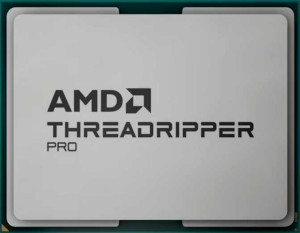
AMD Ryzen Threadripper Pro 9985WX
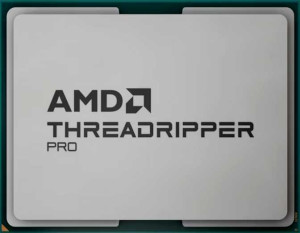
AMD Ryzen Threadripper Pro 9995WX

AMD Ryzen Threadripper Pro 9985WX AMD Ryzen Threadripper Pro 9995WX

Overview

Welcome to our in-depth specification comparison between the AMD Ryzen Threadripper Pro 9985WX and the AMD Ryzen Threadripper Pro 9995WX. Both processors share the same 4 nm architecture, 350W TDP, and DDR5 memory platform, but diverge significantly when it comes to core count, cache hierarchy, and overall multi-threaded throughput. Whether you are building a high-end workstation or evaluating the best fit for your compute-intensive workflows, this comparison will walk you through every key specification to help you make an informed decision.

Common Features

  • Both products are desktop processors.
  • Neither product includes integrated graphics.
  • Both processors have a Thermal Design Power (TDP) of 350W.
  • Both are manufactured using a 4 nm semiconductor process.
  • Both processors have a maximum CPU temperature of 95 °C.
  • Both support PCI Express (PCIe) version 5.
  • Both processors support 64-bit computing.
  • Both have a turbo clock speed of 5.4 GHz.
  • Both processors feature an unlocked multiplier.
  • Both have an L2 cache size of 1 MB per core.
  • Both have an L3 cache size of 4 MB per core.
  • Neither product uses big.LITTLE technology.
  • Both support a maximum RAM speed of 6400 MHz.
  • Both use DDR5 memory.
  • Both processors feature 8 memory channels.
  • Both support a maximum memory amount of 2000 GB.
  • ECC memory is supported on both processors.
  • Both support the same instruction sets: MMX, F16C, FMA3, AES, AVX, AVX2, SSE 4.1, and SSE 4.2.
  • Multithreading is supported on both processors.
  • The NX bit security feature is present on both processors.

Main Differences

  • CPU speed is 64 x 3.2 GHz on AMD Ryzen Threadripper Pro 9985WX and 96 x 2.5 GHz on AMD Ryzen Threadripper Pro 9995WX.
  • CPU threads total 128 on AMD Ryzen Threadripper Pro 9985WX and 192 on AMD Ryzen Threadripper Pro 9995WX.
  • L2 cache is 64 MB on AMD Ryzen Threadripper Pro 9985WX and 96 MB on AMD Ryzen Threadripper Pro 9995WX.
  • L3 cache is 256 MB on AMD Ryzen Threadripper Pro 9985WX and 384 MB on AMD Ryzen Threadripper Pro 9995WX.
  • L1 cache is 5120 KB on AMD Ryzen Threadripper Pro 9985WX and 7680 KB on AMD Ryzen Threadripper Pro 9995WX.
  • The clock multiplier is 32 on AMD Ryzen Threadripper Pro 9985WX and 25 on AMD Ryzen Threadripper Pro 9995WX.
  • The PassMark multi-core result is 156305 on AMD Ryzen Threadripper Pro 9985WX and 176341 on AMD Ryzen Threadripper Pro 9995WX.
  • The PassMark single-core result is 4586 on AMD Ryzen Threadripper Pro 9985WX and 4575 on AMD Ryzen Threadripper Pro 9995WX.
Specs Comparison
AMD Ryzen Threadripper Pro 9985WX

AMD Ryzen Threadripper Pro 9985WX

AMD Ryzen Threadripper Pro 9995WX

AMD Ryzen Threadripper Pro 9995WX

General info:
Type Desktop Desktop
Has integrated graphics
release date May 2025 May 2025
Thermal Design Power (TDP) 350W 350W
semiconductor size 4 nm 4 nm
CPU temperature 95 °C 95 °C
PCI Express (PCIe) version 5 5
Supports 64-bit

At the foundational level, the AMD Ryzen Threadripper Pro 9985WX and 9995WX are built on identical architectural pillars: both are desktop-class processors fabricated on a 4 nm process node, operate without integrated graphics, and share the same 350W TDP, 95 °C maximum CPU temperature, PCIe 5.0 interface, and full 64-bit support.

The shared 350W TDP is a defining characteristic of the Threadripper Pro platform — it signals that both chips are engineered for sustained, thermally demanding workloads in professional workstations, not consumer desktops. This means both require robust cooling solutions and power delivery infrastructure. Similarly, PCIe 5.0 support ensures that neither chip will bottleneck next-generation storage or GPU bandwidth, which is critical for data-intensive professional workflows.

Based strictly on the general specs provided, these two processors are completely tied in this category. There is no differentiator here — the distinction between the 9985WX and 9995WX will lie entirely in other specification groups such as core count, clock speeds, or cache. Users choosing between them cannot use general platform specs as a deciding factor.

Performance:
CPU speed 64 x 3.2 GHz 96 x 2.5 GHz
CPU threads 128 threads 192 threads
turbo clock speed 5.4GHz 5.4GHz
Has an unlocked multiplier
L2 cache 64 MB 96 MB
L3 cache 256 MB 384 MB
L1 cache 5120 KB 7680 KB
L2 core 1 MB/core 1 MB/core
L3 core 4 MB/core 4 MB/core
Uses big.LITTLE technology
clock multiplier 32 25

The most consequential difference in this group is core count: the 9995WX fields 96 cores and 192 threads, versus 64 cores and 128 threads on the 9985WX — a 50% advantage in raw parallelism. For massively multi-threaded workloads like 3D rendering, scientific simulation, or large-scale compilation, that gap is not incremental; it fundamentally changes throughput capacity. The trade-off is base clock speed — the 9995WX runs its cores at 2.5 GHz base compared to 3.2 GHz on the 9985WX, which means lightly-threaded or single-threaded tasks may feel more responsive on the 9985WX.

Both chips share an identical 5.4 GHz turbo ceiling and the same per-core cache ratios (1 MB L2/core and 4 MB L3/core), so neither has a structural cache architecture advantage. However, the 9995WX's absolute cache figures are proportionally larger — 96 MB L2 and 384 MB L3 — simply because it has more cores feeding into that pool. This benefits workloads that keep large datasets warm in cache, such as in-memory analytics or complex simulation meshes.

The 9995WX holds a clear performance edge in this group for multi-threaded professional workloads. The 9985WX is the stronger choice only when per-core clock speed matters more than thread count — a narrower use case at this tier. For the vast majority of Threadripper Pro workstation tasks, more cores and more cache make the 9995WX the higher-throughput option.

Benchmarks:
PassMark result 156305 176341
PassMark result (single) 4586 4575

The PassMark results tell a consistent story with the performance specs: the 9995WX scores 176,341 in the multi-threaded benchmark versus 156,305 for the 9985WX — roughly a 13% lead that directly reflects its additional 32 cores doing real work under load. At this score tier, both chips sit among the highest-performing desktop processors measurable by this benchmark, so the gap is a meaningful differentiator rather than a marginal rounding error.

Single-threaded performance, however, is virtually identical — 4,586 for the 9985WX against 4,575 for the 9995WX, a difference so small it falls within normal run-to-run variance. This confirms that neither chip has a meaningful advantage in latency-sensitive or lightly-threaded tasks; the higher base clock of the 9985WX does not translate into a measurable single-core benchmark edge at this level.

The 9995WX takes a clear win in this group on multi-threaded throughput, while both chips are effectively tied on single-core performance. For users whose workloads can exploit parallelism — and at this product tier, most can — the benchmark data reinforces the 9995WX as the stronger overall performer.

Memory:
RAM speed (max) 6400 MHz 6400 MHz
DDR memory version 5 5
memory channels 8 8
maximum memory amount 2000GB 2000GB
Supports ECC memory

Memory is another area where the 9985WX and 9995WX are in complete lockstep. Both support 8-channel DDR5 at up to 6400 MHz, with a maximum addressable capacity of 2000 GB and full ECC support. The eight-channel configuration is a hallmark of the Threadripper Pro platform and is what separates it from mainstream desktop CPUs — it delivers substantially higher aggregate memory bandwidth, which is critical when feeding dozens of cores with data simultaneously.

ECC support deserves particular attention for the target audience of these chips. In professional workstation environments — computational fluid dynamics, financial modeling, medical imaging — silent data corruption is unacceptable. ECC memory detects and corrects single-bit errors on the fly, making it a non-negotiable feature for mission-critical work. The fact that both processors support it equally means neither has a reliability edge over the other.

This group is a straight tie. Every memory specification is identical across both chips, so memory subsystem capabilities cannot serve as a differentiator. Platform memory performance will be determined entirely by the DIMMs installed, not by which of these two processors is chosen.

Features:
instruction sets MMX, F16C, FMA3, AES, AVX, AVX2, SSE 4.1, SSE 4.2 MMX, F16C, FMA3, AES, AVX, AVX2, SSE 4.1, SSE 4.2
uses multithreading
Has NX bit

Both the 9985WX and 9995WX share an identical instruction set portfolio: AVX2, FMA3, AES, SSE 4.1/4.2, and others. The practically relevant ones here are AVX2 and FMA3, which accelerate floating-point-heavy workloads like machine learning inference, signal processing, and scientific computation — all common use cases at this processor tier. Hardware-accelerated AES ensures cryptographic operations add negligible overhead, important for secure data pipelines and encrypted storage workflows.

Both chips also support simultaneous multithreading and carry the NX bit for hardware-enforced memory protection against certain classes of code-execution exploits. Neither feature is a differentiator here — they are baseline expectations for any modern professional processor and are implemented identically across both SKUs.

This group is a complete tie. There is no feature-level distinction between the two processors; software that leverages any of these instruction sets will behave identically on both. Buyers cannot use this category to separate the two chips — the decision remains, as before, a question of core count and throughput needs.

Comparison Summary & Verdict

Both the AMD Ryzen Threadripper Pro 9985WX and the AMD Ryzen Threadripper Pro 9995WX are exceptional workstation processors sharing the same 4 nm process, 350W TDP, DDR5 platform with 8 memory channels, and up to 2000 GB of ECC RAM support. The key distinction lies in scale: the 9995WX delivers 96 cores and 192 threads, a 384 MB L3 cache, and a notably higher PassMark multi-core score of 176341, making it the clear choice for the most parallelized, resource-hungry workloads. The 9985WX, with its 64 cores and 128 threads and a slightly higher single-core PassMark of 4586, remains a formidable option for users whose tasks balance multi-threaded and single-threaded performance. Choose based on the degree of parallelism your workload demands.

AMD Ryzen Threadripper Pro 9985WX
Buy AMD Ryzen Threadripper Pro 9985WX if...

Buy the AMD Ryzen Threadripper Pro 9985WX if your workloads benefit from a slightly higher single-core clock speed and you do not require the maximum core and cache capacity offered by the 9995WX.

AMD Ryzen Threadripper Pro 9995WX
Buy AMD Ryzen Threadripper Pro 9995WX if...

Buy the AMD Ryzen Threadripper Pro 9995WX if you need maximum multi-threaded performance, with 96 cores, 192 threads, and a 384 MB L3 cache for the most demanding parallel computing workloads.