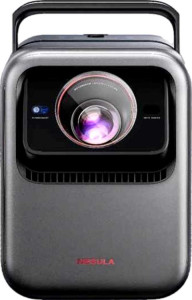
Anker Nebula X1
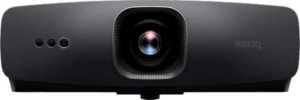
BenQ W2720i

Anker Nebula X1 BenQ W2720i

Overview

Welcome to our in-depth spec comparison between the Anker Nebula X1 and the BenQ W2720i, two premium 4K projectors targeting discerning home cinema enthusiasts. Both share a strong foundation — identical maximum projection size, shared smart platform features, and 4K output — yet they diverge sharply when it comes to light source technology, brightness output, and physical form factor. Read on to see how these two projectors stack up across projection quality, connectivity, and features.

Common Features

  • Both projectors have a lamp life of 30000 hours in eco mode.
  • Both projectors have a dedicated smartphone app.
  • Both projectors output at 4K resolution.
  • Both projectors support a maximum projection size of 200″.
  • Neither projector has a motorized zoom.
  • Both projectors have manual focus.
  • Both projectors support HLG.
  • Both projectors support AirPlay.
  • Both projectors support Wi-Fi.
  • Both projectors have 2 USB ports.
  • Both projectors have Chromecast built-in.
  • Neither projector has a DVI connector.
  • Both projectors support Miracast.
  • Neither projector has an RJ45 port.
  • Both projectors have stereo speakers.
  • Neither projector has horizontal lens shift.
  • Both projectors include a remote control.
  • Both projectors have a built-in smart TV.
  • Both projectors have a built-in speaker.
  • Neither projector has an external memory slot.
  • Both projectors support voice commands.

Main Differences

  • The Anker Nebula X1 uses a laser light source while the BenQ W2720i does not.
  • Width is 186 mm on the Anker Nebula X1 and 420 mm on the BenQ W2720i.
  • Height is 282 mm on the Anker Nebula X1 and 140 mm on the BenQ W2720i.
  • Thickness is 245.5 mm on the Anker Nebula X1 and 310 mm on the BenQ W2720i.
  • Weight is 6200 g on the Anker Nebula X1 and 6500 g on the BenQ W2720i.
  • Volume is 12876.966 cm³ on the Anker Nebula X1 and 18228 cm³ on the BenQ W2720i.
  • Brightness is 3500 ANSI lumens on the Anker Nebula X1 and 2500 ANSI lumens on the BenQ W2720i.
  • Motorized focus is available on the Anker Nebula X1 but not on the BenQ W2720i.
  • Minimum throw distance is 1.7 m on the Anker Nebula X1 and 0.9 m on the BenQ W2720i.
  • Dolby Vision support is present on the Anker Nebula X1 but not available on the BenQ W2720i.
  • The Anker Nebula X1 has 2 HDMI ports while the BenQ W2720i has 3 HDMI ports.
  • Bluetooth is available on the Anker Nebula X1 but not on the BenQ W2720i.
  • A VGA connector is present on the BenQ W2720i but not available on the Anker Nebula X1.
  • An S/PDIF Out port is present on the BenQ W2720i but not available on the Anker Nebula X1.
  • Vertical lens shift is available on the BenQ W2720i but not on the Anker Nebula X1.
  • Audio output power is 2 x 15 & 2 x 5W on the Anker Nebula X1 and 2 x 5W on the BenQ W2720i.
Specs Comparison
Anker Nebula X1

Anker Nebula X1

BenQ W2720i

BenQ W2720i

General info:
has laser light source
release date April 2025 January 2025
lamp life (eco mode) 30000 h 30000 h
width 186 mm 420 mm
height 282 mm 140 mm
thickness 245.5 mm 310 mm
weight 6200 g 6500 g
Has a dedicated smartphone app
volume 12876.966 cm³ 18228 cm³

The most consequential difference in this group is the light source. The Anker Nebula X1 uses a laser light source, while the BenQ W2720i relies on a conventional lamp. Both share an identical rated lamp life of 30,000 hours in eco mode, but achieving that longevity through a laser engine is generally a more robust and consistent path — laser output degrades more gradually over time compared to traditional lamps, which can dim noticeably well before their rated end-of-life. This gives the X1 a meaningful long-term reliability edge despite the identical figure on paper.

Form factor tells a very different story between these two. The X1 is substantially more compact, with a volume of roughly 12,877 cm³ compared to the W2720i's 18,228 cm³ — nearly 42% larger. The W2720i's wide, low-slung footprint (420 mm wide, 140 mm tall) is typical of home cinema projectors designed to sit permanently on a shelf or cabinet, while the X1's taller, narrower chassis makes it easier to reposition or store. Weight is nearly a wash at 6,200 g vs 6,500 g, so neither unit qualifies as truly portable, but the X1's more manageable geometry gives it a slight practical advantage for flexible placement.

Both projectors offer a dedicated smartphone app, putting them on equal footing for remote control and mobile integration. Overall, the X1 holds a clear edge in this group: its laser light source is a technically superior foundation, and its significantly smaller footprint adds real-world flexibility — without sacrificing anything in lamp life or smart-device connectivity.
Projection quality:
ANSI lumens 3500 lumens 2500 lumens
output resolution 4K 4K
has motorized focus
maximum projection size 200" 200"
has motorized zoom
has manual focus
minimum throw distance 1.7 m 0.9 m
supports Dolby Vision
supports HLG

Brightness is where these two projectors diverge most sharply. The X1 delivers 3,500 ANSI lumens against the W2720i's 2,500 ANSI lumens — a 40% advantage that is far from trivial. In practice, that gap translates directly into tolerance for ambient light: the X1 can produce a watchable image in a room with curtains partially open or a lamp on, whereas the W2720i is better suited to a more controlled, darkened environment. Both output at native 4K resolution and share the same 200″ maximum projection size, so the resolution and scale story is identical — but the X1's extra headroom means it can fill that large screen with more consistent punch across varied real-world conditions.

HDR support is another area where the X1 pulls ahead. It covers both Dolby Vision and HLG, while the W2720i is limited to HLG only. Dolby Vision is the more sophisticated of the two standards, offering dynamic, scene-by-scene metadata for superior tone mapping on compatible content. For users streaming from platforms that deliver Dolby Vision — which is increasingly common — the X1 will reproduce that content as intended, while the W2720i falls back to a lesser processing path.

On throw distance, the W2720i holds a niche advantage with a 0.9 m minimum throw versus the X1's 1.7 m, meaning it can fill a large screen from a closer position — useful in shorter rooms. The X1 partially offsets its longer throw requirement with motorized focus, which makes fine-tuning the image easier and more precise without physical adjustment. Taken together, the X1 wins this group decisively on brightness and HDR capability, with the W2720i's shorter minimum throw being the only meaningful counter-point for constrained installations.

Connectivity:
HDMI ports 2 3
has AirPlay
Has Bluetooth
supports Wi-Fi
USB ports 2 2
has Chromecast built-in
has a VGA connector
has a DVI connector
supports Miracast
RJ45 ports 0 0
Has S/PDIF Out port

Wired connectivity slightly favors the W2720i, which offers 3 HDMI ports compared to the X1's 2. For a dedicated home cinema setup with a game console, streaming stick, and Blu-ray player all connected simultaneously, that extra port removes the need for an HDMI switcher. The W2720i also adds a VGA input and an S/PDIF optical audio output — the latter being genuinely useful for connecting a soundbar or AV receiver without HDMI ARC, a common requirement in more traditional home theater configurations. The X1 skips both of those legacy/audio ports entirely.

Wireless is where the X1 asserts itself. Both projectors support Wi-Fi, AirPlay, Chromecast built-in, and Miracast, making them equally capable for screen mirroring and streaming — but the X1 adds Bluetooth, which the W2720i lacks entirely. That matters more than it might initially seem: Bluetooth enables direct pairing of wireless speakers or headphones without occupying an HDMI port or requiring an external audio adapter, which is a meaningful convenience in living room or flexible-use setups.

Neither unit includes an RJ45 ethernet port, and USB counts are identical at 2 each, so those dimensions are a wash. On balance, connectivity here is genuinely split by use case: the W2720i is better suited to a fixed, multi-source home theater rack with an external audio system, while the X1 caters more naturally to a wireless-first setup where Bluetooth audio flexibility is valued. There is no single winner — it depends on how each projector will actually be integrated into a user's existing system.

Features:
has stereo speakers
has lens shift (vertical)
has lens shift (horizontal)
has a remote control
has built-in smart TV
has a built-in speaker
audio output power 2 x 15 & 2 x 5W 2 x 5W
has an external memory slot
has voice commands

Audio output is the standout differentiator here. The X1 runs a four-driver system rated at 2 x 15W + 2 x 5W, totaling 40W across dedicated woofers and tweeters, while the W2720i manages a more modest 2 x 5W stereo setup. That is a significant gap in raw amplification — the X1's built-in sound system is realistically capable of filling a medium-sized room without requiring an external speaker, whereas the W2720i's 10W total output is adequate for quiet viewing but will feel limited on larger screens or in open spaces. For users who prefer a cleaner setup without a separate soundbar, the X1 holds a clear practical advantage.

Placement flexibility tips the other way. The W2720i includes vertical lens shift, which allows the projected image to be moved up or down optically without physically repositioning the projector. This is a genuinely valuable feature for fixed installations — it means the unit can sit on a shelf or mount that isn't in perfect optical alignment with the screen and still produce a geometrically correct image without digital correction, which can degrade image quality. The X1 offers no lens shift in either axis, making precise physical placement more critical.

Beyond those two differentiators, the two projectors are evenly matched: both include a built-in smart TV platform, voice commands, a remote control, and stereo speakers — and neither offers an external memory slot. On balance, which product edges ahead in this group depends on priorities: the X1 wins on audio, the W2720i wins on installation flexibility. Users planning a permanent, precision-mounted setup will value the W2720i's lens shift; those prioritizing a self-contained audio experience without external gear will find the X1's speaker system more compelling.

Comparison Summary & Verdict

After a thorough comparison, both projectors deliver 4K resolution and a rich smart platform, but they cater to different user profiles. The Anker Nebula X1 stands out with its laser light source, higher brightness of 3500 ANSI lumens, Dolby Vision support, Bluetooth connectivity, and a more compact volume — making it the stronger choice for users who want cutting-edge image technology in a relatively smaller package. The BenQ W2720i, on the other hand, offers a shorter minimum throw distance of 0.9 m, vertical lens shift for easier placement flexibility, three HDMI ports, and a VGA connector, making it a more accommodating option for users who need versatile installation options in a dedicated home theatre room.

Anker Nebula X1
Buy Anker Nebula X1 if...

Buy the Anker Nebula X1 if you want a laser-powered projector with higher brightness, Dolby Vision support, and Bluetooth in a more compact form factor.

BenQ W2720i
Buy BenQ W2720i if...

Buy the BenQ W2720i if you need a shorter throw distance, vertical lens shift for flexible placement, and more HDMI ports for a multi-source home theatre setup.