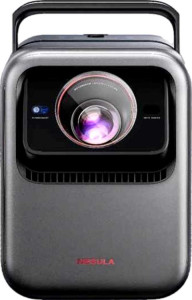
Anker Nebula X1
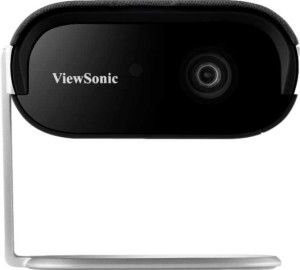
ViewSonic M1 Max

Anker Nebula X1 ViewSonic M1 Max

Common Features

  • Both products have a dedicated smartphone app.
  • Both products have Bluetooth support.
  • Both products support Wi-Fi connectivity.
  • Both products have two USB ports.
  • Both products support Chromecast built-in.
  • Both products support Miracast.
  • Both products have stereo speakers.
  • Both products have a remote control.
  • Both products have a built-in smart TV feature.
  • Both products have a built-in speaker.

Main Differences

  • Anker Nebula X1 has a laser light source, while ViewSonic M1 Max does not.
  • Anker Nebula X1 has a width of 186 mm, while ViewSonic M1 Max has a width of 141 mm.
  • Anker Nebula X1 has a height of 282 mm, while ViewSonic M1 Max has a height of 62 mm.
  • Anker Nebula X1 has a thickness of 245.5 mm, while ViewSonic M1 Max has a thickness of 182 mm.
  • Anker Nebula X1 weighs 6200 g, while ViewSonic M1 Max weighs 960 g.
  • Anker Nebula X1 has a volume of 12876.966 cm³, while ViewSonic M1 Max has a volume of 1591.044 cm³.
  • Anker Nebula X1 has 4K output resolution, while ViewSonic M1 Max has 1080p output resolution.
  • Anker Nebula X1 has a contrast ratio of 5000:1, while ViewSonic M1 Max has a contrast ratio of 120000:1.
  • Anker Nebula X1 can project up to 200″, while ViewSonic M1 Max can project up to 100″.
  • Anker Nebula X1 has a minimum throw distance of 1.7 m, while ViewSonic M1 Max has a minimum throw distance of 0.8 m.
  • Anker Nebula X1 supports Dolby Vision, while ViewSonic M1 Max does not.
  • Anker Nebula X1 supports HLG, while ViewSonic M1 Max does not.
  • Anker Nebula X1 has two HDMI ports, while ViewSonic M1 Max has one HDMI port.
  • Anker Nebula X1 has audio output power of 2 x 15 & 2 x 5W, while ViewSonic M1 Max has audio output power of 2 x 3W.
  • Anker Nebula X1 has voice commands, while ViewSonic M1 Max does not.
Specs Comparison
Anker Nebula X1

Anker Nebula X1

ViewSonic M1 Max

ViewSonic M1 Max

General info:
has laser light source
release date April 2025 April 2025
width 186 mm 141 mm
height 282 mm 62 mm
thickness 245.5 mm 182 mm
weight 6200 g 960 g
Has a dedicated smartphone app
volume 12876.966 cm³ 1591.044 cm³

The Anker Nebula X1 features a laser light source, while the ViewSonic M1 Max does not. This difference may influence factors like brightness and image clarity over time.

In terms of size, the Anker Nebula X1 is significantly larger with a width of 186 mm, height of 282 mm, and a thickness of 245.5 mm, making it bulkier than the ViewSonic M1 Max, which has a more compact profile with a width of 141 mm, height of 62 mm, and thickness of 182 mm. Additionally, the Anker Nebula X1 weighs 6200 g, much heavier compared to the ViewSonic M1 Max's 960 g.

Both products come with a dedicated smartphone app, making them easy to control remotely. The volume of the Anker Nebula X1 is 12876.966 cm³, much larger than the ViewSonic M1 Max's 1591.044 cm³, further reflecting the difference in physical size between the two devices.

Projection quality:
output resolution 4K 1080p
contrast ratio 5000:1 120000:1
maximum projection size 200" 100"
has motorized zoom
minimum throw distance 1.7 m 0.8 m
supports Dolby Vision
supports HLG

The Anker Nebula X1 offers a higher output resolution at 4K, while the ViewSonic M1 Max has a lower resolution of 1080p. This difference means the Nebula X1 can deliver sharper, more detailed images compared to the M1 Max.

In terms of contrast ratio, the ViewSonic M1 Max excels with an impressive 120000:1, significantly higher than the Anker Nebula X1's 5000:1. This suggests the M1 Max can deliver deeper blacks and better contrast for its resolution. The maximum projection size also differs: the Anker Nebula X1 can project up to 200″, while the ViewSonic M1 Max has a smaller maximum projection size of 100″.

Both projectors lack motorized zoom. The minimum throw distance for the Nebula X1 is 1.7 m, which is longer than the M1 Max's minimum of 0.8 m, indicating the M1 Max can project from a closer distance. Additionally, the Anker Nebula X1 supports Dolby Vision and HLG, whereas the ViewSonic M1 Max does not support either of these features.

Connectivity:
HDMI ports 2 1
has AirPlay
Has Bluetooth
supports Wi-Fi
USB ports 2 2
has Chromecast built-in
has a VGA connector
has a DVI connector
supports Miracast
RJ45 ports 0 0
Has S/PDIF Out port

Both the Anker Nebula X1 and ViewSonic M1 Max offer similar connectivity options, with both having AirPlay, Bluetooth, Wi-Fi support, USB ports (2), and Chromecast built-in. This makes them both versatile for wireless streaming and device connections.

However, the Anker Nebula X1 includes 2 HDMI ports, while the ViewSonic M1 Max has only 1 HDMI port, giving the Nebula X1 more flexibility for wired connections. Neither product has a VGA or DVI connector, and both lack an S/PDIF Out port. Additionally, both projectors support Miracast, so you can wirelessly mirror content from compatible devices.

Neither product has an RJ45 port, so they don’t support wired Ethernet connections, but the wireless options available are ample for most uses.

Features:
has stereo speakers
has lens shift (vertical)
has lens shift (horizontal)
has a remote control
has built-in smart TV
has a built-in speaker
audio output power 2 x 15 & 2 x 5W 2 x 3W
has an external memory slot
has voice commands

Both the Anker Nebula X1 and ViewSonic M1 Max come with stereo speakers, remote controls, built-in smart TVs, and built-in speakers, making them both capable of standalone use for media consumption. However, the Anker Nebula X1 has more powerful audio output with 2 x 15W and 2 x 5W speakers, while the ViewSonic M1 Max has lower audio output at 2 x 3W.

Neither projector includes vertical or horizontal lens shift, and both lack an external memory slot. Additionally, the Anker Nebula X1 supports voice commands, whereas the ViewSonic M1 Max does not have this feature.

Overall, both projectors share many of the same features, but the Nebula X1 stands out with its stronger audio output and voice command support.

Comparison Summary

This is a specification comparison between the Anker Nebula X1 and the ViewSonic M1 Max. Both projectors feature a dedicated smartphone app, support Bluetooth and Wi-Fi, and have stereo speakers and a built-in smart TV. The Anker Nebula X1 offers a laser light source and 4K resolution, while the ViewSonic M1 Max provides 1080p resolution with a contrast ratio of 120000:1. The Anker Nebula X1 is significantly larger and heavier, weighing 6200 g compared to the ViewSonic M1 Max’s 960 g. Additionally, the Anker Nebula X1 has dual HDMI ports, while the ViewSonic M1 Max features just one.