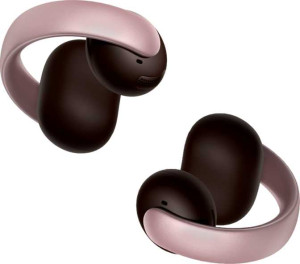
Anker Soundcore AeroClip
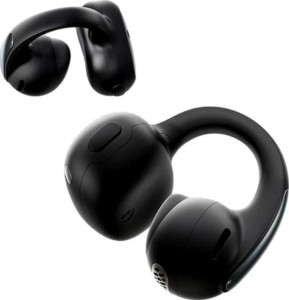
Baseus Bowie MC1

Anker Soundcore AeroClip Baseus Bowie MC1

Overview

When choosing between the Anker Soundcore AeroClip and the Baseus Bowie MC1, you are looking at two open-ear, truly wireless earbuds that share a surprising amount of common ground. Yet key differences in water resistance ratings, battery performance, and codec support mean the right choice depends heavily on your specific needs. Read on as we break down every specification to help you decide which of these earbuds belongs in your ears.

Common Features

  • Both products have an open-ear fit.
  • Neither product has wires or cables.
  • Neither product is a neckband earbud design.
  • Neither product includes wingtips.
  • Neither product has RGB lighting.
  • Both products have stereo speakers.
  • Neither product has a UV light.
  • Neither product has a display.
  • Neither product has active noise cancellation.
  • Neither product has passive noise reduction.
  • Both products have a lowest frequency of 20 Hz and a highest frequency of 20000 Hz.
  • Neither product supports spatial audio.
  • Neither product has Dolby Atmos.
  • Neither product has a neodymium magnet.
  • Both products have a charge time of 1.5 hours.
  • Neither product supports wireless charging.
  • Neither product has a solar power battery.
  • Both products have a battery level indicator.
  • Both products have a rechargeable battery.
  • Both products have USB Type-C connectivity.
  • Both products use Bluetooth version 5.4.
  • Neither product has LDAC, LDHC, Bluetooth LE Audio, aptX Adaptive, or aptX Low Latency support.
  • Neither product has an ambient sound mode.
  • Neither product has in/on-ear detection.
  • Both products support fast charging.
  • Both products support multipoint connection with up to 2 devices.
  • Neither product can read notifications.
  • Both products have a mute function.
  • Both products can be used as a headset.
  • Both products have a control panel placed on the device.
  • Both products have a noise-canceling microphone.

Main Differences

  • The ingress protection rating is IPX4 on the Anker Soundcore AeroClip and IP57 on the Baseus Bowie MC1.
  • The Anker Soundcore AeroClip is sweat resistant, while the Baseus Bowie MC1 is water resistant.
  • The weight is 11.8 g on the Anker Soundcore AeroClip and 10.4 g on the Baseus Bowie MC1.
  • The driver unit size is 12 mm on the Anker Soundcore AeroClip and 10.8 mm on the Baseus Bowie MC1.
  • Battery life is 8 hours on the Anker Soundcore AeroClip and 9 hours on the Baseus Bowie MC1.
  • Battery life of the charging case is 24 hours on the Anker Soundcore AeroClip and 31 hours on the Baseus Bowie MC1.
  • The earbud battery power is 60 mAh on the Anker Soundcore AeroClip and 48 mAh on the Baseus Bowie MC1.
  • The charging case battery power is 580 mAh on the Anker Soundcore AeroClip and 600 mAh on the Baseus Bowie MC1.
  • AAC support is present on the Anker Soundcore AeroClip but not available on the Baseus Bowie MC1.
Specs Comparison
Anker Soundcore AeroClip

Anker Soundcore AeroClip

Baseus Bowie MC1

Baseus Bowie MC1

Design:
Fit Open-ear Open-ear
Ingress Protection (IP) rating IPX4 IP57
water resistance Sweat resistant Water resistant
weight 11.8 g 10.4 g
has no wires or cables
are neckband earbuds
wingtips included
has RGB lighting
has stereo speakers
has UV light
Has a display

Both the Anker Soundcore AeroClip and the Baseus Bowie MC1 share the same fundamental design philosophy: open-ear, fully wireless earbuds with stereo speakers and no wingtips or neckband. For users, this means a similar wearing experience — ambient sound stays audible, and there are no cables to contend with. These shared traits make the comparison particularly tight, pushing the real differences down to finer details.

The most meaningful differentiator is water resistance. The AeroClip carries an IPX4 rating, which covers sweat and light splashes — adequate for workouts but little else. The Bowie MC1 steps up considerably with an IP57 rating, meaning it is fully dust-tight and can withstand submersion in up to 1 meter of water for 30 minutes. In practical terms, the Bowie MC1 can handle rain, poolside use, or accidental drops in water, scenarios where the AeroClip could be at risk. Weight also tips slightly in the Bowie MC1's favor at 10.4 g versus 11.8 g — a small but noticeable margin for an open-ear form factor worn directly on the ear for extended periods.

The Baseus Bowie MC1 holds a clear edge in this group. Its superior ingress protection rating represents a genuinely broader range of real-world use cases, and its marginally lower weight adds a subtle comfort advantage. The AeroClip is not poorly built, but it concedes ground on both of the specs that matter most for durability and wearability in a design-focused comparison.

Sound quality:
has active noise cancellation (ANC)
has passive noise reduction
driver unit size 12 mm 10.8 mm
lowest frequency 20 Hz 20 Hz
highest frequency 20000 Hz 20000 Hz
supports spatial audio
has Dolby Atmos
has Dirac Virtuo
has a neodymium magnet

On paper, the sound quality specs for these two open-ear earbuds are nearly identical. Both cover the standard 20 Hz – 20,000 Hz frequency range, neither offers active or passive noise cancellation, and neither supports spatial audio, Dolby Atmos, or any premium audio processing technology. For an open-ear design, the absence of noise cancellation is expected — the form factor is inherently oriented toward ambient awareness rather than isolation.

The one measurable difference is driver size: the AeroClip uses a 12 mm driver versus the Bowie MC1's 10.8 mm unit. A larger driver diameter can theoretically move more air, which often translates to stronger bass response and greater overall volume headroom. However, this relationship is not guaranteed — driver tuning, diaphragm material, and acoustic chamber design all play significant roles, none of which are captured in these specs. Neither unit has a neodymium magnet listed, so no further driver quality distinction can be drawn from the data.

This group is effectively a near-tie, with a marginal technical edge going to the Anker Soundcore AeroClip purely on the basis of its larger 12 mm driver. The real-world audible difference between a 12 mm and 10.8 mm driver is likely to be subtle, but in the absence of any other differentiating sound quality data, the AeroClip holds the slight advantage here.

Power:
Battery life 8 hours 9 hours
Battery life of charging case 24 hours 31 hours
charge time 1.5 hours 1.5 hours
battery power 60 mAh 48 mAh
battery power (charging case) 580mAh 600mAh
has wireless charging
Has a solar power battery
has a battery level indicator
has a rechargeable battery

Total battery endurance is where the Baseus Bowie MC1 pulls ahead most convincingly in this group. Its 9-hour per-earbud playback time versus the AeroClip's 8 hours is a modest but real difference for long-haul listeners, and the gap widens significantly at the case level: the Bowie MC1 offers 31 hours of total combined battery life compared to the AeroClip's 24 hours. That extra seven hours of case reserves translates to roughly one additional full recharge cycle before needing to find a power outlet — a meaningful advantage for travelers or all-day users.

The earbud battery capacities tell an interesting story in reverse. The AeroClip's earbud cell is rated at 60 mAh while the Bowie MC1 manages its longer runtime on a smaller 48 mAh cell, suggesting the Bowie MC1 is more power-efficient at the earbud level. The case capacity slightly favors the Bowie MC1 at 600 mAh versus 580 mAh, which aligns with its higher total runtime. Both products share an identical 1.5-hour charge time, no wireless charging, and a battery level indicator — so convenience features are evenly matched.

The Bowie MC1 holds a clear advantage in this category. Longer earbud playback, substantially greater total case capacity, and better apparent energy efficiency all point in its favor. For users who prioritize going longer between charges, the Bowie MC1 is the stronger choice based strictly on these specs.

Connectivity:
has fast pairing
Has USB Type-C
Bluetooth version 5.4 5.4
has LDAC
has LDHC
has Bluetooth LE Audio
has aptX Adaptive
has aptX Low Latency
has aptX HD
has aptX
has aptX Lossless
has aptX Voice
has Auracast
maximum Bluetooth range 10 m 10 m
supports Bluetooth pairing using NFC
Can be used wirelessly
has AAC

Connectivity specs for these two earbuds are remarkably uniform. Both run Bluetooth 5.4, charge via USB-C, max out at a 10 m wireless range, and lack fast pairing, NFC, and any advanced codec beyond the basics. Neither supports aptX in any of its variants, LDAC, LDHC, or Bluetooth LE Audio — so users invested in high-resolution wireless audio pipelines will find neither earbud accommodating.

The single differentiator in this entire group is codec support: the Anker Soundcore AeroClip supports AAC, while the Baseus Bowie MC1 does not. AAC matters primarily to Apple device users, as iPhones and iPads prioritize AAC for Bluetooth audio transmission. Without it, the Bowie MC1 falls back to SBC, which is more susceptible to compression artifacts and latency. For Android users the gap is less significant, but on iOS the AeroClip's AAC support translates to a noticeably cleaner and more stable audio stream.

The AeroClip earns a clear, if narrow, edge here solely due to AAC compatibility. For Apple ecosystem users in particular, this is a practically relevant advantage. Outside of that context, both products are functionally identical on connectivity — competent but unambitious at this price tier.

Features:
release date January 2025 February 2025
has ambient sound mode
has in/on-ear detection
Supports fast charging
multipoint count 2 2
can read notifications
has a mute function
can be used as a headset
control panel placed on a device
Has voice prompts
travel bag is included
Has an in-line control panel
Has a temperature sensor
Has a built-in camera remote control function

Across every single feature spec in this group, the Anker Soundcore AeroClip and the Baseus Bowie MC1 are identical. Fast charging, 2-device multipoint pairing, on-device controls, mute function, voice prompts, headset capability, and an included travel bag — both products check the same boxes without exception.

The highlights worth noting for prospective buyers are the features both share. Multipoint connectivity at 2 devices is a genuinely useful daily-use feature, allowing seamless switching between, say, a laptop and a phone without manual re-pairing. Fast charging support on both adds convenience, especially given the already solid battery life seen in the power specs. The included travel bag is a small but appreciated practical addition at this product tier.

This group is a complete tie. There is not a single feature differentiator between the two products based on the provided data. Buyers should look to other specification groups — particularly design and battery — to inform their decision, as features alone offer no basis for choosing one over the other.

Microphone:
has a noise-canceling microphone

Only one data point is available for this group, and it lands identically for both products: each earbud includes a noise-canceling microphone. For call quality in real-world conditions — commuting, working in a café, or exercising outdoors — a noise-canceling mic is a meaningful baseline feature, filtering out ambient sound so the person on the other end hears the speaker more clearly rather than their surrounding environment.

This is a complete tie. With only a single shared spec and no further microphone data provided — such as microphone count, beamforming capability, or frequency response — there is no basis to differentiate the two products here. Buyers who prioritize call quality will need to look beyond this specification group for further guidance.

Comparison Summary & Verdict

Both the Anker Soundcore AeroClip and the Baseus Bowie MC1 are open-ear, truly wireless earbuds built on Bluetooth 5.4, offering fast charging, multipoint connectivity, and noise-canceling microphones. However, the differences are meaningful. The Baseus Bowie MC1 stands out with a superior IP57 water resistance rating, longer battery life of 9 hours on the earbuds and 31 hours from the case, and a lighter 10.4 g build, making it the stronger choice for active users or those who need durability in wet conditions. The Anker Soundcore AeroClip, on the other hand, offers a larger 12 mm driver, a higher earbud battery capacity of 60 mAh, and crucially, AAC codec support, which makes it the better pick for Apple device users or those who prioritize audio codec compatibility. Choose the AeroClip for codec flexibility; choose the Bowie MC1 for ruggedness and endurance.

Anker Soundcore AeroClip
Buy Anker Soundcore AeroClip if...

Buy the Anker Soundcore AeroClip if you use Apple devices or prioritize AAC codec support, and want a larger 12 mm driver with a higher earbud battery capacity.

Baseus Bowie MC1
Buy Baseus Bowie MC1 if...

Buy the Baseus Bowie MC1 if you need stronger water resistance with an IP57 rating, a lighter fit, and longer battery life from both the earbuds and the charging case.