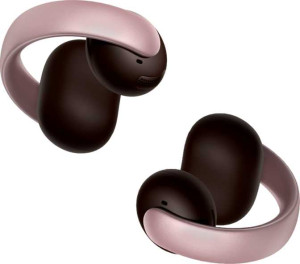
Anker Soundcore AeroClip
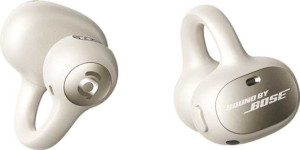
Baseus Inspire XC1

Anker Soundcore AeroClip Baseus Inspire XC1

Overview

Welcome to our in-depth specification comparison between the Anker Soundcore AeroClip and the Baseus Inspire XC1. Both are open-ear, truly wireless earbuds sharing a strong foundation of features, yet they diverge in meaningful ways across connectivity, water resistance, and case endurance. Whether you are an active user or an audiophile seeking the best wireless codec support, this comparison will help you identify which of these two earbuds is truly built for your lifestyle.

Common Features

  • Both products use an open-ear fit design.
  • Neither product has wires or cables.
  • Neither product is a neckband earbud style.
  • Wingtips are not included with either product.
  • Neither product features RGB lighting.
  • Both products have stereo speakers.
  • Neither product includes a UV light.
  • Neither product has a display.
  • Neither product has active noise cancellation (ANC).
  • Neither product has passive noise reduction.
  • Both products share a frequency range of 20 Hz to 20000 Hz.
  • Neither product supports spatial audio, Dolby Atmos, or Dirac Virtuo.
  • Neither product uses a neodymium magnet.
  • Both products offer 8 hours of battery life.
  • Both products have a charge time of 1.5 hours.
  • Neither product supports wireless charging.
  • Both products include a battery level indicator.
  • Both products have a rechargeable battery.
  • Neither product supports fast pairing.
  • Both products include a USB Type-C connection.
  • Neither product supports LDHC, Bluetooth LE Audio, aptX Adaptive, aptX Low Latency, aptX HD, or aptX.
  • Neither product has an ambient sound mode.
  • Neither product has in/on-ear detection.
  • Both products support fast charging.
  • Neither product can read notifications.
  • Both products have a mute function.
  • Both products can be used as a headset.
  • Both products have a control panel placed on the device.
  • Both products feature voice prompts.
  • Both products are equipped with 4 microphones.
  • Both products include a noise-canceling microphone.

Main Differences

  • The Ingress Protection rating is IPX4 on the Anker Soundcore AeroClip and IP66 on the Baseus Inspire XC1.
  • The Anker Soundcore AeroClip is sweat resistant, while the Baseus Inspire XC1 is water resistant.
  • The charging case battery life is 24 hours on the Anker Soundcore AeroClip and 32 hours on the Baseus Inspire XC1.
  • The Bluetooth version is 5.4 on the Anker Soundcore AeroClip and 6.1 on the Baseus Inspire XC1.
  • LDAC support is present on the Baseus Inspire XC1 but not available on the Anker Soundcore AeroClip.
  • A find device feature is available on the Anker Soundcore AeroClip but not present on the Baseus Inspire XC1.
Specs Comparison
Anker Soundcore AeroClip

Anker Soundcore AeroClip

Baseus Inspire XC1

Baseus Inspire XC1

Design:
Fit Open-ear Open-ear
Ingress Protection (IP) rating IPX4 IP66
water resistance Sweat resistant Water resistant
has no wires or cables
are neckband earbuds
wingtips included
has RGB lighting
has stereo speakers
has UV light
Has a display

Both the Anker Soundcore AeroClip and the Baseus Inspire XC1 share the same core design philosophy: fully wireless, open-ear form factors with no neckband, no wingtips, and stereo output. For users who prefer situational awareness without in-ear isolation, both deliver that same open-ear experience out of the box.

The most meaningful differentiator in this group is water resistance. The AeroClip carries an IPX4 rating, meaning it is certified only against sweat and light splashes — adequate for workouts but not much else. The Inspire XC1, by contrast, holds a IP66 rating, which indicates full protection against powerful water jets and dust ingress. In practical terms, the Baseus can handle heavy rain, rinsing, or dusty outdoor environments where the Anker would be at real risk of damage.

On design, the Baseus Inspire XC1 holds a clear advantage purely on durability credentials. If your use case extends beyond the gym — think outdoor commutes, trail runs, or dusty job sites — the significantly higher IP66 rating makes it the more versatile and resilient choice. The AeroClip's IPX4 is not a weakness for casual gym use, but it is a genuine limitation by comparison.

Sound quality:
has active noise cancellation (ANC)
has passive noise reduction
lowest frequency 20 Hz 20 Hz
highest frequency 20000 Hz 20000 Hz
supports spatial audio
has Dolby Atmos
has Dirac Virtuo
has a neodymium magnet

Across every sound quality specification provided, the Anker Soundcore AeroClip and the Baseus Inspire XC1 are identical. Both cover the standard 20 Hz – 20,000 Hz audible frequency range, and neither offers ANC, passive noise reduction, spatial audio, Dolby Atmos, Dirac Virtuo processing, or a neodymium magnet driver.

The shared frequency range is the human hearing baseline — adequate on paper, but the absence of a neodymium magnet on both units is worth noting. Neodymium drivers typically deliver stronger magnetic flux, which translates to tighter bass response and greater overall efficiency. Without that, neither earphone has a documented hardware edge in driver performance based on the available data. Similarly, the lack of any noise management — active or passive — is expected for open-ear designs, where ambient sound passthrough is a feature, not a flaw.

This category is a complete tie. There is no differentiating factor between the two products on sound quality specs as provided. A buying decision in this group cannot be made on these specs alone, and other categories such as design, connectivity, or battery life will carry more weight.

Power:
Battery life 8 hours 8 hours
Battery life of charging case 24 hours 32 hours
charge time 1.5 hours 1.5 hours
has wireless charging
Has a solar power battery
has a battery level indicator
has a rechargeable battery

At the earbud level, these two products are evenly matched: both deliver 8 hours of playback per charge and refill in 1.5 hours. For most daily use cases — commutes, workouts, work-from-home sessions — that on-ear endurance is more than sufficient without ever reaching for the case.

Where they diverge is in case capacity. The Anker Soundcore AeroClip provides 24 hours of total combined battery life, while the Baseus Inspire XC1 extends that to 32 hours. In practical terms, that gap represents one full additional charge cycle from the case — meaning the Baseus can top up the earbuds roughly four times before needing a wall outlet, versus three times for the Anker. For multi-day travel or situations where a charger isn't readily available, that extra buffer is a tangible advantage.

The Baseus Inspire XC1 holds a clear edge in this category, driven entirely by its superior case capacity. Neither product offers wireless charging, so the advantage is straightforward: if extended off-grid use matters to you, the Baseus simply lasts longer between charges.

Connectivity:
has fast pairing
Has USB Type-C
Bluetooth version 5.4 6.1
has LDAC
has LDHC
has Bluetooth LE Audio
has aptX Adaptive
has aptX Low Latency
has aptX HD
has aptX
has aptX Lossless
has aptX Voice
has Auracast
maximum Bluetooth range 10 m 10 m
supports Bluetooth pairing using NFC
Can be used wirelessly
has AAC

On the surface, these two share a lot of connectivity ground: identical 10 m Bluetooth range, USB-C charging, AAC codec support, and no NFC or fast pairing. For casual listeners streaming from a phone, that baseline is perfectly functional. The divergence, however, lies in two specs that matter to more discerning users.

The Baseus Inspire XC1 runs on Bluetooth 6.1 versus the AeroClip's Bluetooth 5.4. A newer Bluetooth version generally brings improvements in connection stability, power efficiency, and channel congestion handling — useful in dense wireless environments like offices or public transit. More impactful for audio quality is the Baseus's support for LDAC, Sony's high-resolution codec that can transmit up to three times more data than standard SBC. For listeners using high-quality streaming sources, LDAC can deliver a noticeably more detailed audio signal — provided the source device supports it too.

The Baseus Inspire XC1 takes a clear lead in connectivity. The combination of a newer Bluetooth version and LDAC support gives it a meaningful technical edge over the AeroClip, which tops out at AAC. For users who prioritize wireless audio fidelity and connection robustness, the Baseus is the stronger option in this category.

Features:
release date January 2025 September 2025
has ambient sound mode
has in/on-ear detection
has find device feature
Supports fast charging
can read notifications
has a mute function
can be used as a headset
control panel placed on a device
Has voice prompts
travel bag is included
Has an in-line control panel
Has a temperature sensor
Has a built-in camera remote control function

Feature parity between these two is high: fast charging, a mute function, on-device controls, voice prompts, headset capability, and an included travel bag are all shared. For everyday usability, that shared foundation covers the essentials comfortably for both products.

The only differentiating spec in this group is the find device feature, which the Anker Soundcore AeroClip supports and the Baseus Inspire XC1 does not. In practice, this function lets users trigger an audible tone from the earbuds via an app when they've been misplaced — a small but genuinely useful safeguard for open-ear earphones that are easy to set down and forget.

The Anker Soundcore AeroClip edges ahead in this category on the strength of that single addition. It's a narrow margin — the Baseus matches it on every other feature listed — but for users who frequently lose small accessories, the find device function is a practical differentiator that tips the balance toward the Anker.

Microphone:
number of microphones 4 4
has a noise-canceling microphone

Microphone hardware is identical across both products: 4 microphones each, both with noise-canceling capability. A quad-mic array is a meaningful configuration for open-ear earphones, where the lack of ear canal sealing makes voice isolation inherently more challenging. Multiple microphones allow for beamforming and wind noise algorithms that help separate the speaker's voice from surrounding ambient sound.

This is a complete tie. With no differentiating specs in this group, neither the Anker Soundcore AeroClip nor the Baseus Inspire XC1 holds any documented advantage in call quality hardware. Users prioritizing microphone performance should weigh other categories to make their decision.

Comparison Summary & Verdict

After examining every specification, both earbuds deliver identical 8-hour battery life, fast charging, USB-C, four-microphone noise-canceling setups, and a broad 20 Hz to 20000 Hz frequency range. However, the differences are telling. The Baseus Inspire XC1 pulls ahead with a superior IP66 water resistance rating, a larger 32-hour charging case, cutting-edge Bluetooth 6.1, and LDAC support for high-resolution audio streaming. The Anker Soundcore AeroClip, on the other hand, counters with a handy find device feature that the XC1 lacks. Choose the AeroClip if device-tracking convenience matters to you; opt for the Baseus Inspire XC1 if you need stronger weather protection, longer total playtime, and premium audio codec performance.

Anker Soundcore AeroClip
Buy Anker Soundcore AeroClip if...

Buy the Anker Soundcore AeroClip if you want a reliable find-device feature to locate your earbuds and are comfortable with sweat-resistant protection for everyday use.

Baseus Inspire XC1
Buy Baseus Inspire XC1 if...

Buy the Baseus Inspire XC1 if you prioritize superior IP66 water resistance, LDAC high-resolution audio support, and a longer 32-hour charging case for extended listening sessions.