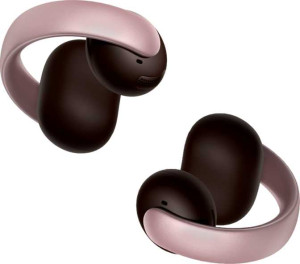
Anker Soundcore AeroClip
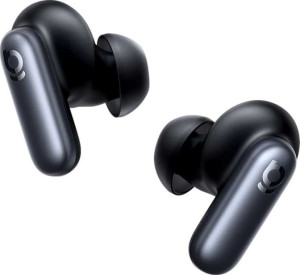
Baseus Inspire XP1

Anker Soundcore AeroClip Baseus Inspire XP1

Overview

When choosing between the Anker Soundcore AeroClip and the Baseus Inspire XP1, two distinct philosophies emerge. From their fundamental approach to fit and noise management to differences in Bluetooth technology and charging case endurance, these two wireless earbuds cater to different listener priorities. In this comparison, we break down exactly how they stack up across design, sound quality, connectivity, and features to help you find your perfect match.

Common Features

  • Neither product has wires or cables.
  • Neither product is a neckband earbud design.
  • Neither product includes wingtips.
  • Neither product has RGB lighting.
  • Both products have stereo speakers.
  • Neither product has a UV light.
  • Neither product has a display.
  • Both products share a lowest frequency of 20 Hz.
  • Both products share a highest frequency of 20000 Hz.
  • Neither product supports spatial audio.
  • Neither product has Dolby Atmos.
  • Neither product has Dirac Virtuo.
  • Neither product has a neodymium magnet.
  • Both products have a battery life of 8 hours.
  • Both products have a charge time of 1.5 hours.
  • Neither product supports wireless charging.
  • Neither product has a solar power battery.
  • Both products have a battery level indicator.
  • Both products have a rechargeable battery.
  • Neither product supports fast pairing.
  • Both products have USB Type-C.
  • Neither product supports LDAC.
  • Neither product supports LDHC.
  • Neither product supports Bluetooth LE Audio.
  • Neither product supports aptX Adaptive.
  • Neither product supports aptX Low Latency.
  • Neither product supports aptX HD.
  • Neither product has in/on-ear detection.
  • Both products support fast charging.
  • Neither product can read notifications.
  • Both products have a mute function.
  • Both products can be used as a headset.
  • Both products have a control panel placed on the device.
  • Both products have voice prompts.
  • A travel bag is included with both products.
  • Both products have a noise-canceling microphone.

Main Differences

  • Fit is open-ear on Anker Soundcore AeroClip and in-ear on Baseus Inspire XP1.
  • Active noise cancellation (ANC) is present on Baseus Inspire XP1 but not available on Anker Soundcore AeroClip.
  • Passive noise reduction is present on Baseus Inspire XP1 but not available on Anker Soundcore AeroClip.
  • Battery life of the charging case is 24 hours on Anker Soundcore AeroClip and 36 hours on Baseus Inspire XP1.
  • Bluetooth version is 5.4 on Anker Soundcore AeroClip and 6.1 on Baseus Inspire XP1.
  • AAC support is present on Anker Soundcore AeroClip but not available on Baseus Inspire XP1.
  • Ambient sound mode is present on Baseus Inspire XP1 but not available on Anker Soundcore AeroClip.
  • The number of microphones is 4 on Anker Soundcore AeroClip and 6 on Baseus Inspire XP1.
Specs Comparison
Anker Soundcore AeroClip

Anker Soundcore AeroClip

Baseus Inspire XP1

Baseus Inspire XP1

Design:
Fit Open-ear In-ear
has no wires or cables
are neckband earbuds
wingtips included
has RGB lighting
has stereo speakers
has UV light
Has a display

The most significant design difference between these two earbuds comes down to a single but consequential spec: fit type. The Anker Soundcore AeroClip uses an open-ear design, meaning it rests against the outer ear without sealing the ear canal. The Baseus Inspire XP1, by contrast, uses a traditional in-ear design, inserting directly into the ear canal to create a passive seal.

This distinction has real-world implications beyond personal preference. Open-ear designs like the AeroClip allow ambient sound to pass through freely, making them better suited for situations where situational awareness matters — running outdoors, working in an office, or extended wear where ear fatigue from canal pressure is a concern. In-ear designs like the XP1 naturally block more external noise through passive isolation, which can improve perceived audio clarity in louder environments, but may feel fatiguing over long sessions for some users.

In every other design dimension — wireless freedom, absence of a neckband, no wingtips, no RGB or UV gimmicks, and stereo speaker support — the two products are evenly matched. The AeroClip holds a design edge for users prioritizing comfort and awareness during active use, while the XP1 is better positioned for those who want passive noise isolation from a more conventional form factor. Neither choice is objectively superior; it depends entirely on the intended use case.

Sound quality:
has active noise cancellation (ANC)
has passive noise reduction
lowest frequency 20 Hz 20 Hz
highest frequency 20000 Hz 20000 Hz
supports spatial audio
has Dolby Atmos
has Dirac Virtuo
has a neodymium magnet

Both earbuds share an identical frequency range of 20 Hz to 20,000 Hz, covering the full spectrum of human hearing on paper. Neither supports spatial audio, Dolby Atmos, or Dirac Virtuo, so on the audio enhancement front, they arrive at the same destination — but the path to noise management is where they diverge sharply.

The Baseus Inspire XP1 brings both active noise cancellation (ANC) and passive noise reduction to the table. ANC uses microphones to electronically counteract ambient sound waves, while the passive seal inherent to its in-ear design blocks noise physically — a meaningful one-two punch for listeners in commutes, offices, or other high-distraction environments. The Anker Soundcore AeroClip, by contrast, offers neither. Its open-ear design intentionally allows ambient sound in, so the absence of ANC is architecturally consistent — but it does mean users get no isolation tools whatsoever.

For sound quality in controlled or quiet environments, the matched frequency response keeps things competitive. But in real-world noisy conditions, the XP1 holds a clear advantage — its dual-layer noise isolation approach gives it a significant edge for anyone who needs to focus on their audio rather than their surroundings. The AeroClip is the right tool only when ambient awareness is the goal, not audio immersion.

Power:
Battery life 8 hours 8 hours
Battery life of charging case 24 hours 36 hours
charge time 1.5 hours 1.5 hours
has wireless charging
Has a solar power battery
has a battery level indicator
has a rechargeable battery

Earbud battery life is a wash here — both the Anker Soundcore AeroClip and the Baseus Inspire XP1 deliver 8 hours of playback per charge, and both replenish fully in 1.5 hours. For most daily use cases — commutes, workouts, long work sessions — that per-earbud endurance is more than adequate without needing to dip into the case mid-day.

Where the two products part ways is in case capacity. The AeroClip's case extends total listening time to 24 hours, which translates to roughly two full top-ups beyond the initial charge. The XP1's case, by comparison, provides 36 hours of total battery — enough for three complete recharges. That extra 12 hours of reserve is meaningful for travelers, frequent flyers, or anyone who goes days between opportunities to plug in.

Neither product offers wireless charging, which keeps the comparison clean. The XP1 has a clear power advantage in this group — not because the earbuds themselves last longer, but because its case carries significantly more reserve energy, reducing how often users need to find an outlet. For light daily users the gap may feel negligible, but for extended trips or unpredictable schedules, the XP1's case endurance is a practical differentiator.

Connectivity:
has fast pairing
Has USB Type-C
Bluetooth version 5.4 6.1
has LDAC
has LDHC
has Bluetooth LE Audio
has aptX Adaptive
has aptX Low Latency
has aptX HD
has aptX
has aptX Lossless
has aptX Voice
has Auracast
maximum Bluetooth range 10 m 10 m
supports Bluetooth pairing using NFC
Can be used wirelessly
has AAC

Across most connectivity dimensions, these two earbuds are mirror images — identical 10 m Bluetooth range, USB-C charging, no NFC pairing, and a shared absence of premium codecs like LDAC or any aptX variant. The meaningful divergence comes from two opposing advantages that effectively cancel each other out depending on the user's ecosystem.

The Baseus Inspire XP1 runs on Bluetooth 6.1, a newer specification than the Bluetooth 5.4 found in the Anker Soundcore AeroClip. Newer Bluetooth generations generally bring improvements in connection efficiency, stability, and power consumption, though real-world audibility of that gap at this range of versions is often subtle. On the flip side, the AeroClip supports AAC — a codec that matters significantly for Apple device users, as iPhones and iPads rely on AAC to transmit higher-quality audio over Bluetooth. The XP1 lacks AAC entirely, meaning it falls back to the standard SBC codec when paired with Apple hardware, which noticeably reduces audio fidelity.

The verdict here depends squarely on the user's primary device. For iPhone users, the AeroClip's AAC support is a tangible, audible advantage. For Android users — where AAC matters less and Bluetooth version carries more weight — the XP1's Bluetooth 6.1 gives it a modest connectivity edge. Neither product dominates unconditionally; it is a deliberate trade-off rather than a clear overall winner.

Features:
release date January 2025 September 2025
has ambient sound mode
has in/on-ear detection
Supports fast charging
can read notifications
has a mute function
can be used as a headset
control panel placed on a device
Has voice prompts
travel bag is included
Has an in-line control panel
Has a temperature sensor
Has a built-in camera remote control function

Feature parity is strong between these two earbuds — fast charging, mute function, on-device controls, voice prompts, headset capability, and an included travel bag are all shared. For everyday usability, that common ground means neither product feels stripped down relative to the other.

The single differentiator in this group is ambient sound mode, which the Baseus Inspire XP1 supports and the Anker Soundcore AeroClip does not. Ambient mode uses the earbuds' microphones to pipe in environmental sound deliberately, letting users stay aware of their surroundings without removing the earbuds. For an in-ear design like the XP1 — which passively blocks ambient noise — this feature is particularly valuable, effectively recreating the open-awareness that the seal would otherwise eliminate. It is a meaningful quality-of-life addition for commuters, runners near traffic, or anyone who needs to toggle between immersion and awareness.

Notably, the AeroClip's open-ear design already provides natural ambient awareness without needing a dedicated mode, so the absence of this feature is architecturally consistent — but from a pure spec standpoint within this group, the XP1 holds the edge by offering an additional layer of environmental control that the AeroClip simply does not provide.

Microphone:
number of microphones 4 6
has a noise-canceling microphone

Both earbuds feature noise-canceling microphones, so call clarity in moderately noisy environments is a baseline expectation for each. The real question is how well each can isolate a voice from background noise — and microphone count is a meaningful proxy for that capability.

The Anker Soundcore AeroClip uses 4 microphones, while the Baseus Inspire XP1 deploys 6 microphones. More microphones enable more sophisticated beamforming algorithms — the technique earbuds use to triangulate the direction of a user's voice and suppress noise coming from other angles. In practice, a higher microphone count generally allows for better voice isolation in windy conditions, crowded spaces, or during movement, producing cleaner call audio on the receiving end.

On microphone hardware alone, the XP1 has the edge. The additional two microphones give it a structural advantage in call quality processing, particularly in challenging acoustic environments. For users who frequently take calls on the go, that difference is worth noting. The AeroClip's 4-mic setup is respectable and noise-canceling capable, but it is outspecced here by a measurable margin.

Comparison Summary & Verdict

After examining every specification, the choice between the Anker Soundcore AeroClip and the Baseus Inspire XP1 comes down to personal priorities. The AeroClip stands out with its open-ear fit, AAC audio codec support, and a newer Bluetooth 5.4 connection, making it a strong pick for those who prefer situational awareness and a more natural listening experience. The Baseus Inspire XP1, on the other hand, counters with active noise cancellation, passive noise reduction, an ambient sound mode, a larger 36-hour charging case, Bluetooth 6.1, and six microphones, making it better suited for users who need focused listening and superior call clarity in demanding environments. Both share identical 8-hour battery life, fast charging, and a travel bag, so neither compromises on everyday convenience.

Anker Soundcore AeroClip
Buy Anker Soundcore AeroClip if...

Buy the Anker Soundcore AeroClip if you prefer an open-ear fit that keeps you aware of your surroundings and want AAC codec support for your audio source.

Baseus Inspire XP1
Buy Baseus Inspire XP1 if...

Buy the Baseus Inspire XP1 if active noise cancellation, ambient sound mode, and a longer 36-hour charging case are your top priorities for focused, immersive listening.