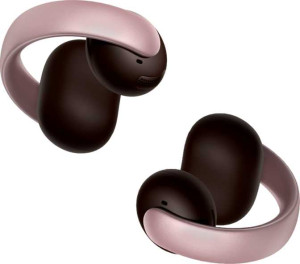
Anker Soundcore AeroClip
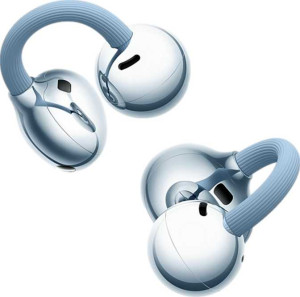
Huawei FreeClip 2

Anker Soundcore AeroClip Huawei FreeClip 2

Overview

Welcome to our in-depth specification comparison between the Anker Soundcore AeroClip and the Huawei FreeClip 2. Both are open-ear, truly wireless earbuds sharing a number of core traits, yet they diverge in meaningful ways. From water resistance ratings and overall weight to charging case endurance and microphone count, there is plenty to unpack before making your decision. Read on as we break down every key spec side by side to help you find the right fit for your lifestyle.

Common Features

  • Both products have an open-ear fit.
  • Both products are sweat resistant.
  • Both products have no wires or cables.
  • Neither product is a neckband earbud.
  • Neither product includes wingtips.
  • Neither product has RGB lighting.
  • Both products have stereo speakers.
  • Neither product has a UV light.
  • Neither product has active noise cancellation.
  • Neither product has passive noise reduction.
  • Both products have a lowest frequency of 20 Hz and a highest frequency of 20000 Hz.
  • Neither product supports spatial audio.
  • Neither product has Dolby Atmos.
  • Neither product has Dirac Virtuo.
  • Neither product has a neodymium magnet.
  • Both products have a battery life of 8 hours.
  • Both products have a battery power of 60 mAh.
  • Neither product supports wireless charging.
  • Neither product has a solar power battery.
  • Both products have a battery level indicator.
  • Both products have a rechargeable battery.
  • Neither product supports fast pairing.
  • Both products have USB Type-C.
  • Neither product has LDAC.
  • Neither product has LDHC.
  • Neither product has Bluetooth LE Audio.
  • Neither product supports aptX Adaptive, aptX Low Latency, or aptX HD.
  • Neither product has an ambient sound mode.
  • Both products have a find device feature.
  • Both products support fast charging.
  • Both products support multipoint connection with 2 devices.
  • Neither product can read notifications.
  • Both products have a mute function.
  • Both products can be used as a headset.
  • Both products have a control panel placed on the device.
  • Both products have a noise-canceling microphone.

Main Differences

  • The Ingress Protection rating is IPX4 on the Anker Soundcore AeroClip and IP57 on the Huawei FreeClip 2.
  • The weight is 11.8 g on the Anker Soundcore AeroClip and 10.2 g on the Huawei FreeClip 2.
  • The battery life of the charging case is 24 hours on the Anker Soundcore AeroClip and 30 hours on the Huawei FreeClip 2.
  • The charge time is 1.5 hours on the Anker Soundcore AeroClip and 1 hour on the Huawei FreeClip 2.
  • The battery power of the charging case is 580 mAh on the Anker Soundcore AeroClip and 537 mAh on the Huawei FreeClip 2.
  • The Bluetooth version is 5.4 on the Anker Soundcore AeroClip and 6 on the Huawei FreeClip 2.
  • AAC support is available on the Anker Soundcore AeroClip but not on the Huawei FreeClip 2.
  • The number of microphones is 4 on the Anker Soundcore AeroClip and 6 on the Huawei FreeClip 2.
Specs Comparison
Anker Soundcore AeroClip

Anker Soundcore AeroClip

Huawei FreeClip 2

Huawei FreeClip 2

Design:
Fit Open-ear Open-ear
Ingress Protection (IP) rating IPX4 IP57
water resistance Sweat resistant Sweat resistant
weight 11.8 g 10.2 g
has no wires or cables
are neckband earbuds
wingtips included
has RGB lighting
has stereo speakers
has UV light
Has a display

Both the Anker Soundcore AeroClip and the Huawei FreeClip 2 share the same fundamental design philosophy: open-ear, truly wireless, no neckband, no wingtips, and stereo playback. For users deciding between the two on form factor alone, they are effectively identical in concept — a clip-based, cable-free design built for everyday wear.

Where the two diverge meaningfully is in water resistance and weight. The FreeClip 2 carries an IP57 rating, meaning it is fully dust-tight and can withstand submersion in up to 1 meter of water for 30 minutes. The AeroClip's IPX4 rating, by contrast, only certifies splash and sweat resistance with no dust protection and no submersion tolerance. In practice, this makes the FreeClip 2 significantly more resilient — suitable for heavy rain or accidental drops in water, while the AeroClip is better suited to controlled workout environments. The weight gap is smaller but still real: the FreeClip 2 comes in at 10.2 g versus the AeroClip's 11.8 g, a 1.6 g difference per earbud that, over long wear sessions, can contribute to reduced fatigue with an open-ear clip design.

The Huawei FreeClip 2 holds a clear edge in the Design category. Its superior IP57 protection offers meaningfully broader real-world durability, and its lighter build adds a marginal but genuine comfort advantage. The AeroClip is not a poor design by any measure, but for users who prioritize durability and all-day wearability, the FreeClip 2 is the stronger choice based strictly on these specs.
Sound quality:
has active noise cancellation (ANC)
has passive noise reduction
lowest frequency 20 Hz 20 Hz
highest frequency 20000 Hz 20000 Hz
supports spatial audio
has Dolby Atmos
has Dirac Virtuo
has a neodymium magnet

On paper, the Anker Soundcore AeroClip and the Huawei FreeClip 2 are indistinguishable in this category. Both cover the standard 20 Hz – 20,000 Hz audible frequency range, and neither offers ANC, passive noise reduction, spatial audio, Dolby Atmos, Dirac Virtuo, or a neodymium magnet driver. Every single sound quality spec provided is a mirror image between the two.

The shared frequency range is worth contextualizing: 20 Hz to 20 kHz represents the full theoretical range of human hearing, so on that metric alone neither product is at a disadvantage. However, a quoted range says nothing about tuning, driver quality, or how flat and accurate the response curve actually is across that range — none of which are captured in the provided data. The absence of a neodymium magnet callout for either product is also notable, since neodymium drivers are common in premium earbuds and are often associated with stronger magnetic flux and tighter bass response. Neither product makes that claim here.

This category is a complete tie based strictly on the available specs. Neither the AeroClip nor the FreeClip 2 holds any measurable advantage — every data point is identical. Users for whom sound quality is the deciding factor will need to look beyond this spec sheet, as the provided data offers no basis for differentiation between the two.

Power:
Battery life 8 hours 8 hours
Battery life of charging case 24 hours 30 hours
charge time 1.5 hours 1 hours
battery power 60 mAh 60 mAh
battery power (charging case) 580mAh 537mAh
has wireless charging
Has a solar power battery
has a battery level indicator
has a rechargeable battery

At the earbud level, these two are evenly matched: both deliver 8 hours of playback per charge from identical 60 mAh cells. For most users, 8 hours covers a full workday of listening without needing to dip into the case, so this is a solid baseline for both.

The more interesting story is in the case-level figures. The AeroClip's case packs a larger 580 mAh cell, yet delivers only 24 hours of total battery life — meaning roughly 3 additional full charges. The FreeClip 2 manages 30 hours total from a slightly smaller 537 mAh case, which implies more efficient power delivery from case to earbud. The practical result: the FreeClip 2 stretches the same hardware further. Charge speed also favors the FreeClip 2, with a 1-hour full charge versus the AeroClip's 1.5 hours — a 30-minute difference that matters when you are topping up between meetings or commutes. Neither supports wireless charging.

The Huawei FreeClip 2 takes a clear edge in Power. It offers 6 more total hours of use, charges faster, and does so from a smaller case battery — a combination that signals better efficiency across the board. For users who travel frequently or go multiple days without reliable access to a charger, that gap is meaningful.

Connectivity:
has fast pairing
Has USB Type-C
Bluetooth version 5.4 6
has LDAC
has LDHC
has Bluetooth LE Audio
has aptX Adaptive
has aptX Low Latency
has aptX HD
has aptX
has aptX Lossless
has aptX Voice
has Auracast
maximum Bluetooth range 10 m 10 m
supports Bluetooth pairing using NFC
Can be used wirelessly
has AAC

The codec picture is sparse for both earbuds — no LDAC, no aptX variants, no LE Audio or Auracast support on either side. The one meaningful split is that the AeroClip supports AAC while the FreeClip 2 does not. For iPhone users, this matters: AAC is Apple's preferred wireless audio codec and enables noticeably cleaner, higher-quality streaming over Bluetooth on iOS compared to the fallback SBC baseline. Android users will feel the gap less, since AAC performance on Android varies by device and manufacturer implementation.

Flipping that advantage, the FreeClip 2 runs on Bluetooth 6 against the AeroClip's Bluetooth 5.4. Bluetooth 6 introduces improved connection accuracy and more efficient channel management, which in practical terms can translate to more stable links in congested wireless environments and marginally better power efficiency over time. Both products top out at the same 10 m range, so the version difference does not extend real-world reach, but it does represent a more future-forward platform. Neither product supports fast pairing or NFC pairing, keeping the connection experience straightforward but basic.

Connectivity is a genuine trade-off here rather than a clean win for either side. The AeroClip has the edge for Apple users thanks to AAC support, while the FreeClip 2 holds a platform advantage with its newer Bluetooth 6 stack. Users heavily embedded in the iOS ecosystem should lean toward the AeroClip; those on Android or seeking a more current Bluetooth foundation will find the FreeClip 2 the stronger pick.

Features:
release date January 2025 September 2025
has ambient sound mode
has find device feature
Supports fast charging
multipoint count 2 2
can read notifications
has a mute function
can be used as a headset
control panel placed on a device
Has voice prompts
travel bag is included
Has an in-line control panel
Has a temperature sensor
Has a built-in camera remote control function

Across every feature in this category, the Anker Soundcore AeroClip and the Huawei FreeClip 2 are identical — a rare but definitive dead heat. Both support multipoint connection to 2 devices simultaneously, fast charging, on-device controls, voice prompts, a mute function, and headset use for calls. Both also include a travel bag in the box, which is a practical value-add that not all earbuds at this level bother with.

A few shared absences are worth flagging for prospective buyers. Neither earbud offers an ambient sound mode, which is a meaningful omission for open-ear designs — users who want to stay aware of their surroundings are relying entirely on the inherently open fit rather than any mic-assisted passthrough. Neither product can read notifications aloud, which limits hands-free utility for users who prioritize that workflow. These are consistent limitations across both, not differentiators.

This category is a complete tie. Every feature present or absent is shared equally between the two products, giving neither a functional advantage over the other. Buyers weighing this spec group alone have no basis to choose one over the other — the decision will need to rest on the differences surfaced in other categories.

Microphone:
number of microphones 4 6
has a noise-canceling microphone

Call quality is one area where a quantitative gap exists between these two. Both earbuds feature noise-canceling microphones, which is the baseline expectation for any earbud being used as a headset in real-world conditions. The meaningful difference is mic count: the AeroClip deploys 4 microphones, while the FreeClip 2 fields 6 microphones.

More microphones enable more sophisticated beamforming and noise-isolation algorithms — the system has more spatial reference points to distinguish the user's voice from ambient noise. In loud environments like busy streets, open offices, or public transit, a higher mic count generally gives the signal processing more to work with, which can translate to cleaner voice pickup for the person on the other end of the call. That said, the provided data speaks only to hardware configuration, not to the quality of the underlying processing — mic count is an input, not a guarantee of output quality.

The Huawei FreeClip 2 holds the edge here by virtue of its 6-microphone array. For users who frequently take calls in noisy environments or rely heavily on voice input, that additional hardware headroom is a genuine structural advantage over the AeroClip's 4-mic setup.

Comparison Summary & Verdict

After examining the full specification set, both earbuds deliver the same 8-hour playback, fast charging, and dual-device multipoint connectivity. However, their differences paint a clearer picture of who each suits best. The Huawei FreeClip 2 pulls ahead with a superior IP57 dust and water resistance rating, a lighter 10.2 g build, a longer 30-hour case battery life, faster 1-hour charge time, a more advanced Bluetooth 6.0 connection, and a higher 6-microphone array for call quality. The Anker Soundcore AeroClip, on the other hand, offers AAC audio codec support and a higher-capacity 580 mAh charging case battery. If maximum durability, lighter weight, and superior call performance matter most, the FreeClip 2 is the stronger choice. If AAC codec compatibility and a larger case battery capacity are priorities, the AeroClip is worth considering.

Anker Soundcore AeroClip
Buy Anker Soundcore AeroClip if...

Buy the Anker Soundcore AeroClip if you need AAC codec support for higher-quality audio streaming or prefer a charging case with a larger battery capacity.

Huawei FreeClip 2
Buy Huawei FreeClip 2 if...

Buy the Huawei FreeClip 2 if you want superior IP57 water and dust resistance, a lighter fit, faster charging, a longer case battery life, and a more capable 6-microphone setup for clearer calls.