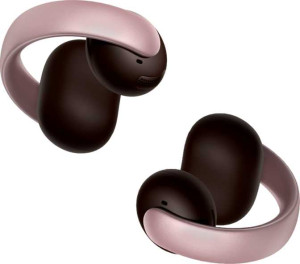
Anker Soundcore AeroClip
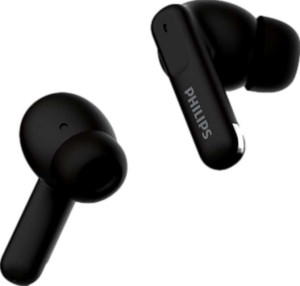
Philips TAT1050

Anker Soundcore AeroClip Philips TAT1050

Overview

Welcome to our in-depth spec comparison between the Anker Soundcore AeroClip and the Philips TAT1050. These two wireless earbuds take fundamentally different approaches to everyday listening, starting with their core design philosophy. While both share a solid foundation of features, key battlegrounds emerge around fit style and noise isolation, battery ecosystem, and audio enhancement capabilities. Read on to see how each model stacks up across design, sound quality, power, and connectivity.

Common Features

  • Both products have no wires or cables.
  • Neither product is a neckband earbud.
  • Neither product includes wingtips.
  • Neither product has RGB lighting.
  • Both products have stereo speakers.
  • Neither product has a UV light.
  • Neither product has a display.
  • Both products have a frequency range of 20 Hz to 20000 Hz.
  • Neither product supports spatial audio.
  • Neither product has Dolby Atmos.
  • Neither product has a neodymium magnet.
  • Both products have a battery life of 8 hours.
  • Neither product supports wireless charging.
  • Neither product has a solar power battery.
  • Both products have a battery level indicator.
  • Both products have a rechargeable battery.
  • Neither product supports fast pairing.
  • Both products have USB Type-C charging.
  • Neither product has LDAC, LDHC, Bluetooth LE Audio, aptX Adaptive, aptX Low Latency, or aptX HD.
  • Both products support fast charging.
  • Both products support multipoint connection with up to 2 devices.
  • Neither product can read notifications.
  • Both products have a mute function.
  • Both products can be used as a headset.
  • Both products have a control panel placed on the device.
  • Both products have voice prompts.
  • Both products have 4 microphones.
  • Both products have a noise-canceling microphone.

Main Differences

  • The Anker Soundcore AeroClip has an open-ear fit, while the Philips TAT1050 has an in-ear fit.
  • The ingress protection rating is IPX4 on the Anker Soundcore AeroClip and IPX5 on the Philips TAT1050.
  • The Anker Soundcore AeroClip is sweat resistant, while the Philips TAT1050 is water resistant.
  • Active noise cancellation is present on the Philips TAT1050 but not available on the Anker Soundcore AeroClip.
  • Passive noise reduction is present on the Philips TAT1050 but not available on the Anker Soundcore AeroClip.
  • The driver unit size is 12 mm on the Anker Soundcore AeroClip and 13 mm on the Philips TAT1050.
  • The charging case battery life is 24 hours on the Anker Soundcore AeroClip and 42 hours on the Philips TAT1050.
  • The charge time is 1.5 hours on the Anker Soundcore AeroClip and 2 hours on the Philips TAT1050.
  • The earbud battery power is 60 mAh on the Anker Soundcore AeroClip and 40 mAh on the Philips TAT1050.
  • The charging case battery power is 580 mAh on the Anker Soundcore AeroClip and 400 mAh on the Philips TAT1050.
  • The Bluetooth version is 5.4 on the Anker Soundcore AeroClip and 5.3 on the Philips TAT1050.
  • Ambient sound mode is present on the Philips TAT1050 but not available on the Anker Soundcore AeroClip.
Specs Comparison
Anker Soundcore AeroClip

Anker Soundcore AeroClip

Philips TAT1050

Philips TAT1050

Design:
Fit Open-ear In-ear
Ingress Protection (IP) rating IPX4 IPX5
water resistance Sweat resistant Water resistant
has no wires or cables
are neckband earbuds
wingtips included
has RGB lighting
has stereo speakers
has UV light
Has a display

The most fundamental design difference between these two earbuds lies in their fit: the Anker Soundcore AeroClip uses an open-ear form factor, while the Philips TAT1050 goes with a traditional in-ear design. This distinction has real-world consequences beyond mere comfort preference. Open-ear earbuds sit outside the ear canal, preserving ambient awareness — ideal for outdoor runs or commutes where situational awareness matters. In-ear designs create a seal that naturally isolates more sound, which can improve perceived audio immersion but may feel intrusive during extended wear.

On water resistance, both are wireless and share solid protection ratings, but the TAT1050 holds a slight edge with IPX5 versus the AeroClip's IPX4. In practice, IPX4 covers splashes and sweat from most directions, while IPX5 adds resistance to low-pressure water jets — meaning the Philips can better handle heavy rain or a more vigorous rinse. For casual gym use, both suffice; for outdoor athletes in unpredictable weather, the TAT1050's rating offers a modest but real advantage.

Beyond fit and water resistance, the two products are closely matched in design fundamentals — both are fully wireless, lack neckbands, skip RGB lighting and displays, and support stereo audio. The open-ear fit of the AeroClip is the defining design choice here: it suits users who prioritize comfort and ambient awareness, while the TAT1050's in-ear fit combined with its stronger IP rating makes it the better pick for those focused on immersion and weather durability. Neither has a sweeping overall design advantage — the right choice depends on the user's lifestyle priorities.

Sound quality:
has active noise cancellation (ANC)
has passive noise reduction
driver unit size 12 mm 13 mm
lowest frequency 20 Hz 20 Hz
highest frequency 20000 Hz 20000 Hz
supports spatial audio
has Dolby Atmos
has Dirac Virtuo
has a neodymium magnet

The sharpest divide in sound quality between these two earbuds is noise isolation. The Philips TAT1050 offers both active noise cancellation (ANC) and passive noise reduction — a meaningful double layer of defense against ambient sound. ANC uses microphones and signal processing to electronically cancel out low-frequency background noise like engine rumble or AC hum, while passive reduction comes naturally from the in-ear seal blocking sound physically. The AeroClip, being open-ear, provides neither — which is an inherent consequence of its form factor rather than an oversight, but it is a real limitation for noisy environments.

Raw driver specs tell a more balanced story. Both earbuds share an identical 20 Hz – 20,000 Hz frequency range, covering the full spectrum of human hearing. The TAT1050 edges ahead with a slightly larger 13 mm driver versus the AeroClip's 12 mm, which in theory can move more air and contribute to stronger bass response — though driver size alone does not guarantee audio quality without knowing tuning and acoustic design. Neither earbud incorporates spatial audio, Dolby Atmos, or Dirac Virtuo, so neither has an advantage in immersive audio processing.

For sound quality, the Philips TAT1050 holds a clear edge. Its combination of ANC, passive noise reduction, and a marginally larger driver gives it a tangible advantage for listeners who want cleaner, more isolated audio in real-world conditions. The AeroClip is not without merit — open-ear designs suit those who want to stay aware of their surroundings — but strictly on sound isolation and noise-blocking capability, the TAT1050 wins this category decisively.

Power:
Battery life 8 hours 8 hours
Battery life of charging case 24 hours 42 hours
charge time 1.5 hours 2 hours
battery power 60 mAh 40 mAh
battery power (charging case) 580mAh 400mAh
has wireless charging
Has a solar power battery
has a battery level indicator
has a rechargeable battery

At the earbud level, both the Anker Soundcore AeroClip and the Philips TAT1050 deliver identical 8 hours of playback per charge — a solid result that comfortably covers a full workday of listening. Where they diverge significantly is in how many additional charges the case provides. The AeroClip's case extends total runtime to 24 hours, while the TAT1050's case pushes that figure to a substantially higher 42 hours. For frequent travelers or users who go days between access to a power outlet, that gap is meaningful — the TAT1050 can essentially go nearly a full week of typical daily use without needing to be plugged in.

Interestingly, the AeroClip achieves this despite packing a larger case battery (580 mAh versus the TAT1050's 400 mAh), yet delivers fewer total hours. This is because the AeroClip's earbuds carry a bigger per-bud battery (60 mAh versus 40 mAh), meaning each recharge cycle draws more from the case. The TAT1050's more efficient per-bud draw allows its smaller case to deliver more recharge cycles overall. On the flip side, the AeroClip recharges faster at 1.5 hours compared to the TAT1050's 2 hours, which matters when you need a quick top-up before heading out.

Neither earbud supports wireless charging, so both require a cable when replenishing the case. Overall, the Philips TAT1050 holds a clear power advantage thanks to its dramatically longer combined battery life — the faster charge time of the AeroClip is a convenience perk, but it does not offset the TAT1050's lead in total untethered usage.

Connectivity:
has fast pairing
Has USB Type-C
Bluetooth version 5.4 5.3
has LDAC
has LDHC
has Bluetooth LE Audio
has aptX Adaptive
has aptX Low Latency
has aptX HD
has aptX
has aptX Lossless
has aptX Voice
has Auracast
maximum Bluetooth range 10 m 10 m
supports Bluetooth pairing using NFC
Can be used wirelessly
has AAC

Connectivity between these two earbuds is remarkably close, with one minor but notable distinction: the AeroClip runs on Bluetooth 5.4 versus the TAT1050's Bluetooth 5.3. While both versions offer stable, low-latency wireless performance well beyond what most users will stress in daily life, 5.4 introduces incremental improvements in connection efficiency and reliability. In practical terms, the gap is narrow — but the AeroClip holds a slight generational edge.

Beyond that, the two products are essentially identical in connectivity scope. Both cap out at a 10 m Bluetooth range, support AAC as their highest-quality audio codec, and charge via USB-C. Neither supports advanced codecs like LDAC, aptX, or any of its variants, nor do they offer LE Audio, Auracast, or NFC pairing. For most listeners streaming from a phone or laptop, AAC delivers solid audio quality — but audiophiles seeking hi-res wireless transmission will find both options limited in this regard.

Overall, connectivity is a near-tie. The Anker Soundcore AeroClip earns a marginal edge from its newer Bluetooth version, but the real takeaway is that neither earbud differentiates itself meaningfully in this category. Users prioritizing advanced codec support or extended wireless range will find both products similarly constrained.

Features:
release date January 2025 April 2025
has ambient sound mode
has in/on-ear detection
Supports fast charging
multipoint count 2 2
can read notifications
has a mute function
can be used as a headset
control panel placed on a device
Has voice prompts
travel bag is included
Has an in-line control panel
Has a temperature sensor
Has a built-in camera remote control function

Across most features, these two earbuds are strikingly well-matched — both support fast charging, multipoint connection to 2 devices simultaneously, a mute function, on-device controls, voice prompts, headset use for calls, and even include a travel bag. For everyday usability, this common ground means neither product leaves users short on practical functionality.

The one feature that separates them is ambient sound mode, which is present on the Philips TAT1050 but absent on the AeroClip. Ambient mode uses the earbuds' microphones to pipe in environmental audio, letting the listener stay aware of their surroundings without removing the earbuds — useful for navigating busy streets, hearing announcements, or holding a quick conversation. It is worth noting that the AeroClip's open-ear design inherently allows ambient sound to pass through physically, which partially offsets the lack of a dedicated software mode. Still, as a deliberate, controllable feature, the TAT1050 holds a functional advantage here.

On balance, the Philips TAT1050 edges ahead in this category solely due to its ambient sound mode — a genuinely useful addition for in-ear earbuds that would otherwise seal off the outside world. For users who already favor the AeroClip's open-ear fit for situational awareness, the absence of this feature matters far less. In all other respects, the two products are evenly matched.

Microphone:
number of microphones 4 4
has a noise-canceling microphone

Microphone hardware is a clean tie between these two earbuds. Both the Anker Soundcore AeroClip and the Philips TAT1050 carry 4 microphones and include noise-canceling microphone technology. A quad-mic setup is well-suited for call quality — multiple mics allow the earbuds to use beamforming techniques, focusing on the user's voice while filtering out surrounding noise, which is particularly valuable in louder environments like offices or busy streets.

Based strictly on the provided specifications, there is no differentiator to analyze here. Both products are identically equipped on paper, and neither holds an advantage in this category.

Comparison Summary & Verdict

After a thorough look at the specs, both earbuds serve distinct audiences. The Anker Soundcore AeroClip stands out with its open-ear fit, faster 1.5-hour charge time, and a higher-capacity earbud and case battery, making it a compelling pick for those who prefer situational awareness during workouts or commutes. The Philips TAT1050, on the other hand, counters with a more immersive in-ear design backed by active noise cancellation, passive noise reduction, and an ambient sound mode, alongside a significantly longer 42-hour case battery life and a stronger IPX5 water resistance rating. If extended battery longevity and focused listening matter most to you, the TAT1050 is the stronger contender. If you value comfort, awareness of your surroundings, and quicker top-ups, the AeroClip is the smarter choice.

Anker Soundcore AeroClip
Buy Anker Soundcore AeroClip if...

Buy the Anker Soundcore AeroClip if you prefer an open-ear fit for environmental awareness and want faster charging with a higher-capacity earbud battery.

Philips TAT1050
Buy Philips TAT1050 if...

Buy the Philips TAT1050 if you need active noise cancellation, passive noise reduction, and a much longer charging case battery life of 42 hours.