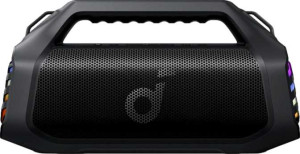
Across most connectivity dimensions, these two speakers are virtually identical — neither supports advanced audio codecs like aptX or LDAC, Wi-Fi, NFC pairing, AirPlay, or Chromecast, and both offer a single USB port. The shared absence of a 3.5mm audio jack is also worth noting, as it rules out wired analog input entirely on both devices. Given how similar the feature sets are, the two points of divergence become all the more significant.
The most impactful difference is Bluetooth range. The Boom 2 Pro reaches up to 100 m, while the Rave 3S is rated at just 10 m — a tenfold gap. In practice, this means the Boom 2 Pro can maintain a stable connection across a large backyard, a park, or a multi-room space, whereas the Rave 3S requires the source device to remain in close proximity. For a speaker positioned as a party or event unit, a 10 m Bluetooth ceiling is a meaningful limitation. The second differentiator works in the Rave 3S's favor: it includes a microphone input, which the Boom 2 Pro lacks. This makes the Rave 3S compatible with external microphones — useful for speeches, karaoke, or live announcements — adding a layer of versatility relevant to its party-speaker role.
Weighing both factors, the Boom 2 Pro holds the stronger connectivity profile overall, as the 100 m Bluetooth range is a broadly useful advantage for nearly any listener. The Rave 3S's microphone input is a genuine perk, but one that applies only to a specific subset of use cases.