Anker Soundcore Boom 3i
JBL Charge 6

Anker Soundcore Boom 3i JBL Charge 6

Overview

Welcome to our in-depth specification comparison between the Anker Soundcore Boom 3i and the JBL Charge 6. Both portable Bluetooth speakers share a solid IP68 waterproof rating and a two-driver setup, yet they take notably different approaches when it comes to battery endurance, physical dimensions, and extra functionality. Whether you are prioritizing raw audio output power or extended playtime, this side-by-side breakdown will help you determine which speaker best fits your lifestyle.

Common Features

  • Both products have an IP68 ingress protection rating.
  • Both products have 2 drivers.
  • Both products have a control panel placed on the device.
  • Both products are waterproof.
  • Neither product includes a travel bag.
  • Neither product has a touch screen.
  • Neither product has RGB lighting.
  • Both products have a detachable cable.
  • Both products have a battery level indicator.
  • Both products have a rechargeable battery.
  • Neither product has a removable battery.
  • Neither product supports wireless charging.
  • Neither product supports Bluetooth pairing using NFC.
  • Neither product has a 3.5 mm audio jack socket.
  • Neither product has an AUX input.
  • Neither product supports aptX Lossless, LDAC, aptX Adaptive, aptX HD, or aptX.
  • Both products can be used wirelessly.
  • Both products support remote smartphone control.
  • Neither product has fast pairing.
  • Neither product has voice commands.
  • Neither product has a radio.
  • Both products have voice prompts.
  • Neither product has a mute function.
  • Both products have a sleep timer.

Main Differences

  • Volume is 1401.225 cm³ on Anker Soundcore Boom 3i and 2118.4592 cm³ on JBL Charge 6.
  • A neodymium magnet is present on JBL Charge 6 but not available on Anker Soundcore Boom 3i.
  • Weight data is unavailable for Anker Soundcore Boom 3i while JBL Charge 6 weighs 960 g.
  • Height is 210 mm on Anker Soundcore Boom 3i and 98.5 mm on JBL Charge 6.
  • Width is 85 mm on Anker Soundcore Boom 3i and 228.8 mm on JBL Charge 6.
  • Thickness is 78.5 mm on Anker Soundcore Boom 3i and 94 mm on JBL Charge 6.
  • Audio output power is 2 x 25W on Anker Soundcore Boom 3i and 2 x 22.5W on JBL Charge 6.
  • Battery life is 16 hours on Anker Soundcore Boom 3i and 28 hours on JBL Charge 6.
  • Auracast support is present on JBL Charge 6 but not available on Anker Soundcore Boom 3i.
  • Anker Soundcore Boom 3i has 2 USB ports while JBL Charge 6 has 1 USB port.
  • Power bank functionality is available on JBL Charge 6 but not on Anker Soundcore Boom 3i.
Specs Comparison
Anker Soundcore Boom 3i

Anker Soundcore Boom 3i

JBL Charge 6

JBL Charge 6

Design:
Ingress Protection (IP) rating IP68 IP68
volume 1401.225 cm³ 2118.4592 cm³
drivers count 2 2
has a neodymium magnet
control panel placed on a device
water resistance Waterproof Waterproof
travel bag is included
has a touch screen
has RGB lighting
has a detachable cable
is a neckband speaker
has a remote control
weight 0 g 960 g
waterproof depth rating 1 m 1 m
height 210 mm 98.5 mm
width 85 mm 228.8 mm
thickness 78.5 mm 94 mm

Both the Anker Soundcore Boom 3i and the JBL Charge 6 share a solid baseline of design features: IP68 waterproofing with a 1-meter depth rating, an on-device control panel, a detachable cable, and identical driver counts. For outdoor or poolside use, neither has a meaningful edge on durability — they are evenly matched on protection.

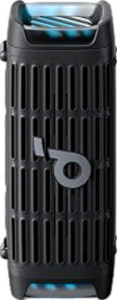
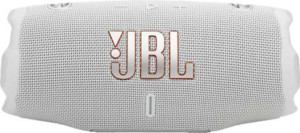
Where the two diverge significantly is form factor and overall size. The Boom 3i adopts a tall, upright cylindrical shape (210 × 85 × 78.5 mm) with a relatively compact volume of 1,401 cm³, making it the more portable and shelf-friendly option. The Charge 6, by contrast, is a wide horizontal bar (228.8 × 98.5 × 94 mm) with a substantially larger volume of 2,118 cm³ — roughly 51% more physical bulk. This size difference suggests the Charge 6 is designed to house a larger battery and audio components, but it comes at a real portability cost. The Charge 6 also weighs 960 g, making it noticeably heavy to carry, while weight data for the Boom 3i was not provided. Additionally, only the Charge 6 features a neodymium magnet, which typically enables more efficient driver performance from a smaller magnetic assembly.

On design, the edge goes to the Boom 3i for users who prioritize portability and a compact footprint. The Charge 6 is the bulkier, heavier unit — a trade-off that may be acceptable if its larger enclosure delivers tangible audio or battery benefits, but purely from a design and carry-ability standpoint, the Boom 3i is the more practical choice.
Sound quality:
audio output power 2 x 25W 2 x 22.5W

Both speakers deliver a stereo two-driver configuration, but they differ slightly in raw output: the Boom 3i is rated at 2 × 25W (50W total), while the Charge 6 comes in at 2 × 22.5W (45W total). On paper, that is a 10% power advantage for the Boom 3i — modest, but not negligible.

In practical terms, wattage alone does not determine how a speaker sounds, as enclosure design, driver tuning, and DSP processing all play major roles. However, higher rated output power does generally correlate with greater headroom at maximum volume — meaning the Boom 3i is less likely to distort when pushed to its limits in loud outdoor environments. The difference is unlikely to be dramatic in casual listening, but users who regularly max out volume in open spaces may notice the Boom 3i holds together slightly better at peak levels.

Based strictly on the available data, the Boom 3i holds a narrow edge in sound output potential. The gap is small enough that real-world performance could easily close it, but from a spec standpoint, the Boom 3i has the advantage here.

Power:
Battery life 16 hours 28 hours
has a battery level indicator
has a rechargeable battery
has a removable battery
has wireless charging

Battery life is where these two speakers diverge most dramatically. The Charge 6 is rated at 28 hours of playback, compared to 16 hours for the Boom 3i — a difference of 12 hours, or 75% more endurance. That gap is substantial enough to matter in real use: the Charge 6 can comfortably cover a full weekend camping trip or multiple back-to-back outdoor sessions without needing a recharge, while the Boom 3i would likely require a top-up somewhere in that same scenario.

Both speakers share the same supporting power features — a built-in battery level indicator, a non-removable rechargeable battery, and no wireless charging. These shared limitations mean neither offers the convenience of Qi charging or a swappable battery pack, so both users are equally dependent on a wired charge when the battery runs low. The indicator on both units at least ensures you are never caught off guard.

The JBL Charge 6 wins this category decisively. Nearly 75% more battery life is a meaningful real-world advantage, particularly for extended outdoor use — and it is the single biggest differentiator in this spec group.

Connectivity:
supports Bluetooth pairing using NFC
has a socket for a 3.5 mm audio jack
has an AUX input
has aptX Lossless
has LDAC
has aptX Adaptive
has aptX HD
has aptX
has aptX Low Latency
has AAC
has AirPlay
has Chromecast built-in
has Auracast
has Bluetooth LE Audio
maximum Bluetooth range 10 m 10 m
supports Wi-Fi
USB ports 2 1
Has USB Type-C
has a 3.5mm male connector
has an external memory slot
is DLNA-certified
supports Ethernet
has a microphone input

Connectivity is largely a story of shared limitations for these two speakers. Neither supports advanced Bluetooth audio codecs — no aptX, no LDAC, no AAC — and both are capped at a 10-meter Bluetooth range with no Wi-Fi, AUX input, or 3.5mm jack. For most users streaming from a phone at close range, the codec gap will not matter, but audiophiles looking for higher-fidelity wireless transmission will find both options equally restrictive.

Two meaningful differences do emerge. First, the Charge 6 supports Auracast, a Bluetooth broadcast technology that allows one speaker to simultaneously stream audio to multiple Auracast-compatible receivers nearby — useful for shared listening scenarios without pairing limitations. The Boom 3i has no such capability. Second, the Boom 3i counters with 2 USB ports versus the Charge 6's single port, which is a practical advantage for charging external devices like phones while the speaker is in use.

Neither product holds a commanding overall edge here, but the advantages point in different directions depending on use case. The Charge 6 is the stronger pick for group listening setups thanks to Auracast, while the Boom 3i has a slight practical edge as a portable charging hub. Users who do not need either feature will find the two essentially tied on connectivity.

Features:
release date May 2025 March 2025
Can be used wirelessly
supports a remote smartphone
has fast pairing
has voice commands
Has a radio
Has voice prompts
has a mute function
works as a power bank
has a sleep timer

Across most features, these two speakers are in lockstep: both support wireless playback, smartphone remote control, voice prompts, and a sleep timer, while neither offers fast pairing, voice commands, or a mute function. For day-to-day use, this parity means the experience of operating either speaker will feel broadly similar.

The one feature that sets them apart is the Charge 6's ability to function as a power bank. This means the Charge 6 can charge external devices — like a phone — directly from its battery. Given that the Charge 6 already leads significantly in battery capacity (as established in the Power category), this feature is a meaningful real-world bonus for outdoor use, where a wall outlet may not be available. The Boom 3i offers no equivalent capability.

The JBL Charge 6 takes a clear edge in this category. The power bank function is a genuinely useful differentiator that adds utility beyond just playing music, and no other spec in this group compensates for its absence on the Boom 3i's side.

Comparison Summary & Verdict

After examining all available specifications, both speakers prove to be capable waterproof companions, but they clearly target different users. The Anker Soundcore Boom 3i edges ahead in audio output power at 2 x 25W and offers two USB ports, making it a stronger pick for those who value a slightly more powerful sound and added connectivity flexibility. The JBL Charge 6, on the other hand, dominates in battery life at 28 hours versus 16 hours, supports Auracast for multi-speaker pairing, includes a neodymium magnet, and can double as a power bank to charge your devices on the go. If longevity and versatile functionality are your top priorities, the JBL Charge 6 is the more well-rounded choice. If a more compact form factor with slightly higher wattage matters more to you, the Anker Soundcore Boom 3i deserves serious consideration.

Anker Soundcore Boom 3i
Buy Anker Soundcore Boom 3i if...

Buy the Anker Soundcore Boom 3i if you want slightly higher audio output power and prefer having two USB ports for greater connectivity flexibility in a more compact form factor.

JBL Charge 6
Buy JBL Charge 6 if...

Buy the JBL Charge 6 if you need significantly longer battery life, want the convenience of a built-in power bank, or plan to use Auracast for pairing multiple speakers together.