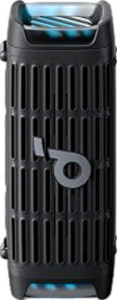
Anker Soundcore Boom 3i
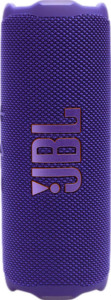
JBL Flip 7

Anker Soundcore Boom 3i JBL Flip 7

Overview

Welcome to our in-depth comparison of the Anker Soundcore Boom 3i and the JBL Flip 7 — two portable Bluetooth speakers that share a surprising amount of common ground while diverging in meaningful ways. Both carry an IP68 waterproof rating and deliver 16 hours of battery life, but when it comes to size, audio output power, and connectivity features, these two take notably different paths worth exploring before you decide.

Common Features

  • Both products have an IP68 ingress protection rating.
  • Both products feature 2 drivers.
  • Neither product uses a neodymium magnet.
  • Both products have a control panel placed on the device.
  • Both products are waterproof.
  • Neither product includes a travel bag.
  • Neither product has a touch screen.
  • Neither product features RGB lighting.
  • Neither product has stereo speakers.
  • Both products have a battery life of 16 hours.
  • Both products have a battery level indicator.
  • Both products have a rechargeable battery.
  • Neither product has a removable battery.
  • Neither product supports wireless charging.
  • Neither product supports Bluetooth pairing using NFC.
  • Neither product has a 3.5 mm audio jack socket or AUX input.
  • Neither product supports aptX, aptX HD, aptX Adaptive, aptX Lossless, or LDAC.
  • Both products can be used wirelessly and support a remote smartphone.
  • Neither product has fast pairing or voice commands.
  • Both products feature voice prompts, and neither has a radio, mute function, or power bank capability.

Main Differences

  • Volume is 1401.225 cm³ on Anker Soundcore Boom 3i and 906.888125 cm³ on JBL Flip 7.
  • Weight data is unavailable for Anker Soundcore Boom 3i, while JBL Flip 7 weighs 560 g.
  • Waterproof depth rating is 1 m on Anker Soundcore Boom 3i and 1.5 m on JBL Flip 7.
  • Height is 210 mm on Anker Soundcore Boom 3i and 182.5 mm on JBL Flip 7.
  • Width is 85 mm on Anker Soundcore Boom 3i and 71.5 mm on JBL Flip 7.
  • Thickness is 78.5 mm on Anker Soundcore Boom 3i and 69.5 mm on JBL Flip 7.
  • A subwoofer is present on JBL Flip 7 but not available on Anker Soundcore Boom 3i.
  • Audio output power is 2 x 25W on Anker Soundcore Boom 3i and 2 x 17.5W on JBL Flip 7.
  • Auracast support is present on JBL Flip 7 but not available on Anker Soundcore Boom 3i.
  • Anker Soundcore Boom 3i has 2 USB ports, while JBL Flip 7 has 1 USB port.
Specs Comparison
Anker Soundcore Boom 3i

Anker Soundcore Boom 3i

JBL Flip 7

JBL Flip 7

Design:
Ingress Protection (IP) rating IP68 IP68
volume 1401.225 cm³ 906.888125 cm³
drivers count 2 2
has a neodymium magnet
control panel placed on a device
water resistance Waterproof Waterproof
travel bag is included
has a touch screen
has RGB lighting
has a detachable cable
is a neckband speaker
has a remote control
weight 0 g 560 g
waterproof depth rating 1 m 1.5 m
height 210 mm 182.5 mm
width 85 mm 71.5 mm
thickness 78.5 mm 69.5 mm

Both the Anker Soundcore Boom 3i and the JBL Flip 7 share a strong baseline of design features: an IP68 waterproof rating, a physical control panel on the device, a detachable cable, and two drivers each. Neither includes a travel bag, remote control, touch screen, or RGB lighting, so on those fronts they are evenly matched.

Where they diverge meaningfully is in size and waterproofing depth. The Boom 3i is a noticeably bulkier unit — 210 × 85 × 78.5 mm and roughly 1,401 cm³ in volume — compared to the Flip 7's more compact 182.5 × 71.5 × 69.5 mm frame and 907 cm³ footprint. That extra volume on the Boom 3i suggests it is designed to house a larger acoustic chamber or battery, which can translate to bigger sound output or longer runtimes, but it comes at the cost of portability. The Flip 7, at 560 g and a slimmer profile, is the easier speaker to toss in a bag or hold in one hand.

On water resistance, both carry IP68 certification, but the Flip 7 edges ahead with a rated submersion depth of 1.5 m versus the Boom 3i's 1 m — a practical advantage for poolside or kayaking use where accidental deeper submersion is a real risk. Overall, the JBL Flip 7 holds a design edge for users who prioritize portability and slightly stronger water protection, while the Boom 3i suits those who prefer a larger, more presence-commanding form factor.

Sound quality:
has stereo speakers
has a subwoofer
audio output power 2 x 25W 2 x 17.5W

The core trade-off between these two speakers comes down to raw wattage versus low-end hardware. The Boom 3i delivers a combined 50W of output power (2 × 25W), giving it a meaningful loudness advantage over the Flip 7's 35W total (2 × 17.5W). In practical terms, that gap matters most in open outdoor settings where volume ceiling and projection are the deciding factors — the Boom 3i can simply push more air and fill larger spaces more comfortably.

However, the Flip 7 counters with a dedicated subwoofer, a hardware feature the Boom 3i entirely lacks. A subwoofer is not just a spec checkbox — it is a physically separate driver tuned specifically to reproduce low frequencies, which tends to produce tighter, more defined bass rather than relying solely on the full-range drivers to handle the entire spectrum. For genres like hip-hop, electronic, or anything bass-forward, this architectural difference can result in a more textured low end on the Flip 7 despite its lower total wattage.

Neither speaker offers stereo output, so spatial imaging is off the table for both. The edge here depends on listening priorities: the Boom 3i wins on sheer volume capacity, making it the stronger pick for loud, open-air use, while the Flip 7 holds a structural advantage in bass reproduction thanks to its subwoofer — a meaningful differentiator for users who value low-frequency depth over maximum loudness.

Power:
Battery life 16 hours 16 hours
has a battery level indicator
has a rechargeable battery
has a removable battery
has wireless charging

On paper, the power specifications for these two speakers are identical across every measured dimension. Both offer 16 hours of rated battery life, a built-in battery level indicator, a non-removable rechargeable battery, and no wireless charging support. When two competing products land on exactly the same numbers, the specs alone offer no basis for differentiation — this category is a true tie.

The 16-hour runtime is a practically useful figure for either speaker: it comfortably covers a full day of outdoor use, a beach trip, or an extended gathering without needing a recharge. The battery level indicator is a small but appreciated feature on both, preventing unexpected shutdowns by giving the user a heads-up before the battery runs dry. The absence of wireless charging on both means users are tethered to a cable when topping up — a minor inconvenience that is equally shared.

Since no spec in this group separates the two products, power is a draw. Buyers who were hoping battery life or charging features would tip the scales will need to look to other spec groups — design, sound quality, or connectivity — to make their decision.

Connectivity:
supports Bluetooth pairing using NFC
has a socket for a 3.5 mm audio jack
has an AUX input
has aptX Lossless
has LDAC
has aptX Adaptive
has aptX HD
has aptX
has aptX Low Latency
has AAC
has AirPlay
has Chromecast built-in
has Auracast
has Bluetooth LE Audio
maximum Bluetooth range 10 m 10 m
supports Wi-Fi
USB ports 2 1
Has USB Type-C
has a 3.5mm male connector
has an external memory slot
is DLNA-certified
supports Ethernet
has a microphone input

Connectivity is lean on both sides — no AUX input, no Wi-Fi, no advanced codecs like LDAC or aptX, and an identical 10 m Bluetooth range. For most users, the absence of a 3.5mm jack or any lossless audio codec means these speakers are firmly Bluetooth-first devices with no wired fallback. Both support USB Type-C, which at minimum serves charging duties, though the Boom 3i stands out with 2 USB ports versus the Flip 7's single port — a practical convenience if you want to charge a secondary device directly from the speaker.

The most meaningful differentiator in this category is the Flip 7's support for Auracast. This Bluetooth broadcast technology allows one audio source to stream simultaneously to multiple Auracast-compatible receivers — useful for multi-speaker setups or shared listening scenarios without the traditional pairing limitations. The Boom 3i has no equivalent capability, which is a concrete functional gap rather than a marginal spec difference.

Weighing both factors, the two products trade punches: the Boom 3i has a USB port advantage for device charging on the go, while the Flip 7 holds a more forward-looking edge with Auracast support. For users who care about multi-speaker or broadcast audio scenarios, the Flip 7 is the clear pick here; for those who simply want an extra charging port in the field, the Boom 3i has the edge.

Features:
release date May 2025 March 2025
Can be used wirelessly
supports a remote smartphone
has fast pairing
has voice commands
Has a radio
Has voice prompts
has a mute function
works as a power bank
has a sleep timer

Feature parity is absolute in this category — every single spec aligns identically between the Anker Soundcore Boom 3i and the JBL Flip 7. Both support wireless use, smartphone remote control, voice prompts, and a sleep timer, while neither offers fast pairing, voice commands, a radio, a mute function, or power bank functionality.

The shared features that carry the most practical weight are smartphone remote support and the sleep timer. Being able to control playback from a phone app extends usability beyond the physical buttons on the device, and a sleep timer is a genuinely handy quality-of-life feature for bedtime or background listening sessions where you don't want music running indefinitely. Voice prompts — audio cues for pairing status, battery level, and similar events — are a baseline convenience both devices offer equally.

With no divergence anywhere in this spec group, the features category is an unambiguous draw. Neither product offers anything the other does not, and no spec here should influence a buying decision either way.

Comparison Summary & Verdict

After examining the full specification set, both the Anker Soundcore Boom 3i and the JBL Flip 7 prove themselves as capable, waterproof portable speakers with identical battery endurance. However, their differences are telling. The Anker Soundcore Boom 3i stands out with a higher total audio output of 2 x 25W and two USB ports, making it the better pick for those who want more raw power and charging flexibility. The JBL Flip 7, on the other hand, offers a more compact and lighter build, a deeper waterproof rating of 1.5 m, a dedicated subwoofer, and Auracast support for multi-speaker connectivity — advantages that will appeal to on-the-go listeners who value portability and modern wireless features.

Anker Soundcore Boom 3i
Buy Anker Soundcore Boom 3i if...

Buy the Anker Soundcore Boom 3i if you want higher audio output power at 2 x 25W and the convenience of two USB ports for charging on the go.

JBL Flip 7
Buy JBL Flip 7 if...

Buy the JBL Flip 7 if you prioritize a more compact and lightweight design, a deeper waterproof rating of 1.5 m, built-in subwoofer performance, and Auracast multi-speaker support.