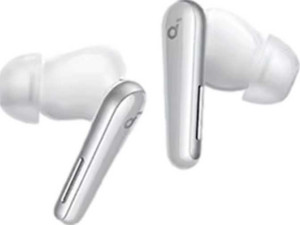
Anker Soundcore Liberty 5
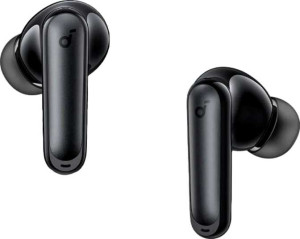
Anker Soundcore P41i

Anker Soundcore Liberty 5 Anker Soundcore P41i

Overview

Welcome to our detailed spec comparison between the Anker Soundcore Liberty 5 and the Anker Soundcore P41i. Both earbuds share a solid foundation — in-ear fit, active noise cancellation, six microphones, and fast charging — but they diverge in some compelling ways. From audio codec support and driver size to battery endurance and charging case capacity, this comparison digs into what truly sets these two earbuds apart to help you find the right fit for your listening needs.

Common Features

  • Both earbuds have an in-ear fit.
  • Both products are water resistant.
  • Neither product has wires or cables.
  • Neither product is a neckband earbud style.
  • Neither product includes wingtips.
  • Neither product has RGB lighting.
  • Both products have stereo speakers.
  • Neither product has a UV light.
  • Both products support active noise cancellation (ANC).
  • Both products have passive noise reduction.
  • The lowest frequency on both products is 20 Hz.
  • Neither product supports spatial audio.
  • Neither product has Dirac Virtuo.
  • Neither product has a neodymium magnet.
  • Neither product has a solar power battery.
  • Both products have a battery level indicator.
  • Both products have a rechargeable battery.
  • Neither product supports fast pairing.
  • Both products have USB Type-C connectivity.
  • Neither product supports LDHC, Bluetooth LE Audio, aptX Adaptive, aptX Low Latency, aptX HD, or aptX.
  • Both products have an ambient sound mode.
  • Both products support fast charging.
  • Neither product can read notifications.
  • Neither product has a built-in translator.
  • Both products have a mute function.
  • Both products can be used as a headset.
  • Both products have a control panel placed on the device.
  • Both products have voice prompts.
  • Both products have 6 microphones.
  • Both products have a noise-canceling microphone.

Main Differences

  • The Ingress Protection rating is IP55 on Anker Soundcore Liberty 5 and IPX5 on Anker Soundcore P41i.
  • A display is not present on Anker Soundcore Liberty 5 but is available on Anker Soundcore P41i.
  • The driver unit size is 9.2 mm on Anker Soundcore Liberty 5 and 11 mm on Anker Soundcore P41i.
  • The highest frequency is 40000 Hz on Anker Soundcore Liberty 5 and 20000 Hz on Anker Soundcore P41i.
  • Dolby Atmos support is present on Anker Soundcore Liberty 5 but not available on Anker Soundcore P41i.
  • Battery life is 8 hours on Anker Soundcore Liberty 5 and 12 hours on Anker Soundcore P41i.
  • Battery life of the charging case is 40 hours on Anker Soundcore Liberty 5 and 180 hours on Anker Soundcore P41i.
  • Battery life with ANC enabled is 12 hours on Anker Soundcore Liberty 5 and 10 hours on Anker Soundcore P41i.
  • Charge time is 1.5 hours on Anker Soundcore Liberty 5 and 2 hours on Anker Soundcore P41i.
  • Wireless charging is supported on Anker Soundcore Liberty 5 but not available on Anker Soundcore P41i.
  • The Bluetooth version is 5.4 on Anker Soundcore Liberty 5 and 5.3 on Anker Soundcore P41i.
  • LDAC support is present on Anker Soundcore Liberty 5 but not available on Anker Soundcore P41i.
  • AAC support is present on Anker Soundcore Liberty 5 but not available on Anker Soundcore P41i.
Specs Comparison
Anker Soundcore Liberty 5

Anker Soundcore Liberty 5

Anker Soundcore P41i

Anker Soundcore P41i

Design:
Fit In-ear In-ear
Ingress Protection (IP) rating IP55 IPX5
water resistance Water resistant Water resistant
has no wires or cables
are neckband earbuds
wingtips included
has RGB lighting
has stereo speakers
has UV light
Has a display

Both the Anker Soundcore Liberty 5 and the Anker Soundcore P41i share the same fundamental design DNA: fully wireless, in-ear earbuds with no neckband, no wingtips, no RGB lighting, and stereo playback. For users comparing these two side by side, the shared baseline means neither has an ergonomic or aesthetic edge over the other in most respects.

Where the designs diverge is in two specific areas. On water resistance, the Liberty 5 carries an IP55 rating while the P41i is rated IPX5. The difference is subtle but meaningful: the ″X″ in IPX5 means dust resistance was not tested on the P41i, whereas the Liberty 5′s IP55 rating confirms protection against dust particles as well. For gym use or outdoor environments where dust and debris are a factor, the Liberty 5 holds a practical edge. Both handle sweat and water jets equally well under the shared ″5″ water rating.

The other differentiator is that the P41i includes a display, while the Liberty 5 does not. A display — typically found on the charging case — lets users check battery levels at a glance without reaching for a phone, which is a convenience advantage for daily use. Weighing both points, the Liberty 5 wins on protection with its fuller IP rating, while the P41i offers a usability perk with its display. The Liberty 5 has a slight overall design edge for users in active or dusty environments.

Sound quality:
has active noise cancellation (ANC)
has passive noise reduction
driver unit size 9.2 mm 11 mm
lowest frequency 20 Hz 20 Hz
highest frequency 40000 Hz 20000 Hz
supports spatial audio
has Dolby Atmos
has Dirac Virtuo
has a neodymium magnet

Both earbuds share a solid noise-isolation foundation — active noise cancellation and passive noise reduction are present on both the Liberty 5 and the P41i, meaning neither has an inherent edge in blocking out ambient sound at the feature level. The real differentiation emerges when looking at driver size and frequency response. The P41i uses a larger 11 mm driver versus the Liberty 5′s 9.2 mm unit; larger drivers generally move more air, which can translate to fuller bass and a more physical low-end presence, though driver size alone does not guarantee superior sound.

The frequency response tells a more decisive story. Both start at 20 Hz at the low end, matching the threshold of human hearing. However, the Liberty 5 extends all the way to 40,000 Hz, double the P41i′s ceiling of 20,000 Hz. While human hearing typically tops out around 20 kHz, the extended high-frequency range of the Liberty 5 is relevant for high-resolution audio formats, where harmonics and overtones above 20 kHz can subtly influence perceived audio richness and detail — a benefit for listeners using Hi-Res audio sources.

Adding further weight to the Liberty 5′s audio profile is its support for Dolby Atmos, which the P41i lacks entirely. Dolby Atmos delivers a more immersive, spatially layered sound experience — particularly noticeable in movies and select music. Taken together, the Liberty 5 holds a clear sound quality edge: its wider frequency range and Dolby Atmos support make it the stronger choice for listeners who prioritize audio fidelity and immersive content.

Power:
Battery life 8 hours 12 hours
Battery life of charging case 40 hours 180 hours
Battery life (ANC) 12 hours 10 hours
charge time 1.5 hours 2 hours
has wireless charging
Has a solar power battery
has a battery level indicator
has a rechargeable battery

The most striking figure in this category is the P41i′s charging case capacity of 180 hours — more than four times the Liberty 5′s 40 hours. For travelers, commuters, or anyone who goes days without access to an outlet, this is a transformative difference in practice. The P41i essentially becomes a set-and-forget earbuds for extended trips, while the Liberty 5′s case, though respectable, requires significantly more frequent top-ups.

Earbud-level battery tells a more nuanced story. The P41i lasts 12 hours per charge in standard use versus the Liberty 5′s 8 hours — a meaningful gap for long listening sessions. However, with ANC enabled, the results flip: the Liberty 5 actually extends to 12 hours while the P41i drops to 10 hours. This suggests the Liberty 5′s ANC implementation is unusually power-efficient relative to its baseline mode, making it the stronger pick specifically for users who run ANC continuously.

Two additional factors break in the Liberty 5′s favor: it supports wireless charging — a convenience the P41i entirely lacks — and it charges faster at 1.5 hours versus the P41i′s 2 hours. Overall, the P41i dominates on raw stamina and total reserve power, making it the clear winner for infrequent-charger scenarios. The Liberty 5 counters with wireless charging convenience and better ANC endurance, but cannot match the P41i′s sheer longevity.

Connectivity:
has fast pairing
Has USB Type-C
Bluetooth version 5.4 5.3
has LDAC
has LDHC
has Bluetooth LE Audio
has aptX Adaptive
has aptX Low Latency
has aptX HD
has aptX
has aptX Lossless
has aptX Voice
has Auracast
maximum Bluetooth range 10 m 10 m
supports Bluetooth pairing using NFC
Can be used wirelessly
has AAC

On the surface, the Liberty 5 and P41i share a nearly identical connectivity profile — same 10 m Bluetooth range, USB-C charging, no NFC or fast pairing, and no support for aptX variants or LE Audio. The practical distinction comes down to two specs: Bluetooth version and audio codec support. The Liberty 5 runs Bluetooth 5.4 versus the P41i′s 5.3, a generational step that brings incremental improvements in connection stability and energy efficiency, though the real-world impact in day-to-day use is modest.

The more impactful differentiator is codec support. The Liberty 5 supports both LDAC and AAC, while the P41i supports neither. LDAC is Sony′s high-resolution wireless codec, capable of transmitting up to three times the data of standard Bluetooth audio — a meaningful advantage for listeners streaming lossless or hi-res audio on compatible Android devices. AAC, meanwhile, is the preferred codec for Apple devices, ensuring efficient, higher-quality transmission on iPhones. The P41i is limited to the standard SBC codec by default, which compresses audio more aggressively.

The Liberty 5 holds a clear and significant edge in connectivity. Its dual-codec advantage with LDAC and AAC makes it the more versatile choice across both Android and iOS ecosystems, and it pairs naturally with the wider frequency range and Dolby Atmos support noted in the sound quality comparison. For users who care about wireless audio fidelity, the Liberty 5 is the decisive winner here.
Features:
release date July 2025 May 2025
has ambient sound mode
Supports fast charging
can read notifications
Has a built-in translator
has a mute function
can be used as a headset
control panel placed on a device
Has voice prompts
travel bag is included
Has an in-line control panel
Has a temperature sensor
Has a built-in camera remote control function

Across every feature spec in this category, the Anker Soundcore Liberty 5 and the Anker Soundcore P41i are a perfect match. Both offer ambient sound mode, fast charging, on-device controls, voice prompts, a mute function, headset capability, and even a travel bag included in the box. There is not a single differentiating data point between them here.

The shared feature set is notably practical: ambient sound mode allows users to let in environmental audio without removing the earbuds — useful in traffic or public settings — while on-device control panels eliminate the need to reach for a phone for basic functions. Fast charging support on both means short top-up windows translate to usable listening time quickly. The included travel bag is a small but appreciated addition that neither product skips.

This group is a dead tie. Choosing between the Liberty 5 and the P41i on features alone is impossible — the spec data provides no basis for preferring one over the other. Users should look to the other specification groups, particularly sound quality, connectivity, and power, where meaningful differences do exist, to inform their decision.

Microphone:
number of microphones 6 6
has a noise-canceling microphone

Microphone hardware is identical across both earbuds: the Liberty 5 and the P41i each deploy 6 microphones paired with noise-canceling capability. A six-mic array is a strong specification at this product tier — more microphones allow for better beamforming, where the earbuds can more precisely isolate the user′s voice and suppress surrounding noise during calls. Both products are well-equipped for voice calls in noisy environments like streets or open offices.

With no differentiating data points between the two, this category is a complete tie. Call quality potential, at least as defined by microphone count and noise-canceling support, is equivalent on paper. Users prioritizing call performance have no reason to favor one over the other based on the available specs alone.

Comparison Summary & Verdict

After reviewing all the specifications, both earbuds serve distinct listener profiles. The Anker Soundcore Liberty 5 stands out for audiophiles and connectivity-focused users, thanks to its LDAC and AAC codec support, Dolby Atmos compatibility, extended high-frequency range up to 40000 Hz, and the convenience of wireless charging. It also edges ahead with Bluetooth 5.4 and a slightly better ANC battery life of 12 hours. On the other hand, the Anker Soundcore P41i is the endurance champion, offering a remarkable 180-hour charging case and 12 hours of standard playback, making it ideal for frequent travelers or users who charge infrequently. Its larger 11 mm driver and built-in display add extra appeal for those who value tactile feedback and a fuller sound. Choose the Liberty 5 for premium audio features; choose the P41i for maximum battery longevity.

Anker Soundcore Liberty 5
Buy Anker Soundcore Liberty 5 if...

Buy the Anker Soundcore Liberty 5 if you prioritize premium audio codec support (LDAC and AAC), Dolby Atmos, wireless charging, and a wider frequency range for a richer listening experience.

Anker Soundcore P41i
Buy Anker Soundcore P41i if...

Buy the Anker Soundcore P41i if long-lasting battery life is your top priority, as its 12-hour playback and exceptional 180-hour charging case make it perfect for extended use with minimal recharging.