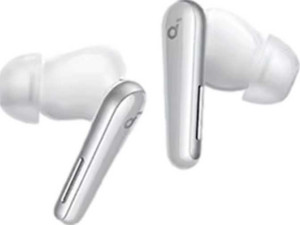
Anker Soundcore Liberty 5
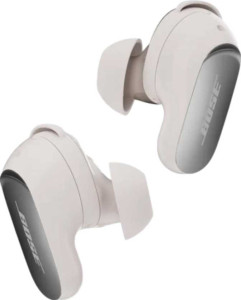
Bose QuietComfort Ultra Earbuds (2nd Gen)

Anker Soundcore Liberty 5 Bose QuietComfort Ultra Earbuds (2nd Gen)

Overview

Choosing between two premium wireless earbuds is never easy, especially when both offer compelling features. In this head-to-head comparison, we put the Anker Soundcore Liberty 5 and the Bose QuietComfort Ultra Earbuds (2nd Gen) to the test across the specs that matter most: battery endurance, audio performance, connectivity standards, and everyday usability. Whether you are chasing the longest listening sessions possible or looking for the most refined call quality, this breakdown will help you find the right fit for your needs.

Common Features

  • Both products have an in-ear fit.
  • Neither product uses wires or cables.
  • Neither product is a neckband earbud style.
  • Neither product includes wingtips.
  • Neither product has RGB lighting.
  • Both products feature stereo speakers.
  • Neither product has a UV light.
  • Neither product has a display.
  • Both products have active noise cancellation (ANC).
  • Both products have passive noise reduction.
  • Both products share a lowest frequency of 20 Hz.
  • Neither product supports spatial audio.
  • Neither product has Dirac Virtuo.
  • Neither product uses a neodymium magnet.
  • Both products support wireless charging.
  • Neither product has a solar power battery.
  • Both products have a battery level indicator.
  • Both products have a rechargeable battery.
  • Neither product supports fast pairing.
  • Both products have USB Type-C connectivity.
  • Neither product supports LDHC.
  • Neither product supports Bluetooth LE Audio.
  • Neither product supports aptX Low Latency.
  • Neither product supports aptX HD.
  • Neither product supports aptX.
  • Neither product supports aptX Lossless.
  • Both products have an ambient sound mode.
  • Both products support fast charging.
  • Both products support multipoint connection with 2 devices.
  • Neither product can read notifications.
  • Neither product has a built-in translator.
  • Both products have a mute function.
  • Both products can be used as a headset.
  • Both products have a control panel placed on the device.
  • Both products have a noise-canceling microphone.

Main Differences

  • The IP rating is IP55 on Anker Soundcore Liberty 5 and IPX4 on Bose QuietComfort Ultra Earbuds (2nd Gen).
  • The Anker Soundcore Liberty 5 is water resistant, while the Bose QuietComfort Ultra Earbuds (2nd Gen) is sweat resistant.
  • Weight is 10 g on Anker Soundcore Liberty 5 and 15.4 g on Bose QuietComfort Ultra Earbuds (2nd Gen).
  • Driver unit size is 9.2 mm on Anker Soundcore Liberty 5 and 9.3 mm on Bose QuietComfort Ultra Earbuds (2nd Gen).
  • Highest frequency is 40000 Hz on Anker Soundcore Liberty 5 and 20000 Hz on Bose QuietComfort Ultra Earbuds (2nd Gen).
  • Dolby Atmos support is present on Anker Soundcore Liberty 5 but not available on Bose QuietComfort Ultra Earbuds (2nd Gen).
  • Battery life is 8 hours on Anker Soundcore Liberty 5 and 6 hours on Bose QuietComfort Ultra Earbuds (2nd Gen).
  • Battery life of the charging case is 40 hours on Anker Soundcore Liberty 5 and 18 hours on Bose QuietComfort Ultra Earbuds (2nd Gen).
  • Charge time is 1.5 hours on Anker Soundcore Liberty 5 and 1 hour on Bose QuietComfort Ultra Earbuds (2nd Gen).
  • Bluetooth version is 5.4 on Anker Soundcore Liberty 5 and 5.3 on Bose QuietComfort Ultra Earbuds (2nd Gen).
  • LDAC support is present on Anker Soundcore Liberty 5 but not available on Bose QuietComfort Ultra Earbuds (2nd Gen).
  • aptX Adaptive support is present on Bose QuietComfort Ultra Earbuds (2nd Gen) but not available on Anker Soundcore Liberty 5.
  • The number of microphones is 6 on Anker Soundcore Liberty 5 and 8 on Bose QuietComfort Ultra Earbuds (2nd Gen).
Specs Comparison
Anker Soundcore Liberty 5

Anker Soundcore Liberty 5

Bose QuietComfort Ultra Earbuds (2nd Gen)

Bose QuietComfort Ultra Earbuds (2nd Gen)

Design:
Fit In-ear In-ear
Ingress Protection (IP) rating IP55 IPX4
water resistance Water resistant Sweat resistant
weight 10 g 15.4 g
has no wires or cables
are neckband earbuds
wingtips included
has RGB lighting
has stereo speakers
has UV light
Has a display

Both the Anker Soundcore Liberty 5 and the Bose QuietComfort Ultra Earbuds (2nd Gen) share the same fundamental design DNA: true wireless, in-ear fit with no neckband, no wingtips, and no gimmicks like RGB lighting or a display. For users, this means a clean, conventional earbud form factor from both options.

Where the designs meaningfully diverge is in weight and ingress protection. At 10 g, the Liberty 5 is notably lighter than the Bose at 15.4 g — a 54% difference that can translate to reduced ear fatigue during extended listening sessions. On protection, the Liberty 5 carries an IP55 rating, meaning it is tested against both dust ingress and water jets, making it a more versatile companion for outdoor and gym use. The Bose holds an IPX4 rating, which covers only sweat and light water splashes with no dust resistance — adequate for workouts, but a step behind in real-world ruggedness.

The Anker Soundcore Liberty 5 holds a clear design edge here. Its lower weight and higher ingress protection rating offer a practical advantage for active users, while the Bose's heavier build and sweat-only resistance put it at a disadvantage in this specific category.

Sound quality:
has active noise cancellation (ANC)
has passive noise reduction
driver unit size 9.2 mm 9.3 mm
lowest frequency 20 Hz 20 Hz
highest frequency 40000 Hz 20000 Hz
supports spatial audio
has Dolby Atmos
has Dirac Virtuo
has a neodymium magnet

At the core of the sound quality comparison, both earbuds are closely matched in driver hardware — nearly identical 9.2 mm vs 9.3 mm dynamic drivers — and both offer active noise cancellation alongside passive noise reduction. For everyday listening, this hardware parity suggests a similar foundation for audio reproduction.

The most consequential differentiator is frequency range. The Anker Soundcore Liberty 5 extends up to 40,000 Hz, twice the 20,000 Hz ceiling of the Bose QuietComfort Ultra Earbuds (2nd Gen). While human hearing tops out around 20 kHz, the extended high-frequency range can benefit listeners using high-resolution audio formats, where ultrasonic content may influence perceived clarity and airiness through psychoacoustic effects. Adding to this, the Liberty 5 includes Dolby Atmos support — an object-based audio format that enhances the sense of soundstage depth and dimension, particularly for compatible content — a feature absent on the Bose.

On paper, the Anker Soundcore Liberty 5 holds the edge in this category. Its broader frequency response and Dolby Atmos support give it more technical headroom for high-resolution and immersive audio content, while the Bose offers a more conventional but still competitive audio specification.

Power:
Battery life 8 hours 6 hours
Battery life of charging case 40 hours 18 hours
charge time 1.5 hours 1 hours
has wireless charging
Has a solar power battery
has a battery level indicator
has a rechargeable battery

Battery endurance is where the gap between these two earbuds becomes particularly practical. The Anker Soundcore Liberty 5 delivers 8 hours of earbud playback versus 6 hours on the Bose QuietComfort Ultra Earbuds (2nd Gen) — a meaningful difference for long-haul travelers or all-day listeners who cannot easily reach a charger. The total system endurance gap is even wider: the Liberty 5's case extends the total to 40 hours, more than double the Bose's 18 hours. In real-world terms, the Bose user would need to recharge the case roughly twice for every one recharge the Liberty 5 user requires.

The one area where the Bose edges ahead is charge time — reaching full charge in 1 hour compared to 1.5 hours for the Liberty 5. For users who top up frequently and in short windows, this faster turnaround has genuine convenience value. Both earbuds support wireless charging and include a battery level indicator, so neither holds an advantage on those fronts.

Overall, the Anker Soundcore Liberty 5 wins the power category decisively. Its longer per-charge playback and dramatically larger case reserve make it the stronger choice for users who prioritize going longer between charges, with the Bose's faster charge speed being the only meaningful counterpoint.

Connectivity:
has fast pairing
Has USB Type-C
Bluetooth version 5.4 5.3
has LDAC
has LDHC
has Bluetooth LE Audio
has aptX Adaptive
has aptX Low Latency
has aptX HD
has aptX
has aptX Lossless
has aptX Voice
has Auracast
maximum Bluetooth range 10 m 10 m
supports Bluetooth pairing using NFC
Can be used wirelessly
has AAC

Shared ground is easy to find here — identical 10 m Bluetooth range, USB-C charging, AAC support, and no NFC pairing on either side. The meaningful action is in the codec and Bluetooth version differences, which directly affect audio quality for users with compatible source devices.

The codec split is the defining story of this category. The Anker Soundcore Liberty 5 supports LDAC, Sony's high-resolution wireless codec capable of transmitting up to 990 kbps — a significant advantage for Android users with LDAC-compatible devices seeking near-lossless wireless audio. The Bose QuietComfort Ultra Earbuds (2nd Gen) instead offer aptX Adaptive, Qualcomm's rival high-quality codec that dynamically adjusts bitrate and also targets high-resolution transmission, benefiting users in the Qualcomm-equipped Android ecosystem. Neither codec is universally superior; the real-world winner depends entirely on what the user's source device supports. The Liberty 5 also runs on the slightly newer Bluetooth 5.4 versus the Bose's 5.3, which can bring marginal improvements in connection efficiency, though the practical difference at this version gap is minimal for most users.

This category is essentially a tie shaped by ecosystem. LDAC and aptX Adaptive are comparable in ambition, and the advantage of each codec only materializes if the user's phone or device supports it. Neither product holds an absolute edge — the right choice depends on the listener's existing hardware.

Features:
release date July 2025 August 2025
has ambient sound mode
Supports fast charging
multipoint count 2 2
can read notifications
Has a built-in translator
has a mute function
can be used as a headset
control panel placed on a device
Has voice prompts
travel bag is included
Has an in-line control panel
Has a temperature sensor
Has a built-in camera remote control function

Rarely does a spec group tell such a clear story: across every single feature listed, the Anker Soundcore Liberty 5 and the Bose QuietComfort Ultra Earbuds (2nd Gen) are in complete lockstep. Both offer ambient sound mode, fast charging, on-device touch controls, voice prompts, a mute function, headset capability, and even a travel bag included in the box.

Worth highlighting as a shared strength is multipoint connectivity — both earbuds support simultaneous pairing with 2 devices, a practical feature for users who switch between a laptop and a phone throughout the day without manually re-pairing. Fast charging is another shared win, reducing downtime for both options equally. The inclusion of a travel bag on both also signals a comparable out-of-box experience for users who prioritize portability and protection.

This category is an unambiguous tie. There is not a single feature differentiator between these two products in the provided data — a user choosing between them based solely on features would have no reason to favor one over the other.

Microphone:
number of microphones 6 8
has a noise-canceling microphone

The microphone category is lean on data but not without a clear takeaway. Both earbuds feature noise-canceling microphones, meaning both are engineered to suppress background noise during calls — a baseline expectation for premium true wireless earbuds. The differentiator is microphone count: 6 mics on the Anker Soundcore Liberty 5 versus 8 mics on the Bose QuietComfort Ultra Earbuds (2nd Gen).

More microphones generally allow for more sophisticated beamforming and noise isolation algorithms — the array gives the signal processing more reference points to distinguish the user's voice from ambient sound. In practice, a higher mic count can translate to cleaner call quality in noisy environments like busy streets or open offices, where isolating the speaker's voice is most challenging.

Based strictly on the provided specs, the Bose QuietComfort Ultra Earbuds (2nd Gen) hold the edge here. Its 8-microphone array gives it a structural advantage in call quality potential over the Liberty 5's 6-mic setup, making it the stronger candidate for users who frequently take calls in demanding acoustic environments.

Comparison Summary & Verdict

After examining every available specification, both earbuds prove to be strong contenders in the premium wireless segment, but each shines in a different area. The Anker Soundcore Liberty 5 stands out with its superior battery life of 8 hours plus a 40-hour charging case, a higher 40000 Hz frequency ceiling, Dolby Atmos support, LDAC for high-resolution audio streaming, a lighter 10 g build, and a more robust IP55 water resistance rating. The Bose QuietComfort Ultra Earbuds (2nd Gen), on the other hand, counters with a faster 1-hour charge time, aptX Adaptive connectivity, a greater 8-microphone array for call clarity, and a slightly larger driver. If long battery life, Dolby Atmos, and LDAC support are your priorities, the Anker is the smarter pick. If you value faster charging, superior microphone count, and aptX Adaptive, the Bose earns its place.

Anker Soundcore Liberty 5
Buy Anker Soundcore Liberty 5 if...

Buy the Anker Soundcore Liberty 5 if you want longer battery life, Dolby Atmos and LDAC support, a lighter and more water-resistant design, and an extended frequency range for high-fidelity audio.

Bose QuietComfort Ultra Earbuds (2nd Gen)
Buy Bose QuietComfort Ultra Earbuds (2nd Gen) if...

Buy the Bose QuietComfort Ultra Earbuds (2nd Gen) if you prioritize faster charging, aptX Adaptive connectivity, and a larger microphone array for clearer calls and voice performance.