Anker Soundcore Liberty 5
Huawei FreeBuds 7i

Anker Soundcore Liberty 5 Huawei FreeBuds 7i

Overview

Welcome to our in-depth spec comparison between the Anker Soundcore Liberty 5 and the Huawei FreeBuds 7i. Both earbuds share a strong common foundation — including ANC, LDAC support, and a 6-microphone setup — yet they diverge in meaningful ways across audio performance, battery endurance, and charging convenience. Read on to discover which of these two competitors best matches your listening needs.

Common Features

  • Both products use an in-ear fit.
  • Neither product has wires or cables.
  • Neither product is a neckband earbud design.
  • Neither product includes wingtips.
  • Neither product features RGB lighting.
  • Both products have stereo speakers.
  • Neither product has a UV light.
  • Neither product has a display.
  • Both products support active noise cancellation (ANC).
  • Both products provide passive noise reduction.
  • Both products share a lowest frequency of 20 Hz.
  • Neither product uses a neodymium magnet.
  • Neither product supports Dirac Virtuo.
  • Both products offer a battery life of 8 hours.
  • Both products have a charge time of 1.5 hours.
  • Neither product has a solar power battery.
  • Both products include a battery level indicator.
  • Both products have a rechargeable battery.
  • Both products use USB Type-C for charging.
  • Both products support Bluetooth version 5.4.
  • Both products support LDAC audio codec.
  • Neither product supports LDHC.
  • Neither product supports Bluetooth LE Audio.
  • Neither product supports aptX Adaptive.
  • Neither product supports aptX Low Latency.
  • Neither product supports fast pairing.
  • Both products feature an ambient sound mode.
  • Both products include in/on-ear detection.
  • Both products support fast charging.
  • Neither product can read notifications.
  • Neither product has a built-in translator.
  • Both products have a mute function.
  • Both products can be used as a headset.
  • Both products have a control panel placed on the device.
  • Both products are equipped with 6 microphones.
  • Both products feature a noise-canceling microphone.

Main Differences

  • The Ingress Protection rating is IP55 on Anker Soundcore Liberty 5 and IP54 on Huawei FreeBuds 7i.
  • The Anker Soundcore Liberty 5 is water resistant, while the Huawei FreeBuds 7i is sweat resistant.
  • The weight is 10 g on Anker Soundcore Liberty 5 and 10.8 g on Huawei FreeBuds 7i.
  • The driver unit size is 9.2 mm on Anker Soundcore Liberty 5 and 11 mm on Huawei FreeBuds 7i.
  • The highest frequency is 40000 Hz on Anker Soundcore Liberty 5 and 20000 Hz on Huawei FreeBuds 7i.
  • Spatial audio support is present on Huawei FreeBuds 7i but not available on Anker Soundcore Liberty 5.
  • Dolby Atmos support is present on Anker Soundcore Liberty 5 but not available on Huawei FreeBuds 7i.
  • The battery life of the charging case is 40 hours on Anker Soundcore Liberty 5 and 27 hours on Huawei FreeBuds 7i.
  • Wireless charging is supported on Anker Soundcore Liberty 5 but not available on Huawei FreeBuds 7i.
Specs Comparison
Anker Soundcore Liberty 5

Anker Soundcore Liberty 5

Huawei FreeBuds 7i

Huawei FreeBuds 7i

Design:
Fit In-ear In-ear
Ingress Protection (IP) rating IP55 IP54
water resistance Water resistant Sweat resistant
weight 10 g 10.8 g
has no wires or cables
are neckband earbuds
wingtips included
has RGB lighting
has stereo speakers
has UV light
Has a display

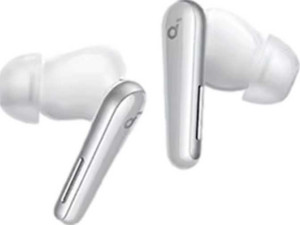
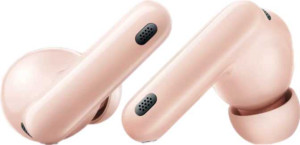
Both the Anker Soundcore Liberty 5 and the Huawei FreeBuds 7i share the same fundamental design philosophy: a wireless, in-ear form factor with no neckband, no wingtips, and no RGB lighting — making them straightforward, no-frills earbuds focused on function over flash. At a glance, they appear nearly identical on paper, but a closer look at the details reveals a meaningful gap in real-world durability.

The most significant differentiator is ingress protection. The Liberty 5 carries an IP55 rating, while the FreeBuds 7i is rated IP54. The first digit refers to dust resistance — a ″5″ on both means neither is fully dustproof, but both offer meaningful protection against dust ingress. The second digit, however, tells the real story: the Liberty 5's ″5″ means it can withstand water jets from any direction, whereas the FreeBuds 7i's ″4″ only guarantees protection against splashing water. In practice, the Liberty 5 is rated as fully water resistant, while the FreeBuds 7i is only classified as sweat resistant — a notable distinction for users who plan to use them during intense workouts, in rain, or in humid environments.

On weight, the Liberty 5 comes in at 10 g versus the FreeBuds 7i's 10.8 g — a negligible 0.8 g difference that will be imperceptible during normal use. Overall, the Anker Soundcore Liberty 5 holds a clear design-category edge, primarily due to its superior IP55 water resistance rating, which offers a broader safety margin for active and outdoor use cases.
Sound quality:
has active noise cancellation (ANC)
has passive noise reduction
driver unit size 9.2 mm 11 mm
lowest frequency 20 Hz 20 Hz
highest frequency 40000 Hz 20000 Hz
supports spatial audio
has Dolby Atmos
has Dirac Virtuo
has a neodymium magnet

Both earbuds cover the same bass floor at 20 Hz and share active plus passive noise cancellation — a solid foundation for blocking out ambient noise through both electronic processing and physical ear seal. Where they diverge meaningfully is in driver size and frequency ceiling. The FreeBuds 7i uses a larger 11 mm driver compared to the Liberty 5's 9.2 mm unit; larger drivers generally move more air and can deliver fuller low-end response, though driver size alone does not guarantee superior sound without knowing tuning and implementation quality.

The frequency range tells a more clear-cut story. The Liberty 5 extends all the way up to 40,000 Hz, well beyond the standard limit of human hearing, while the FreeBuds 7i tops out at 20,000 Hz — the conventional upper boundary of audible sound. In practice, the wider high-frequency headroom of the Liberty 5 can benefit high-resolution audio formats and may contribute to a more detailed, airy top-end reproduction, particularly on compatible sources. The FreeBuds 7i's range, by contrast, is perfectly adequate for standard listening but leaves no overhead for hi-res content.

On the audio processing side, the two products take opposite paths: the Liberty 5 includes Dolby Atmos support, while the FreeBuds 7i offers spatial audio. Dolby Atmos is a widely adopted, content-dependent immersive format, whereas spatial audio as listed here is a broader feature that can enhance stereo width across various content types. Neither product edges out the other decisively on this front, as both cater to different use cases. Overall, the Anker Soundcore Liberty 5 holds a technical advantage in this group, primarily due to its substantially wider 40,000 Hz frequency range, making it the stronger choice for users who prioritize high-resolution audio fidelity.

Power:
Battery life 8 hours 8 hours
Battery life of charging case 40 hours 27 hours
charge time 1.5 hours 1.5 hours
has wireless charging
Has a solar power battery
has a battery level indicator
has a rechargeable battery

Per-earbud battery life is identical at 8 hours for both, and both charge in the same 1.5 hours — so on a day-to-day basis, users of either product will have a practically equivalent experience. The real separation emerges when you factor in the charging case. The Liberty 5's case extends total playback to 40 hours, versus 27 hours for the FreeBuds 7i — a 48% larger reserve that translates to roughly three to four additional full earbud charges before the case itself needs topping up. For frequent travelers or users who go several days between charges, that gap is genuinely consequential.

The other key differentiator is charging method. The Liberty 5 supports wireless charging, while the FreeBuds 7i does not. Wireless charging is a quality-of-life feature that becomes particularly valuable over time — simply dropping the case on a Qi pad rather than locating a cable reduces friction in daily routines and future-proofs the product as wireless charging infrastructure becomes more ubiquitous.

The Anker Soundcore Liberty 5 holds a clear advantage in this category. Between its significantly larger combined battery reserve and wireless charging support, it offers meaningfully more flexibility for users who prioritize longevity and convenience between charges.

Connectivity:
has fast pairing
Has USB Type-C
Bluetooth version 5.4 5.4
has LDAC
has LDHC
has Bluetooth LE Audio
has aptX Adaptive
has aptX Low Latency
has aptX HD
has aptX
has aptX Lossless
has aptX Voice
has Auracast
maximum Bluetooth range 10 m 10 m
supports Bluetooth pairing using NFC
Can be used wirelessly
has AAC

Connectivity is the rare category where these two earbuds are in complete lockstep. Both run on Bluetooth 5.4, support LDAC and AAC as their high-quality audio codecs, cap out at a 10 m wireless range, and share USB Type-C for wired charging. Every single spec in this group is identical — there is no meaningful differentiator to analyze.

Worth noting for context: LDAC is Sony's high-resolution wireless codec capable of transmitting up to three times the data of standard Bluetooth audio, making it the standout shared feature here for audiophile-minded users. The absence of aptX variants or Bluetooth LE Audio on both devices means neither product is positioned for cutting-edge low-latency or next-generation broadcast use cases, but for the vast majority of listeners streaming from a smartphone, the shared codec set is more than sufficient.

This category is a definitive tie. Users should look to other specification groups — such as sound quality, design, or battery — to differentiate between these two products, as connectivity offers no advantage to either side.

Features:
release date July 2025 September 2025
has ambient sound mode
has in/on-ear detection
Supports fast charging
can read notifications
Has a built-in translator
has a mute function
can be used as a headset
control panel placed on a device
Has voice prompts
travel bag is included
Has an in-line control panel
Has a temperature sensor
Has a built-in camera remote control function

Much like their connectivity specs, the feature sets of these two earbuds are completely identical across every data point provided. Both offer ambient sound mode, in/on-ear detection, fast charging, a mute function, on-device controls, voice prompts, and even a travel bag in the box — a practical inclusion that not all earbuds at this tier provide.

The shared highlights are worth unpacking briefly. Ambient sound mode and in-ear detection are increasingly expected on modern earbuds, but fast charging remains a genuine convenience feature — being able to recover meaningful playtime from a short top-up is useful for users who frequently forget to charge. The inclusion of a travel bag on both is a small but appreciated sign that both products are targeting users who are on the move.

This group is another clear tie. Every feature present on one is present on the other, and every feature absent from one is absent from the other. Prospective buyers should weigh the differences identified in other categories — particularly battery capacity, water resistance, and sound specifications — when choosing between the Anker Soundcore Liberty 5 and the Huawei FreeBuds 7i.

Microphone:
number of microphones 6 6
has a noise-canceling microphone

Microphone hardware is another area where the two earbuds are evenly matched. Both deploy 6 microphones total and both feature noise-canceling microphone technology — meaning neither product holds a spec-level advantage for call quality or voice pickup.

A 6-microphone array is a competitive count for true wireless earbuds at this tier. The higher microphone count allows for more sophisticated beamforming and wind noise reduction algorithms, which generally translates to cleaner voice transmission in noisy or outdoor environments. Paired with active noise cancellation on the mic side, both earbuds are well-equipped for calls, video conferencing, and voice assistant use.

This category is a tie. With identical microphone counts and the same noise-canceling capability on both sides, the provided data offers no basis for preferring one over the other for voice performance. Buyers prioritizing call quality can consider both products equally competitive on this front.

Comparison Summary & Verdict

After a thorough side-by-side analysis, both the Anker Soundcore Liberty 5 and the Huawei FreeBuds 7i prove to be well-rounded wireless earbuds with a shared commitment to ANC, LDAC, and a 6-microphone array. However, their differences reveal distinct priorities. The Anker Soundcore Liberty 5 pulls ahead with a wider frequency range up to 40000 Hz, Dolby Atmos support, a longer 40-hour case battery life, and the added convenience of wireless charging — making it the stronger pick for audiophiles and power users. The Huawei FreeBuds 7i counters with a larger 11 mm driver and spatial audio support, appealing to those who prioritize an immersive, three-dimensional soundstage. Choose the Anker if endurance and audio range matter most; choose the Huawei if spatial audio is your top priority.

Anker Soundcore Liberty 5
Buy Anker Soundcore Liberty 5 if...

Buy the Anker Soundcore Liberty 5 if you want a longer-lasting charging case, wireless charging support, Dolby Atmos, and a wider frequency range for detailed audio reproduction.

Huawei FreeBuds 7i
Buy Huawei FreeBuds 7i if...

Buy the Huawei FreeBuds 7i if you prioritize spatial audio support and a larger 11 mm driver for a more immersive listening experience.