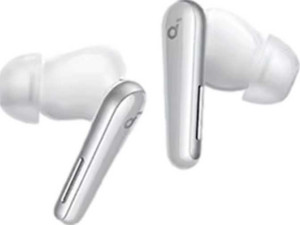
Anker Soundcore Liberty 5
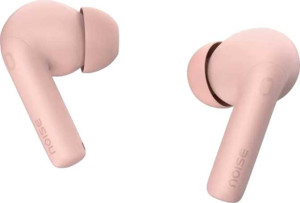
Noise Air Buds Pro 6

Anker Soundcore Liberty 5 Noise Air Buds Pro 6

Overview

Welcome to our in-depth specification comparison between the Anker Soundcore Liberty 5 and the Noise Air Buds Pro 6. Both true wireless earbuds share a solid foundation of active noise cancellation, ambient sound mode, and multipoint connectivity, but they diverge sharply when it comes to audio codec support, battery endurance, and charging flexibility. Read on to see how these two contenders stack up across every key category.

Common Features

  • Both products have an in-ear fit.
  • Both products are water resistant.
  • Neither product has wires or cables.
  • Neither product is a neckband earbud design.
  • Wingtips are not included with either product.
  • RGB lighting is not present on either product.
  • Both products have stereo speakers.
  • UV light is not available on either product.
  • Both products have active noise cancellation (ANC).
  • Both products have passive noise reduction.
  • The lowest frequency on both products is 20 Hz.
  • Spatial audio is not supported on either product.
  • Dirac Virtuo is not available on either product.
  • Neither product has a neodymium magnet.
  • Both products have a charge time of 1.5 hours.
  • Neither product has a solar power battery.
  • Both products have a battery level indicator.
  • Both products have a rechargeable battery.
  • Both products use USB Type-C charging.
  • Bluetooth LE Audio is not supported on either product.
  • aptX Adaptive is not supported on either product.
  • aptX Low Latency is not supported on either product.
  • aptX HD is not supported on either product.
  • aptX is not supported on either product.
  • aptX Lossless is not supported on either product.
  • aptX Voice is not supported on either product.
  • Both products support ambient sound mode.
  • Both products have in/on-ear detection.
  • Both products support fast charging.
  • Both products support multipoint connection with 2 devices.
  • Neither product can read notifications.
  • Both products have a mute function.
  • Both products can be used as a headset.
  • Both products have a control panel placed on the device.
  • Both products have a noise-canceling microphone.

Main Differences

  • The Ingress Protection rating is IP55 on Anker Soundcore Liberty 5 and IPX5 on Noise Air Buds Pro 6.
  • The driver unit size is 9.2 mm on Anker Soundcore Liberty 5 and 12.4 mm on Noise Air Buds Pro 6.
  • The highest frequency is 40000 Hz on Anker Soundcore Liberty 5 and 20000 Hz on Noise Air Buds Pro 6.
  • Dolby Atmos support is present on Anker Soundcore Liberty 5 but not available on Noise Air Buds Pro 6.
  • Battery life is 8 hours on Anker Soundcore Liberty 5 and 7 hours on Noise Air Buds Pro 6.
  • The battery life of the charging case is 40 hours on Anker Soundcore Liberty 5 and 36 hours on Noise Air Buds Pro 6.
  • Wireless charging is supported on Anker Soundcore Liberty 5 but not available on Noise Air Buds Pro 6.
  • Fast pairing is available on Noise Air Buds Pro 6 but not present on Anker Soundcore Liberty 5.
  • LDAC support is present on Anker Soundcore Liberty 5 but not available on Noise Air Buds Pro 6.
  • LDHC support is present on Noise Air Buds Pro 6 but not available on Anker Soundcore Liberty 5.
  • The number of microphones is 6 on Anker Soundcore Liberty 5 and 4 on Noise Air Buds Pro 6.
Specs Comparison
Anker Soundcore Liberty 5

Anker Soundcore Liberty 5

Noise Air Buds Pro 6

Noise Air Buds Pro 6

Design:
Fit In-ear In-ear
Ingress Protection (IP) rating IP55 IPX5
water resistance Water resistant Water resistant
has no wires or cables
are neckband earbuds
wingtips included
has RGB lighting
has stereo speakers
has UV light
Has a display

In terms of overall design architecture, the Anker Soundcore Liberty 5 and the Noise Air Buds Pro 6 are closely matched. Both are true wireless, in-ear earbuds with no cables, no neckband, no wingtips, and no gimmicks like RGB lighting or a display. For most users, this shared foundation means a similarly compact, everyday-carry form factor with minimal setup friction.

The one meaningful differentiator in this group is the ingress protection rating. The Liberty 5 carries an IP55 rating, while the Air Buds Pro 6 is rated IPX5. Both handle water jets equally well, but the ″X″ in IPX5 means dust resistance has not been tested or rated for the Noise buds. The Liberty 5's ″5″ dust rating, by contrast, confirms protection against low-pressure dust ingress — a relevant edge if you plan to use them in dusty environments like a gym, construction site, or outdoors on a windy day.

Overall, the Anker Soundcore Liberty 5 holds a narrow but real design advantage purely on the strength of its more complete IP55 certification. For most casual users exercising indoors or in clean environments, this distinction will rarely matter. But for anyone who regularly uses earbuds in dusty or mixed outdoor conditions, the Liberty 5's certified dust resistance makes it the more durable choice on paper.

Sound quality:
has active noise cancellation (ANC)
has passive noise reduction
driver unit size 9.2 mm 12.4 mm
lowest frequency 20 Hz 20 Hz
highest frequency 40000 Hz 20000 Hz
supports spatial audio
has Dolby Atmos
has Dirac Virtuo
has a neodymium magnet

Both the Anker Soundcore Liberty 5 and the Noise Air Buds Pro 6 share a solid noise-isolation foundation, offering both active noise cancellation and passive noise reduction. Where they diverge is in driver size and frequency range — two specs that meaningfully shape the character of the sound. The Air Buds Pro 6 uses a larger 12.4 mm driver versus the Liberty 5's 9.2 mm, which generally translates to greater low-end displacement and a fuller, bassier sound signature. However, driver size alone does not determine audio quality; tuning, materials, and acoustic chamber design all play a role.

The frequency range tells a more decisive story. The Liberty 5 extends up to 40,000 Hz, well beyond the 20,000 Hz ceiling of the Air Buds Pro 6. While human hearing typically tops out around 20 kHz, the extended range matters in one specific context: hi-res audio and codec support. Notably, the Liberty 5 also includes Dolby Atmos support, adding a spatial processing layer for compatible content — a feature entirely absent on the Air Buds Pro 6.

On sound quality specs, the Anker Soundcore Liberty 5 holds a clear edge. Its wider frequency response and Dolby Atmos support position it as the more capable option for users who prioritize audio fidelity and immersive playback. The Air Buds Pro 6's larger driver may appeal to bass-forward listeners, but without comparable high-frequency reach or any spatial audio processing, it trails on the technical merits presented here.

Power:
Battery life 8 hours 7 hours
Battery life of charging case 40 hours 36 hours
charge time 1.5 hours 1.5 hours
has wireless charging
Has a solar power battery
has a battery level indicator
has a rechargeable battery

The power story here favors the Anker Soundcore Liberty 5 across every meaningful metric. Its earbuds last 8 hours per charge versus 7 hours for the Noise Air Buds Pro 6, and the total system endurance — earbuds plus case — comes to 40 hours compared to 36 hours. Neither gap is dramatic in isolation, but together they paint a consistent picture: the Liberty 5 simply goes longer between trips to a power outlet, which matters most for frequent travelers or heavy daily users.

The more impactful differentiator is wireless charging. The Liberty 5 supports it; the Air Buds Pro 6 does not. In practical terms, this means Liberty 5 users can top up the case on any Qi pad — on a desk, in a car, or at a hotel nightstand — without hunting for a cable. Both buds share an identical 1.5-hour charge time, so wired charging speed is a wash, but the Liberty 5's added flexibility is a genuine convenience advantage for cord-averse users.

Across the board, the Anker Soundcore Liberty 5 wins this category. Longer earbud runtime, greater total battery capacity, and wireless charging support combine to make it the more capable option for users who prioritize staying untethered and uninterrupted throughout the day.

Connectivity:
has fast pairing
Has USB Type-C
has LDAC
has LDHC
has Bluetooth LE Audio
has aptX Adaptive
has aptX Low Latency
has aptX HD
has aptX
has aptX Lossless
has aptX Voice
has Auracast
maximum Bluetooth range 10 m 10 m
supports Bluetooth pairing using NFC
Can be used wirelessly
has AAC

At first glance, the connectivity profiles of these two earbuds look nearly identical — same 10 m Bluetooth range, both USB-C, both AAC-capable, and neither offering aptX in any of its variants or NFC pairing. The real divergence comes down to two codec choices and one pairing feature. The Anker Soundcore Liberty 5 supports LDAC, Sony's high-resolution audio codec capable of transmitting up to 990 kbps, and it is the dominant hi-res codec in the Android ecosystem with near-universal support on modern Android devices. The Noise Air Buds Pro 6, by contrast, supports LDHC — a competing hi-res codec with comparable bitrate potential, but significantly narrower device compatibility in practice.

The Air Buds Pro 6 does counter with fast pairing, which the Liberty 5 lacks. Fast pairing streamlines the initial Bluetooth handshake on supported devices, cutting out the manual pairing process — a small but genuinely appreciated convenience for users who frequently switch between devices or set up new ones.

Weighed together, the Anker Soundcore Liberty 5 has the connectivity edge. LDAC's widespread adoption means more users will actually be able to take advantage of its hi-res audio transmission, whereas LDHC's real-world utility is limited by how few devices natively support it. The Air Buds Pro 6's fast pairing is a useful touch, but it does not offset the Liberty 5's more practically valuable codec support.

Features:
release date July 2025 April 2025
has ambient sound mode
has in/on-ear detection
Supports fast charging
multipoint count 2 2
can read notifications
has a mute function
can be used as a headset
control panel placed on a device
Has voice prompts
travel bag is included
Has an in-line control panel
Has a temperature sensor
Has a built-in camera remote control function

This is a rare category where the data leaves no room for debate: the Anker Soundcore Liberty 5 and the Noise Air Buds Pro 6 are a perfect spec-for-spec match. Every single feature in this group — ambient sound mode, in-ear detection, fast charging, 2-device multipoint pairing, mute function, on-device controls, voice prompts, and an included travel bag — is present on both products without exception.

That said, the shared feature set is worth contextualizing. Multipoint support means both pairs can maintain simultaneous connections to two devices, making it easy to switch audio between, say, a laptop and a phone without re-pairing. In-ear detection enables automatic play/pause when an earbud is removed — a convenience feature that has become a baseline expectation in this segment. Fast charging and a bundled travel bag round out a package that covers all the practical bases a commuter or frequent traveler would care about.

With no differentiators present across any data point in this group, the result is a clean tie. Buyers cannot use features alone to separate these two products — the decision will have to rest on the distinctions found in other specification groups.

Microphone:
number of microphones 6 4
has a noise-canceling microphone

Microphone hardware is lean on data points here, but the one quantitative difference is meaningful. The Anker Soundcore Liberty 5 packs 6 microphones across both earbuds, compared to 4 microphones on the Noise Air Buds Pro 6. Both employ noise-canceling mic technology, so the baseline call quality approach is the same — but more microphones generally enable more sophisticated beamforming arrays, which allow the earbuds to better isolate the user's voice from surrounding noise by triangulating the sound source from multiple angles.

In practical terms, this matters most in challenging call environments: busy streets, open-plan offices, cafes, or windy outdoor settings. A 6-mic setup gives the Liberty 5's signal processing more raw input to work with when filtering out background interference, which can translate to cleaner voice pickup on the other end of a call. The Air Buds Pro 6's 4-mic configuration is still a capable setup for everyday calls, but it has less hardware redundancy to draw on in noisy conditions.

Based strictly on the provided specs, the Anker Soundcore Liberty 5 holds the edge in this category. The higher microphone count gives it a structural advantage for call quality in demanding environments, making it the stronger choice for users who frequently take calls on the go.

Comparison Summary & Verdict

After examining every specification, the two earbuds serve subtly different audiences. The Anker Soundcore Liberty 5 stands out with a broader 40000 Hz frequency range, Dolby Atmos support, LDAC codec, wireless charging, a higher IP55 dust-and-water rating, and six microphones — making it the stronger pick for audiophiles and power users who want premium sound fidelity and versatile charging. The Noise Air Buds Pro 6, on the other hand, offers a larger 12.4 mm driver, LDHC codec, and fast pairing, appealing to users who prioritize quick device setup and a physically bigger driver unit. Both deliver the same charge time, ANC, and multipoint support, so neither leaves casual listeners underserved.

Anker Soundcore Liberty 5
Buy Anker Soundcore Liberty 5 if...

Buy the Anker Soundcore Liberty 5 if you want superior audio range with Dolby Atmos and LDAC support, wireless charging, a higher IP55 rating, and more microphones for clearer calls.

Noise Air Buds Pro 6
Buy Noise Air Buds Pro 6 if...

Buy the Noise Air Buds Pro 6 if you prefer a larger 12.4 mm driver, LDHC codec compatibility, and the convenience of fast pairing for quicker device switching.