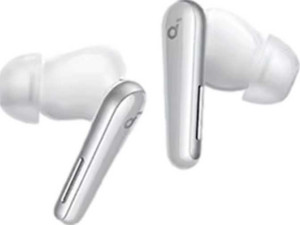
Anker Soundcore Liberty 5
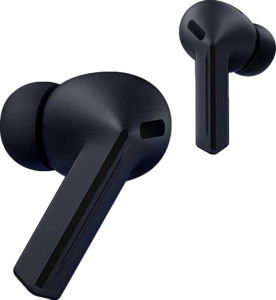
Samsung Galaxy Buds 3 FE

Anker Soundcore Liberty 5 Samsung Galaxy Buds 3 FE

Overview

When choosing between the Anker Soundcore Liberty 5 and the Samsung Galaxy Buds 3 FE, shoppers will find two capable in-ear earbuds sharing the same Bluetooth 5.4 platform, six-microphone setup, and active noise cancellation — yet diverging sharply on battery endurance, audio codec support, and a handful of smart features. This head-to-head comparison breaks down every spec to help you decide which pair truly fits your lifestyle.

Common Features

  • Both products use an in-ear fit design.
  • Both products weigh 10 g.
  • Neither product has wires or cables.
  • Neither product is a neckband earbud style.
  • Neither product includes wingtips.
  • Neither product features RGB lighting.
  • Both products have stereo speakers.
  • Neither product has a UV light.
  • Both products support active noise cancellation (ANC).
  • Both products offer passive noise reduction.
  • Both products have a lowest frequency of 20 Hz.
  • Neither product supports Dirac Virtuo.
  • Neither product uses a neodymium magnet.
  • Both products have a charge time of 1.5 hours.
  • Neither product has a solar power battery.
  • Both products have a battery level indicator.
  • Both products have a rechargeable battery.
  • Both products have a USB Type-C connector.
  • Both products use Bluetooth version 5.4.
  • Neither product supports LDHC, Bluetooth LE Audio, aptX Adaptive, aptX Low Latency, aptX HD, or aptX.
  • Both products have an ambient sound mode.
  • Both products feature in/on-ear detection.
  • Both products support fast charging.
  • Neither product can read notifications.
  • Both products have a mute function.
  • Both products can be used as a headset.
  • Both products have a control panel placed on the device.
  • Both products have voice prompts.
  • Both products have 6 microphones.
  • Both products have a noise-canceling microphone.

Main Differences

  • The Ingress Protection rating is IP55 on Anker Soundcore Liberty 5 and IP54 on Samsung Galaxy Buds 3 FE.
  • The Anker Soundcore Liberty 5 is water resistant, while the Samsung Galaxy Buds 3 FE is sweat resistant.
  • The driver unit size is 9.2 mm on Anker Soundcore Liberty 5 and 11 mm on Samsung Galaxy Buds 3 FE.
  • The highest frequency is 40000 Hz on Anker Soundcore Liberty 5 and 20000 Hz on Samsung Galaxy Buds 3 FE.
  • Spatial audio support is available on Samsung Galaxy Buds 3 FE but not on Anker Soundcore Liberty 5.
  • Dolby Atmos support is available on Anker Soundcore Liberty 5 but not on Samsung Galaxy Buds 3 FE.
  • Battery life is 8 hours on Anker Soundcore Liberty 5 and 8.5 hours on Samsung Galaxy Buds 3 FE.
  • Battery life of the charging case is 40 hours on Anker Soundcore Liberty 5 and 21.5 hours on Samsung Galaxy Buds 3 FE.
  • Battery life with ANC enabled is 12 hours on Anker Soundcore Liberty 5 and 7 hours on Samsung Galaxy Buds 3 FE.
  • Wireless charging is available on Anker Soundcore Liberty 5 but not on Samsung Galaxy Buds 3 FE.
  • Fast pairing is available on Samsung Galaxy Buds 3 FE but not on Anker Soundcore Liberty 5.
  • LDAC support is present on Anker Soundcore Liberty 5 but not available on Samsung Galaxy Buds 3 FE.
  • AAC support is present on Anker Soundcore Liberty 5 but not available on Samsung Galaxy Buds 3 FE.
  • A built-in translator is available on Samsung Galaxy Buds 3 FE but not on Anker Soundcore Liberty 5.
Specs Comparison
Anker Soundcore Liberty 5

Anker Soundcore Liberty 5

Samsung Galaxy Buds 3 FE

Samsung Galaxy Buds 3 FE

Design:
Fit In-ear In-ear
Ingress Protection (IP) rating IP55 IP54
water resistance Water resistant Sweat resistant
weight 10 g 10 g
has no wires or cables
are neckband earbuds
wingtips included
has RGB lighting
has stereo speakers
has UV light
Has a display

Both the Anker Soundcore Liberty 5 and the Samsung Galaxy Buds 3 FE share a nearly identical physical profile: true wireless, in-ear fit, no wingtips, no neckband, identical 10 g weight per earbud, and no RGB lighting or display gimmicks. For users prioritizing a clean, lightweight, no-frills design, both earbuds are on equal footing in most respects.

The one meaningful differentiator in this group is water resistance. The Liberty 5 carries an IP55 rating, while the Galaxy Buds 3 FE is rated IP54. In practical terms, both are protected against low-pressure water jets from any direction, but the Liberty 5's higher second digit (5 vs. 4) means it adds protection against water jets on top of dust resistance, whereas the Buds 3 FE is only rated as sweat resistant. This makes the Liberty 5 marginally better suited for use in rain or more intense moisture exposure, not just gym sessions.

Overall, the Anker Soundcore Liberty 5 holds a narrow edge in this category purely due to its superior IP rating. The difference is modest and unlikely to matter for most casual users, but for those who exercise outdoors in variable weather, the IP55 rating offers a slightly more reliable safety margin.

Sound quality:
has active noise cancellation (ANC)
has passive noise reduction
driver unit size 9.2 mm 11 mm
lowest frequency 20 Hz 20 Hz
highest frequency 40000 Hz 20000 Hz
supports spatial audio
has Dolby Atmos
has Dirac Virtuo
has a neodymium magnet

At the foundation, both earbuds share the same 20 Hz lower frequency limit and both offer active noise cancellation paired with passive noise reduction — a solid baseline for blocking out ambient sound. The divergence begins with the driver and the upper frequency ceiling. The Galaxy Buds 3 FE uses a larger 11 mm driver compared to the Liberty 5's 9.2 mm unit; larger drivers generally move more air and can produce a fuller, more authoritative bass response, though driver size alone does not guarantee superior sound tuning.

Where the Liberty 5 pulls ahead on paper is its extended high-frequency range, reaching up to 40,000 Hz versus the Buds 3 FE's 20,000 Hz ceiling. This places the Liberty 5 in Hi-Res Audio territory, which can be relevant for users playing lossless or high-bitrate audio through compatible sources. The Liberty 5 also includes Dolby Atmos support, adding a software-driven spatial dimension to compatible content. The Buds 3 FE counters with native spatial audio support, which tends to be a more versatile and system-integrated feature for head-tracked immersive listening, particularly on compatible devices.

This group does not produce a clean winner — the two products target different sound priorities. The Anker Soundcore Liberty 5 is the stronger choice for audiophile-leaning users who value extended frequency response and Dolby Atmos on supported content. The Samsung Galaxy Buds 3 FE appeals more to users who prioritize spatial audio immersion and the physical advantages of a larger driver. The right pick depends heavily on what the listener values most.

Power:
Battery life 8 hours 8.5 hours
Battery life of charging case 40 hours 21.5 hours
Battery life (ANC) 12 hours 7 hours
charge time 1.5 hours 1.5 hours
has wireless charging
Has a solar power battery
has a battery level indicator
has a rechargeable battery

On the surface, per-earbud battery life looks nearly identical — 8 hours for the Liberty 5 versus 8.5 hours for the Galaxy Buds 3 FE — a gap too small to matter in practice. The story changes dramatically when ANC is switched on. The Liberty 5 actually lists a longer ANC runtime of 12 hours compared to its standard playback figure, while the Buds 3 FE drops to just 7 hours with ANC active. For users who rely on noise cancellation daily, this gap is significant and tilts the per-session advantage firmly toward the Liberty 5.

The total battery ecosystem tells an even starker story. The Liberty 5's charging case extends the combined runtime to 40 hours, nearly double the Buds 3 FE's 21.5 hours. That difference translates to multiple extra days of use between case charges — a meaningful advantage for travelers or anyone who forgets to plug in regularly. Adding to this, the Liberty 5 supports wireless charging, a convenience the Buds 3 FE simply does not offer. Both share the same 1.5-hour wired charge time, so there is no recovery-speed advantage on either side.

The Anker Soundcore Liberty 5 is the clear winner in this category. Its commanding case battery advantage, superior ANC runtime, and wireless charging support combine to make it a substantially more capable option for users who prioritize longevity and charging flexibility over marginal differences in standard playback time.

Connectivity:
has fast pairing
Has USB Type-C
Bluetooth version 5.4 5.4
has LDAC
has LDHC
has Bluetooth LE Audio
has aptX Adaptive
has aptX Low Latency
has aptX HD
has aptX
has aptX Lossless
has aptX Voice
has Auracast
maximum Bluetooth range 10 m 10 m
supports Bluetooth pairing using NFC
Can be used wirelessly
has AAC

The connectivity foundation is identical here — both earbuds run Bluetooth 5.4, share a 10 m wireless range, and charge via USB-C. Neither supports aptX in any form, Bluetooth LE Audio, or Auracast, so neither holds an edge on next-generation wireless audio standards. Where things diverge is in codec support and pairing convenience, and those differences have real-world weight.

The Liberty 5 supports LDAC and AAC, giving it a meaningful audio transmission advantage. LDAC, developed by Sony, allows up to three times the data throughput of standard SBC, making it the preferred codec for streaming high-resolution audio from compatible Android devices. AAC adds solid quality for Apple device users. The Galaxy Buds 3 FE supports neither, leaving it reliant on SBC as its primary codec — a baseline standard that compresses significantly more. For listeners who care about wireless audio fidelity, the Liberty 5's codec lineup is a tangible advantage. The Buds 3 FE counters with fast pairing, which streamlines the initial device connection experience, but this is a one-time convenience rather than an ongoing performance benefit.

The Anker Soundcore Liberty 5 takes a clear edge in this category. LDAC support alone is a substantial differentiator for Android users with lossless or high-bitrate libraries, and AAC coverage rounds out compatibility across ecosystems. Fast pairing on the Buds 3 FE is a nice-to-have, but it does not meaningfully offset the gap in codec capability.

Features:
release date July 2025 August 2025
has ambient sound mode
has in/on-ear detection
Supports fast charging
can read notifications
Has a built-in translator
has a mute function
can be used as a headset
control panel placed on a device
Has voice prompts
travel bag is included
Has an in-line control panel
Has a temperature sensor
Has a built-in camera remote control function

Across nearly the entire feature set, these two earbuds are functionally identical. Ambient sound mode, in-ear detection, fast charging, mute, headset capability, on-device controls, voice prompts, and an included travel bag — all present on both. For the majority of everyday use cases, neither product holds a feature advantage over the other.

The single differentiator in this group is the Galaxy Buds 3 FE's built-in translator. Depending on implementation, this feature allows real-time or near-real-time language translation directly through the earbuds, which can be genuinely useful for frequent travelers or multilingual environments. It is a niche capability, but for the users who need it, it is not a trivial one — it removes the need for a separate translation app or device in conversational settings.

The Samsung Galaxy Buds 3 FE earns the edge in this category by virtue of that single exclusive feature. That said, the advantage is narrow and audience-specific — users with no need for live translation will find both earbuds effectively tied on features, making this a meaningful differentiator only for a particular subset of buyers.

Microphone:
number of microphones 6 6
has a noise-canceling microphone

Microphone hardware is a complete tie here. Both the Anker Soundcore Liberty 5 and the Samsung Galaxy Buds 3 FE deploy 6 microphones with noise-canceling capability. A six-mic array is a competitive configuration in this class of earbuds, typically enabling beamforming — where the array focuses on the speaker's voice while attenuating sound coming from other directions — resulting in cleaner call quality in noisy environments.

With no differentiating data points available in this group, there is no basis to favor one product over the other on microphone specifications alone. Both are equally matched on the specs provided, and any real-world differences in call clarity or wind noise handling would come down to software processing and tuning, which fall outside the scope of this data.

Comparison Summary & Verdict

Both earbuds deliver a solid true-wireless experience, but they clearly target different priorities. The Anker Soundcore Liberty 5 stands out for listeners who demand long-haul endurance: its 40-hour case battery, impressive 12-hour ANC playback, wireless charging, LDAC and AAC codec support, and an extended 40,000 Hz frequency ceiling make it the stronger pick for audiophiles and frequent travelers. The Samsung Galaxy Buds 3 FE, on the other hand, appeals to users who value convenience and smart features, offering spatial audio, a built-in translator, fast pairing, and a slightly longer single-session battery life of 8.5 hours — though its case holds only 21.5 hours and it lacks wireless charging. Choose the Anker if battery life and audio fidelity are your top concerns; choose the Samsung if ecosystem integration and real-world smart tools matter more to you.

Anker Soundcore Liberty 5
Buy Anker Soundcore Liberty 5 if...

Buy the Anker Soundcore Liberty 5 if you prioritize extended battery life — including up to 12 hours of ANC playback and a 40-hour charging case — along with wireless charging and high-fidelity codec support via LDAC and AAC.

Samsung Galaxy Buds 3 FE
Buy Samsung Galaxy Buds 3 FE if...

Buy the Samsung Galaxy Buds 3 FE if you want spatial audio, a built-in translator, and fast pairing, and prefer a slightly longer single-session battery life over overall case capacity.