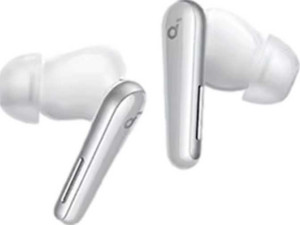
Anker Soundcore Liberty 5
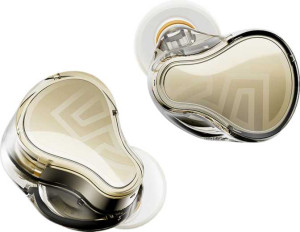
Soundpeats H3

Anker Soundcore Liberty 5 Soundpeats H3

Overview

Welcome to our detailed spec comparison between the Anker Soundcore Liberty 5 and the Soundpeats H3. Both are wireless in-ear earbuds sharing a solid foundation — including Bluetooth 5.4, LDAC support, 6-microphone arrays, and USB-C charging — but they diverge sharply when it comes to noise cancellation, codec support, and battery capabilities. Read on to see how these two contenders stack up across every key specification.

Common Features

  • Both products use an in-ear fit.
  • Both products are water resistant.
  • Both products have no wires or cables.
  • Neither product is a neckband earbud design.
  • Neither product includes wingtips.
  • Neither product has RGB lighting.
  • Both products have stereo speakers.
  • Neither product has a UV light.
  • Both products offer passive noise reduction.
  • Both products have a lowest frequency of 20 Hz.
  • Neither product supports spatial audio.
  • Neither product has Dirac Virtuo.
  • Neither product has a neodymium magnet.
  • Neither product has a solar power battery.
  • Both products have a battery level indicator.
  • Both products have a rechargeable battery.
  • Neither product supports fast pairing.
  • Both products have a USB Type-C connector.
  • Both products use Bluetooth version 5.4.
  • Both products support LDAC.
  • Neither product supports LDHC.
  • Neither product supports Bluetooth LE Audio.
  • Neither product supports aptX Low Latency.
  • Neither product supports aptX HD.
  • Both products support fast charging.
  • Both products support multipoint connection for up to 2 devices.
  • Neither product can read notifications.
  • Neither product has a built-in translator.
  • Both products have a mute function.
  • Both products can be used as a headset.
  • Both products have a control panel placed on the device.
  • Both products have voice prompts.
  • Both products are equipped with 6 microphones.
  • Both products have a noise-canceling microphone.

Main Differences

  • The Ingress Protection rating is IP55 on the Anker Soundcore Liberty 5 and IPX5 on the Soundpeats H3.
  • The weight is 10 g on the Anker Soundcore Liberty 5 and 12 g on the Soundpeats H3.
  • Active noise cancellation (ANC) is present on the Anker Soundcore Liberty 5 but not available on the Soundpeats H3.
  • The driver unit size is 9.2 mm on the Anker Soundcore Liberty 5 and 12 mm on the Soundpeats H3.
  • The highest frequency is 40000 Hz on the Anker Soundcore Liberty 5 and 20000 Hz on the Soundpeats H3.
  • Dolby Atmos support is present on the Anker Soundcore Liberty 5 but not available on the Soundpeats H3.
  • Battery life is 8 hours on the Anker Soundcore Liberty 5 and 7 hours on the Soundpeats H3.
  • Battery life of the charging case is 40 hours on the Anker Soundcore Liberty 5 and 30 hours on the Soundpeats H3.
  • Charge time is 1.5 hours on the Anker Soundcore Liberty 5 and 1 hour on the Soundpeats H3.
  • Wireless charging is supported on the Anker Soundcore Liberty 5 but not available on the Soundpeats H3.
  • aptX Adaptive support is present on the Soundpeats H3 but not available on the Anker Soundcore Liberty 5.
  • aptX support is present on the Soundpeats H3 but not available on the Anker Soundcore Liberty 5.
  • aptX Lossless support is present on the Soundpeats H3 but not available on the Anker Soundcore Liberty 5.
  • Ambient sound mode is available on the Anker Soundcore Liberty 5 but not on the Soundpeats H3.
  • In/on-ear detection is present on the Anker Soundcore Liberty 5 but not available on the Soundpeats H3.
Specs Comparison
Anker Soundcore Liberty 5

Anker Soundcore Liberty 5

Soundpeats H3

Soundpeats H3

Design:
Fit In-ear In-ear
Ingress Protection (IP) rating IP55 IPX5
water resistance Water resistant Water resistant
weight 10 g 12 g
has no wires or cables
are neckband earbuds
wingtips included
has RGB lighting
has stereo speakers
has UV light
Has a display

In terms of overall design, the Anker Soundcore Liberty 5 and Soundpeats H3 share the same fundamental form factor: both are fully wireless, in-ear earbuds with no neckband, no wingtips, no RGB lighting, and no display. For the average buyer, this means the day-to-day experience of wearing and handling either pair will feel broadly similar in concept.

The most meaningful differentiator in this group is water resistance. Both carry an IPX5-class protection against water jets, but the Liberty 5 goes one step further with a full IP55 rating, which adds a ″5″ dust-resistance rating. In practical terms, this means the Liberty 5 can better withstand dusty environments — useful for outdoor workouts or commutes in dry, sandy conditions — while the H3 offers no certified dust protection at all.

Weight is the other noteworthy split: the Liberty 5 comes in at 10 g versus the H3′s 12 g. A 2-gram difference per earbud may sound trivial on paper, but over extended listening sessions it can translate to noticeably less ear fatigue, especially with in-ear designs that rely on fit pressure for a seal. The Liberty 5 therefore holds a clear edge in this group — lighter build and superior ingress protection give it a practical advantage in both comfort and durability.

Sound quality:
has active noise cancellation (ANC)
has passive noise reduction
driver unit size 9.2 mm 12 mm
lowest frequency 20 Hz 20 Hz
highest frequency 40000 Hz 20000 Hz
supports spatial audio
has Dolby Atmos
has Dirac Virtuo
has a neodymium magnet

The single biggest dividing line in this group is noise cancellation: the Anker Soundcore Liberty 5 includes active noise cancellation (ANC), while the Soundpeats H3 relies solely on passive noise reduction — meaning only the physical seal of the ear tip blocks ambient sound. In noisy environments like trains or open offices, ANC can make a substantial difference in perceived audio clarity and listening fatigue, giving the Liberty 5 a meaningful real-world edge for commuters and frequent travelers.

Driver size tells an interesting story here. The H3 uses a larger 12 mm driver versus the Liberty 5′s 9.2 mm unit. Larger drivers can move more air, which sometimes translates to a fuller, more impactful low-end response — though driver size alone does not guarantee sound quality. The frequency response widens this picture further: the Liberty 5 reaches up to 40,000 Hz, extending well into the high-resolution audio range, while the H3 tops out at a standard 20,000 Hz. Practically, most listeners will not perceive frequencies above 20 kHz, but the extended range signals that the Liberty 5 is tuned with hi-res audio sources in mind.

Adding Dolby Atmos support to the Liberty 5′s profile rounds out a notably stronger feature set. While the spatial effect depends heavily on the source content, it adds a dimensionality to compatible media that the H3 simply cannot match. Across every meaningful sound quality metric in this group — ANC, frequency ceiling, and audio processing — the Liberty 5 holds a clear advantage.

Power:
Battery life 8 hours 7 hours
Battery life of charging case 40 hours 30 hours
charge time 1.5 hours 1 hours
has wireless charging
Has a solar power battery
has a battery level indicator
has a rechargeable battery

Battery endurance favors the Anker Soundcore Liberty 5 at both the earbud and case level. Its 8-hour per-charge playback versus the Soundpeats H3′s 7 hours is a modest but real difference — enough to matter on a long-haul flight or an extended work-from-home day without reaching for the case. More significantly, the Liberty 5′s case extends total listening time to 40 hours compared to the H3′s 30 hours, a 33% gap that translates to roughly one to two additional full charges before needing a wall outlet.

Where the Liberty 5 further separates itself is wireless charging support — a convenience the H3 lacks entirely. For users with a Qi pad already on their desk or nightstand, eliminating the cable step streamlines daily top-ups considerably. The H3 does recharge faster at 1 hour versus the Liberty 5′s 1.5 hours, which is a genuine perk when time is short, but this advantage is narrow and situational compared to the cumulative benefits of wireless charging and greater total capacity.

Both earbuds include a battery level indicator, keeping users informed before they run dry — so neither has an edge there. Overall, the Liberty 5 holds a clear power advantage, offering more total runtime and a more flexible charging experience, with the H3′s faster wired charge time being the only counterpoint worth noting.

Connectivity:
has fast pairing
Has USB Type-C
Bluetooth version 5.4 5.4
has LDAC
has LDHC
has Bluetooth LE Audio
has aptX Adaptive
has aptX Low Latency
has aptX HD
has aptX
has aptX Lossless
has aptX Voice
has Auracast
maximum Bluetooth range 10 m 10 m
supports Bluetooth pairing using NFC
Can be used wirelessly
has AAC

At the foundation, these two earbuds are remarkably well-matched: both run on Bluetooth 5.4, share a 10 m wireless range, support USB-C charging, and include LDAC and AAC codec support. LDAC is Sony′s high-resolution wireless codec capable of transmitting up to 990 kbps, making it the gold standard for Android listeners who want near-lossless audio over Bluetooth — and the fact that both earbuds offer it is a strong baseline.

Where the Soundpeats H3 pulls ahead is its additional Qualcomm codec stack: it supports aptX, aptX Adaptive, and notably aptX Lossless. AptX Lossless, in particular, is a meaningful differentiator — it promises CD-quality lossless audio transmission for compatible source devices, something the Anker Soundcore Liberty 5 cannot deliver at all. AptX Adaptive adds further value by dynamically adjusting bitrate based on connection conditions, offering a resilient, high-quality fallback. For users with Qualcomm-powered Android devices, this codec flexibility is a tangible advantage.

The Liberty 5 has no aptX support of any kind, which means codec choice on that pairing is limited to LDAC or AAC depending on the source device. For Apple users, this gap is largely irrelevant since aptX is not supported on iOS regardless. But for Android audiophiles with a Qualcomm-equipped phone, the H3′s broader codec compatibility gives it a clear connectivity edge in this group.

Features:
release date July 2025 October 2025
has ambient sound mode
has in/on-ear detection
Supports fast charging
multipoint count 2 2
can read notifications
Has a built-in translator
has a mute function
can be used as a headset
control panel placed on a device
Has voice prompts
travel bag is included
Has an in-line control panel
Has a temperature sensor
Has a built-in camera remote control function

Much of this feature set is shared ground: both earbuds support fast charging, 2-device multipoint connection, on-device controls, voice prompts, a mute function, headset use, and even include a travel bag. For everyday users, this common baseline means neither pair feels stripped down in day-to-day operation.

The meaningful separation comes from two features exclusive to the Anker Soundcore Liberty 5: ambient sound mode and in/on-ear detection. Ambient mode is a practical quality-of-life feature that pipes in external audio through the microphones, letting users stay aware of their surroundings — critical for commuters or anyone navigating busy environments without removing their earbuds. In/on-ear detection adds a layer of convenience and battery awareness by automatically pausing playback when an earbud is removed, and resuming when reinserted. The Soundpeats H3 offers neither, which is a noticeable omission at this product tier.

These are not exotic or niche capabilities — ambient mode and ear detection have become near-standard expectations for premium wireless earbuds, and their absence on the H3 represents a real usability gap. The Liberty 5 takes a clear advantage in this group, delivering a more intelligent and situationally aware listening experience.

Microphone:
number of microphones 6 6
has a noise-canceling microphone

On paper, the microphone specifications for both earbuds are identical: each deploys 6 microphones and includes noise-canceling mic technology. A 6-mic array is a competitive count at this tier, typically allowing for beamforming configurations that isolate the speaker′s voice while suppressing ambient noise from multiple directions — useful for calls in windy or crowded settings.

Based strictly on the provided data, the Anker Soundcore Liberty 5 and Soundpeats H3 are a complete tie in this group. Neither holds a spec-level advantage over the other in microphone hardware or noise-canceling capability as defined here.

Comparison Summary & Verdict

After examining every specification, a clear picture emerges for each product. The Anker Soundcore Liberty 5 is the stronger all-round performer for listeners who demand premium audio features: it offers Active Noise Cancellation, Dolby Atmos, wireless charging, an ambient sound mode, and in/on-ear detection, all in a lighter 10 g shell with a longer 40-hour total battery life. On the other hand, the Soundpeats H3 makes a compelling case for audiophiles focused on codec fidelity, being the only one of the two to support aptX Adaptive, aptX, and aptX Lossless, and it also charges faster at just 1 hour. Its larger 12 mm driver may also appeal to those who prefer a fuller low-end response. In short, choose the Liberty 5 for a feature-rich everyday experience, and choose the H3 if lossless codec support is your top priority.

Anker Soundcore Liberty 5
Buy Anker Soundcore Liberty 5 if...

Buy the Anker Soundcore Liberty 5 if you want Active Noise Cancellation, Dolby Atmos, wireless charging, and a longer total battery life of up to 40 hours with the case.

Soundpeats H3
Buy Soundpeats H3 if...

Buy the Soundpeats H3 if aptX Adaptive, aptX, and aptX Lossless codec support are your priority, or if you want a faster 1-hour charge time.