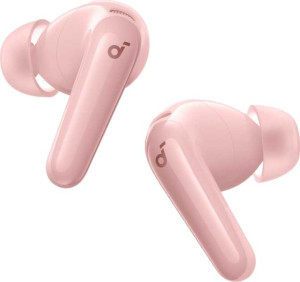
Anker Soundcore P31i
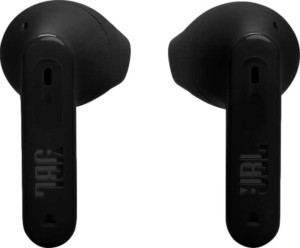
JBL Tune Flex 2

Anker Soundcore P31i JBL Tune Flex 2

Overview

Welcome to our in-depth spec comparison between the Anker Soundcore P31i and the JBL Tune Flex 2. Both are fully wireless, water-resistant earbuds that share a solid foundation of active noise cancellation, spatial audio, and fast charging — but they diverge in some meaningful ways. From fit style and codec support to battery distribution and Bluetooth version, this side-by-side breakdown will help you figure out which pair is the right match for your listening habits and daily needs.

Common Features

  • Both products are water resistant.
  • Neither product has wires or cables.
  • Neither product is a neckband earbud style.
  • Neither product includes wingtips.
  • Neither product has RGB lighting.
  • Both products have stereo speakers.
  • Neither product has a UV light.
  • Neither product has a display.
  • Both products support active noise cancellation (ANC).
  • The lowest frequency on both products is 20 Hz.
  • The highest frequency on both products is 20000 Hz.
  • Both products support spatial audio.
  • Neither product supports Dolby Atmos.
  • Neither product supports Dirac Virtuo.
  • Neither product has a neodymium magnet.
  • Battery life with ANC enabled is 8 hours on both products.
  • Both products have a charge time of 2 hours.
  • Neither product supports wireless charging.
  • Neither product has a solar power battery.
  • Both products have a battery level indicator.
  • Both products have a rechargeable battery.
  • Both products support fast pairing.
  • Both products have a USB Type-C connector.
  • Neither product supports LDHC.
  • Neither product supports Bluetooth LE Audio.
  • Neither product supports aptX Adaptive.
  • Neither product supports aptX Low Latency.
  • Neither product supports aptX HD.
  • Neither product supports aptX.
  • Both products have an ambient sound mode.
  • Both products support fast charging.
  • Both products support multipoint connection with up to 2 devices.
  • Neither product can read notifications.
  • Both products have a mute function.
  • Both products can be used as a headset.
  • Both products have a control panel placed on the device.
  • Both products have voice prompts.
  • Both products have a noise-canceling microphone.

Main Differences

  • Fit style is in-ear on Anker Soundcore P31i and earbud on JBL Tune Flex 2.
  • The Ingress Protection rating is IP55 on Anker Soundcore P31i and IP54 on JBL Tune Flex 2.
  • Passive noise reduction is present on Anker Soundcore P31i but not available on JBL Tune Flex 2.
  • Driver unit size is 11 mm on Anker Soundcore P31i and 12 mm on JBL Tune Flex 2.
  • Battery life (without ANC) is 10 hours on Anker Soundcore P31i and 12 hours on JBL Tune Flex 2.
  • Battery life of the charging case is 40 hours on Anker Soundcore P31i and 36 hours on JBL Tune Flex 2.
  • Bluetooth version is 6.1 on Anker Soundcore P31i and 5.3 on JBL Tune Flex 2.
  • LDAC support is present on Anker Soundcore P31i but not available on JBL Tune Flex 2.
  • AAC support is present on Anker Soundcore P31i but not available on JBL Tune Flex 2.
  • A built-in translator is present on Anker Soundcore P31i but not available on JBL Tune Flex 2.
Specs Comparison
Anker Soundcore P31i

Anker Soundcore P31i

JBL Tune Flex 2

JBL Tune Flex 2

Design:
Fit In-ear Earbud
Ingress Protection (IP) rating IP55 IP54
water resistance Water resistant Water resistant
has no wires or cables
are neckband earbuds
wingtips included
has RGB lighting
has stereo speakers
has UV light
Has a display

Both the Anker Soundcore P31i and the JBL Tune Flex 2 share the same fundamental design DNA: fully wireless, true stereo earbuds with no neckband and no wires. Neither includes wingtips, RGB lighting, a UV sanitizing light, or a display, so on most design dimensions these two are essentially evenly matched.

The one tangible differentiator in this group is ingress protection. The Soundcore P31i carries an IP55 rating, while the Tune Flex 2 holds an IP54. Both ratings share the same first digit — a 5 for dust resistance, meaning neither is fully dustproof but both guard against harmful dust deposits. The distinction lies in the water-resistance digit: a 5 on the P31i indicates protection against low-pressure water jets from any direction, whereas a 4 on the Tune Flex 2 covers only water splashes. In practice, this means the P31i is marginally better suited to use in heavier rain or a sweaty gym session where water may hit from multiple angles with some force, while the Tune Flex 2 is still perfectly adequate for light rain and perspiration.

Overall, design parity is high between these two products. However, if water exposure is a concern — particularly for outdoor or high-intensity workouts — the Soundcore P31i holds a narrow but real edge thanks to its superior IP55 water-resistance rating.

Sound quality:
has active noise cancellation (ANC)
has passive noise reduction
driver unit size 11 mm 12 mm
lowest frequency 20 Hz 20 Hz
highest frequency 20000 Hz 20000 Hz
supports spatial audio
has Dolby Atmos
has Dirac Virtuo
has a neodymium magnet

At the frequency level, these two earbuds are identical — both cover the full standard audible range of 20 Hz to 20,000 Hz, and both support spatial audio without relying on proprietary processing platforms like Dolby Atmos or Dirac Virtuo. For most listeners, this means a comparable breadth of sonic reproduction on paper.

Where things diverge is in driver size and noise isolation approach. The JBL Tune Flex 2 uses a slightly larger 12 mm driver versus the 11 mm driver in the Soundcore P31i. A larger driver can — though does not always — translate to more authority in the low-end and greater overall sound pressure, particularly at higher volumes. More meaningfully, the Soundcore P31i pairs its ANC with passive noise reduction, while the Tune Flex 2 relies on ANC alone with no passive isolation. This is a significant real-world distinction: passive noise reduction stems from the physical seal of an in-ear fit, which blocks ambient sound before electronics even engage. The P31i therefore benefits from two complementary layers of noise attenuation — the physical seal dampens mid-to-high frequency noise, and ANC handles low-frequency rumble — making it potentially more effective in loud or varied environments.

On balance, the Soundcore P31i holds the edge in sound quality for this group. Its combination of active and passive noise isolation gives it a structural advantage in real-world noise blocking that the Tune Flex 2 cannot match on ANC alone, regardless of driver size.

Power:
Battery life 10 hours 12 hours
Battery life of charging case 40 hours 36 hours
Battery life (ANC) 8 hours 8 hours
charge time 2 hours 2 hours
has wireless charging
Has a solar power battery
has a battery level indicator
has a rechargeable battery

Charge time, wireless charging support, and the presence of a battery indicator are identical across both earbuds — neither offers wireless charging, both replenish fully in 2 hours, and both provide a battery level indicator for at-a-glance monitoring. The real story in this category comes down to how the two products distribute their total battery capacity between the earbuds themselves and the charging case.

The JBL Tune Flex 2 leads on earbud-only playback, delivering 12 hours per charge compared to 10 hours for the Soundcore P31i — a 20% advantage that is meaningful for long-haul travelers or anyone who frequently goes a full day without access to the case. With ANC enabled, however, that gap closes entirely: both earbuds drop to an identical 8 hours, suggesting that the P31i's ANC circuitry is relatively more power-efficient relative to its baseline. On the case side, the dynamic flips — the Soundcore P31i's case holds 40 hours of total charge versus 36 hours for the Tune Flex 2, meaning the P31i can deliver more full top-ups before the case itself needs a cable.

Choosing a winner here depends on usage pattern. For listeners who rarely use ANC and want maximum single-session freedom, the Tune Flex 2 has the edge. For those who prioritize multi-day endurance away from a power outlet — especially with ANC running — the Soundcore P31i's larger case reserve makes it the more compelling choice for extended trips.

Connectivity:
has fast pairing
Has USB Type-C
Bluetooth version 6.1 5.3
has LDAC
has LDHC
has Bluetooth LE Audio
has aptX Adaptive
has aptX Low Latency
has aptX HD
has aptX
has aptX Lossless
has aptX Voice
has Auracast
maximum Bluetooth range 10 m 10 m
supports Bluetooth pairing using NFC
Can be used wirelessly
has AAC

Shared ground between these two is easy to summarize: both offer fast pairing, USB Type-C charging, a 10 m Bluetooth range, and wireless-only operation. Neither supports NFC pairing, aptX in any of its variants, Bluetooth LE Audio, or Auracast. The meaningful separation lies in two areas — Bluetooth version and codec support.

The Soundcore P31i runs on Bluetooth 6.1, a notably newer specification than the 5.3 found in the Tune Flex 2. A more recent Bluetooth version generally brings improvements to connection stability, interference handling, and power efficiency during transmission. Alongside that, the P31i supports both LDAC and AAC. LDAC is Sony's high-resolution codec capable of transmitting up to three times the data of standard Bluetooth audio, making it the go-to option for audiophiles streaming hi-res content from compatible Android devices. AAC, meanwhile, is the preferred codec for Apple devices, ensuring efficient, higher-quality transmission on iPhones. The Tune Flex 2 supports neither, falling back to SBC by default — a baseline codec that is functional but noticeably less efficient at preserving audio detail.

The connectivity advantage here belongs clearly to the Soundcore P31i. Its combination of a newer Bluetooth standard and broader codec support — particularly LDAC for Android users and AAC for Apple users — gives it a meaningfully richer and more versatile wireless audio pipeline than the Tune Flex 2.
Features:
release date November 2025 March 2025
has ambient sound mode
Supports fast charging
multipoint count 2 2
can read notifications
Has a built-in translator
has a mute function
can be used as a headset
control panel placed on a device
Has voice prompts
travel bag is included
Has an in-line control panel
Has a temperature sensor
Has a built-in camera remote control function

Functionally, these two earbuds are remarkably well-matched across most feature checkboxes. Both support ambient sound mode, fast charging, 2-device multipoint connectivity, mute, headset use, on-device controls, voice prompts, and even include a travel bag — a level of feature parity that makes direct comparison in this category straightforward.

The single point of differentiation is that the Soundcore P31i includes a built-in translator, while the Tune Flex 2 does not. A real-time translation feature can be genuinely useful for travelers or professionals who regularly navigate multilingual conversations, allowing the earbuds to function as an interpretation aid without relying on a separate app or device. It is a niche capability, but for users who would actually use it, it adds tangible, everyday utility that the Tune Flex 2 simply cannot offer.

Given how closely matched everything else is, the Soundcore P31i holds the edge in this group solely on the strength of its built-in translator. For most users the feature set will feel equivalent, but that one addition gives the P31i a practical advantage for internationally mobile or multilingual users.

Microphone:
has a noise-canceling microphone

Microphone specifications for these two earbuds are limited to a single shared data point: both the Anker Soundcore P31i and the JBL Tune Flex 2 feature a noise-canceling microphone. This is a meaningful baseline capability — a noise-canceling mic actively works to suppress ambient sound during calls, making voice transmission cleaner in busy environments like commutes, open offices, or city streets.

With only one spec available for this group and both products matching on it exactly, there is no differentiating data to analyze further. Based strictly on the provided specifications, this category is a complete tie — neither earbud holds an advantage over the other in microphone capability as defined by this data.

Comparison Summary & Verdict

After reviewing every specification, both earbuds prove to be capable, well-rounded options — but they cater to slightly different priorities. The Anker Soundcore P31i stands out for audio enthusiasts who value higher-fidelity wireless transmission, thanks to its LDAC and AAC codec support, newer Bluetooth 6.1, passive noise reduction, and a built-in translator feature. Its charging case also offers a longer 40-hour total battery reserve. The JBL Tune Flex 2, on the other hand, delivers a longer 12-hour single-charge playback in a classic open earbud fit, which many users find more comfortable for extended wear. If audio codec quality and feature depth matter most to you, the Anker is the stronger pick. If you prefer a relaxed, open-fit earbud with solid battery life per charge, the JBL is worth a serious look.

Anker Soundcore P31i
Buy Anker Soundcore P31i if...

Buy the Anker Soundcore P31i if you prioritize high-quality audio codecs like LDAC and AAC, want passive noise reduction alongside ANC, or need a larger combined battery reserve from the charging case.

JBL Tune Flex 2
Buy JBL Tune Flex 2 if...

Buy the JBL Tune Flex 2 if you prefer an open earbud fit for all-day comfort and want a longer single-charge battery life of 12 hours between top-ups.