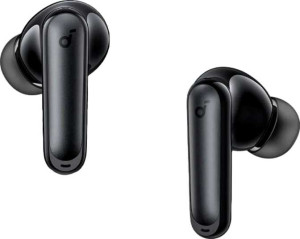
Anker Soundcore P41i
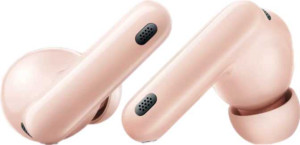
Huawei FreeBuds 7i

Anker Soundcore P41i Huawei FreeBuds 7i

Overview

Welcome to our in-depth spec comparison between the Anker Soundcore P41i and the Huawei FreeBuds 7i. Both true wireless earbuds share a strong foundation — six-microphone ANC, fast charging, and an 11 mm driver — yet they diverge in meaningful ways across battery endurance, audio codec support, and connectivity. Read on to see which of these earbuds better fits your listening lifestyle.

Common Features

  • Both products use an in-ear fit.
  • Neither product has wires or cables.
  • Neither product is a neckband earbud design.
  • Neither product includes wingtips.
  • Neither product has RGB lighting.
  • Both products have stereo speakers.
  • Neither product has a UV light.
  • Both products have active noise cancellation (ANC).
  • Both products have passive noise reduction.
  • Both products use an 11 mm driver unit size.
  • The lowest frequency on both products is 20 Hz.
  • The highest frequency on both products is 20000 Hz.
  • Neither product supports Dolby Atmos.
  • Neither product supports Dirac Virtuo.
  • Neither product has a neodymium magnet.
  • Neither product supports wireless charging.
  • Neither product has a solar power battery.
  • Both products have a battery level indicator.
  • Both products have a rechargeable battery.
  • Neither product supports fast pairing.
  • Both products have USB Type-C charging.
  • Neither product supports LDHC.
  • Neither product supports Bluetooth LE Audio.
  • Neither product supports aptX Adaptive.
  • Neither product supports aptX Low Latency.
  • Neither product supports aptX HD.
  • Neither product supports aptX.
  • Both products have an ambient sound mode.
  • Both products support fast charging.
  • Neither product can read notifications.
  • Neither product has a built-in translator.
  • Both products have a mute function.
  • Both products can be used as a headset.
  • Both products have a control panel placed on the device.
  • Both products have voice prompts.
  • Both products have 6 microphones.
  • Both products have a noise-canceling microphone.

Main Differences

  • The Ingress Protection rating is IPX5 on the Anker Soundcore P41i and IP54 on the Huawei FreeBuds 7i.
  • The Anker Soundcore P41i is water resistant, while the Huawei FreeBuds 7i is sweat resistant.
  • A display is present on the Anker Soundcore P41i but not available on the Huawei FreeBuds 7i.
  • Spatial audio support is present on the Huawei FreeBuds 7i but not available on the Anker Soundcore P41i.
  • Battery life is 12 hours on the Anker Soundcore P41i and 8 hours on the Huawei FreeBuds 7i.
  • Battery life of the charging case is 180 hours on the Anker Soundcore P41i and 27 hours on the Huawei FreeBuds 7i.
  • Charge time is 2 hours on the Anker Soundcore P41i and 1.5 hours on the Huawei FreeBuds 7i.
  • The Bluetooth version is 5.3 on the Anker Soundcore P41i and 5.4 on the Huawei FreeBuds 7i.
  • LDAC support is present on the Huawei FreeBuds 7i but not available on the Anker Soundcore P41i.
  • AAC support is present on the Huawei FreeBuds 7i but not available on the Anker Soundcore P41i.
Specs Comparison
Anker Soundcore P41i

Anker Soundcore P41i

Huawei FreeBuds 7i

Huawei FreeBuds 7i

Design:
Fit In-ear In-ear
Ingress Protection (IP) rating IPX5 IP54
water resistance Water resistant Sweat resistant
has no wires or cables
are neckband earbuds
wingtips included
has RGB lighting
has stereo speakers
has UV light
Has a display

Both the Anker Soundcore P40i and the Huawei FreeBuds 7i share the same fundamental design DNA: true wireless, in-ear form factors with stereo drivers and no neckband or wingtip accessories. For most users, the day-to-day wearing experience will feel broadly similar on paper — but the details reveal meaningful differences.

The most practical divergence lies in their ingress protection ratings. The Soundcore P40i carries an IPX5 rating, meaning it is tested against sustained, directional water jets — making it well-suited for heavy rain or splashing. The FreeBuds 7i holds an IP54 rating, which trades some water-jet resistance for added dust protection, but its official positioning as merely sweat resistant signals a narrower real-world use case. For gym workouts the IP54 is adequate, but the P40i's IPX5 gives it a clear edge for outdoor or wet-weather use.

The other key differentiator is that the Soundcore P40i includes a display — most likely on the charging case — which allows users to check battery status at a glance without relying on a companion app or audio cues. The FreeBuds 7i lacks this feature entirely. Overall, the Anker Soundcore P40i holds a design advantage for users who prioritize stronger water resistance and convenient battery monitoring, while the FreeBuds 7i offers no meaningful compensating design feature to offset these gaps.

Sound quality:
has active noise cancellation (ANC)
has passive noise reduction
driver unit size 11 mm 11 mm
lowest frequency 20 Hz 20 Hz
highest frequency 20000 Hz 20000 Hz
supports spatial audio
has Dolby Atmos
has Dirac Virtuo
has a neodymium magnet

On paper, these two earbuds are remarkably well-matched in sound quality fundamentals. Both feature 11 mm drivers, an identical frequency range of 20 Hz – 20,000 Hz, and both combine active noise cancellation with passive noise reduction — meaning neither has a raw technical edge in driver size or tunable frequency coverage. The ANC implementation on both should handle typical commute or office noise, though the data does not specify ANC depth in decibels.

The single differentiator in this category is spatial audio, which the FreeBuds 7i supports and the Soundcore P40i does not. Spatial audio creates a simulated three-dimensional soundstage, making music, movies, and games feel more immersive and less like sound is coming directly from inside your ears. For casual listeners this may feel like a subtle novelty, but for media consumption — particularly video content and gaming — it is a genuinely useful feature that the P40i simply cannot replicate.

Given how evenly matched everything else is, Huawei FreeBuds 7i takes a narrow but clear edge in this category purely on the strength of spatial audio support. Users who prioritize immersive playback will find meaningful added value there, while those indifferent to spatial audio will find both earbuds sonically comparable.

Power:
Battery life 12 hours 8 hours
Battery life of charging case 180 hours 27 hours
charge time 2 hours 1.5 hours
has wireless charging
Has a solar power battery
has a battery level indicator
has a rechargeable battery

Battery life is where these two earbuds diverge most dramatically. The Soundcore P40i delivers 12 hours of playtime per charge versus the FreeBuds 7i's 8 hours — a 50% gap that translates directly into fewer interruptions during long flights, workdays, or outdoor sessions. For heavy users who regularly push past the 7–8 hour mark without access to a case, that extra headroom is genuinely significant.

The case capacity gap is even more striking. The P40i's case extends total battery life to a remarkable 180 hours, compared to just 27 hours for the FreeBuds 7i. In practical terms, the P40i could go well over a week of heavy use between case charges, while the FreeBuds 7i would need its case recharged roughly every two to three days. The only area where the FreeBuds 7i recovers slightly is charge time — it refills in 1.5 hours versus the P40i's 2 hours, a minor convenience for users who regularly top up overnight.

Neither earbuds supports wireless charging, so that is a non-factor. Overall, the Anker Soundcore P40i holds a commanding advantage in this category. Unless charge speed is a priority, the P40i's superior per-charge endurance and vastly larger case capacity make it the clear winner for users who value staying unplugged for as long as possible.

Connectivity:
has fast pairing
Has USB Type-C
Bluetooth version 5.3 5.4
has LDAC
has LDHC
has Bluetooth LE Audio
has aptX Adaptive
has aptX Low Latency
has aptX HD
has aptX
has aptX Lossless
has aptX Voice
has Auracast
maximum Bluetooth range 10 m 10 m
supports Bluetooth pairing using NFC
Can be used wirelessly
has AAC

Shared ground first: both earbuds use USB-C charging, top out at the same 10 m Bluetooth range, and neither supports fast pairing or NFC. Where they part ways is in audio codec support and Bluetooth version — and those differences carry real weight for discerning listeners.

The FreeBuds 7i runs on Bluetooth 5.4, a small but meaningful step above the P40i's 5.3, offering marginally improved efficiency and connection stability. More impactful, however, is its codec lineup: the FreeBuds 7i supports both LDAC and AAC, while the Soundcore P40i supports neither. LDAC is particularly significant — it transmits audio at up to three times the bitrate of standard Bluetooth codecs, enabling near-lossless wireless audio quality on compatible Android devices. AAC, meanwhile, ensures cleaner audio transmission for Apple users. The P40i, lacking both, is limited to the baseline SBC codec in all scenarios.

For users who stream high-resolution audio or pair with premium smartphones, the codec gap is a decisive factor. The Huawei FreeBuds 7i takes a clear edge in connectivity, with its LDAC support alone justifying the advantage for audiophile-leaning listeners — while the P40i offers no compensating connectivity feature to close that gap.

Features:
release date May 2025 September 2025
has ambient sound mode
Supports fast charging
can read notifications
Has a built-in translator
has a mute function
can be used as a headset
control panel placed on a device
Has voice prompts
travel bag is included
Has an in-line control panel
Has a temperature sensor
Has a built-in camera remote control function

Rare in a head-to-head comparison, the Features category is a complete dead heat — every single spec listed is identical across both earbuds. Both offer ambient sound mode, fast charging, on-device controls, voice prompts, mute functionality, and even a travel bag included in the box. For everyday usability, this means neither product holds a practical advantage over the other.

The highlights worth contextualizing: ambient sound mode is increasingly essential for urban users who need situational awareness without removing their earbuds, and its presence on both is a genuine quality-of-life win. Fast charging similarly benefits both users equally — a short time on charge yields usable playback time, reducing the friction of running low mid-day. On-device controls and voice prompts round out a feature set that makes both earbuds fully self-sufficient without needing a companion app for core functions.

This category is a tie. Neither the Soundcore P40i nor the FreeBuds 7i offers any differentiating feature here, and users should treat this group as neutral ground when weighing their overall decision.

Microphone:
number of microphones 6 6
has a noise-canceling microphone

Microphone hardware is identical across both earbuds: each packs 6 microphones with noise-canceling capability. A six-mic array is a notably generous configuration at this price tier — more pickup points allow the beamforming algorithms to more precisely isolate the speaker's voice while suppressing wind, crowd noise, and background chatter during calls.

This category is a tie. With no differentiating specs to separate them, call quality on paper is evenly matched, and neither the Soundcore P40i nor the FreeBuds 7i holds a measurable microphone advantage over the other.

Comparison Summary & Verdict

After examining every specification, both earbuds prove themselves capable daily companions, but each excels in a different scenario. The Anker Soundcore P41i stands out for users who demand exceptional battery longevity, delivering 12 hours of playback and a staggering 180-hour charging case — ideal for frequent travelers or heavy users. It also features a built-in display on the case, a rare convenience in this segment. The Huawei FreeBuds 7i, on the other hand, appeals to audiophiles and quality-focused listeners with its support for LDAC and AAC codecs, spatial audio, and the slightly newer Bluetooth 5.4 standard. Its faster 1.5-hour charge time is also a practical bonus. In short, choose the Anker for stamina and case features; choose the Huawei for superior audio fidelity and modern codec support.

Anker Soundcore P41i
Buy Anker Soundcore P41i if...

Buy the Anker Soundcore P41i if you prioritize exceptional battery life and a charging case with a display, making it perfect for long trips or extended daily use.

Huawei FreeBuds 7i
Buy Huawei FreeBuds 7i if...

Buy the Huawei FreeBuds 7i if you value high-quality audio codecs like LDAC and AAC, spatial audio support, and a faster charging time.