Anker Soundcore P41i
Shokz OpenFit 2 Plus

Anker Soundcore P41i Shokz OpenFit 2 Plus

Overview

Welcome to our detailed spec comparison between the Anker Soundcore P41i and the Shokz OpenFit 2 Plus — two wireless earbuds that take very different approaches to everyday listening. From their contrasting fit styles to their varying noise management capabilities and battery endurance, these two products cater to distinct types of users. Read on as we break down every key specification to help you decide which one truly fits your lifestyle.

Common Features

  • Both products are water resistant.
  • Neither product has wires or cables.
  • Neither product is a neckband earbud design.
  • Neither product has RGB lighting.
  • Both products have stereo speakers.
  • Neither product has a UV light.
  • Both products have a frequency range of 20 Hz to 20000 Hz.
  • Spatial audio is not supported on either product.
  • Dolby Atmos is not available on either product.
  • Neither product has a Dirac Virtuo feature.
  • Neither product has a neodymium magnet.
  • Both products have a charge time of 2 hours.
  • Neither product has a solar power battery.
  • Both products have a battery level indicator.
  • Both products have a rechargeable battery.
  • Neither product supports fast pairing.
  • Both products have a USB Type-C port.
  • Neither product has LDAC, LDHC, Bluetooth LE Audio, aptX Adaptive, aptX Low Latency, or aptX HD support.
  • Both products support fast charging.
  • Neither product can read notifications.
  • Neither product has a built-in translator.
  • Both products have a mute function.
  • Both products can be used as a headset.
  • Both products have a control panel placed on the device.
  • Both products have voice prompts.
  • A travel bag is included with both products.
  • Both products have a noise-canceling microphone.

Main Differences

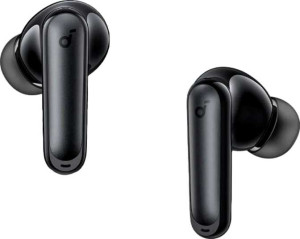
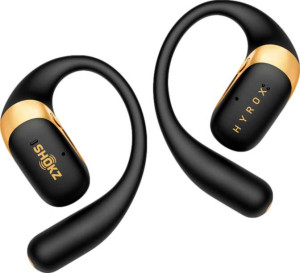
  • Fit style is in-ear on Anker Soundcore P41i and open-ear on Shokz OpenFit 2 Plus.
  • The Ingress Protection rating is IPX5 on Anker Soundcore P41i and IP55 on Shokz OpenFit 2 Plus.
  • Wingtips are not included with Anker Soundcore P41i but are included with Shokz OpenFit 2 Plus.
  • A display is present on Anker Soundcore P41i but not available on Shokz OpenFit 2 Plus.
  • Active noise cancellation is available on Anker Soundcore P41i but not on Shokz OpenFit 2 Plus.
  • Passive noise reduction is present on Anker Soundcore P41i but not on Shokz OpenFit 2 Plus.
  • The driver unit size is 11 mm on Anker Soundcore P41i and 17.3 mm on Shokz OpenFit 2 Plus.
  • Battery life is 12 hours on Anker Soundcore P41i and 11 hours on Shokz OpenFit 2 Plus.
  • Battery life of the charging case is 180 hours on Anker Soundcore P41i and 37 hours on Shokz OpenFit 2 Plus.
  • Wireless charging is not supported on Anker Soundcore P41i but is supported on Shokz OpenFit 2 Plus.
  • Ambient sound mode is available on Anker Soundcore P41i but not on Shokz OpenFit 2 Plus.
Specs Comparison
Anker Soundcore P41i

Anker Soundcore P41i

Shokz OpenFit 2 Plus

Shokz OpenFit 2 Plus

Design:
Fit In-ear Open-ear
Ingress Protection (IP) rating IPX5 IP55
water resistance Water resistant Water resistant
has no wires or cables
are neckband earbuds
wingtips included
has RGB lighting
has stereo speakers
has UV light
Has a display

The most fundamental design split here is the fit style: the Anker Soundcore P40i uses a traditional in-ear form factor, while the Shokz OpenFit 2 Plus adopts an open-ear design. In practice, this is a lifestyle decision as much as a technical one. In-ear buds create a seal inside the ear canal, which typically improves passive noise isolation and bass response, but can cause fatigue or discomfort during extended wear. Open-ear designs sit outside the canal entirely, preserving ambient sound awareness — a meaningful safety advantage for outdoor runners or commuters who need to stay alert to their surroundings.

On durability, both are water resistant, but the Shokz edges ahead with a full IP55 rating versus the Anker's IPX5. The key difference is that IP55 includes a dust-resistance rating (the first ″5″), while the ″X″ in IPX5 means dust protection was simply not tested. For gym or outdoor use, dust ingress is a real concern over time, so the Shokz carries a slight long-term durability advantage here. Both handle sweat and water splashes equally well under the shared ″5″ water rating.

Two smaller but notable differentiators: the Anker includes a display (likely an LED indicator for battery or connection status), which the Shokz lacks, offering at-a-glance feedback without reaching for a phone. Conversely, the Shokz bundles wingtips, which help anchor open-ear buds securely — especially relevant given that open-ear designs don't use a canal seal for natural retention. Overall, neither product is a clear winner across the board: the Shokz OpenFit 2 Plus holds an edge in protection rating and situational awareness design, while the Soundcore P40i suits users who prioritize sound isolation and onboard status feedback.
Sound quality:
has active noise cancellation (ANC)
has passive noise reduction
driver unit size 11 mm 17.3 mm
lowest frequency 20 Hz 20 Hz
highest frequency 20000 Hz 20000 Hz
supports spatial audio
has Dolby Atmos
has Dirac Virtuo
has a neodymium magnet

The noise isolation story is where these two diverge most sharply. The Anker Soundcore P40i offers both active noise cancellation (ANC) and passive noise reduction — a meaningful combination for focus or commuting. ANC uses microphones to actively counteract ambient sound, while passive reduction comes from the physical seal of the in-ear fit. Together, they provide a layered defense against environmental noise. The Shokz OpenFit 2 Plus, by contrast, has neither — a direct consequence of its open-ear design, which by nature cannot block or cancel sound. For anyone prioritizing an immersive, distraction-free listening experience, the Anker holds a significant structural advantage here.

Driver size tells a different story. The Shokz packs a substantially larger 17.3 mm driver compared to the Anker's 11 mm driver. Larger drivers can move more air, which generally translates to greater low-end authority and overall loudness potential — though driver size alone does not guarantee superior sound quality. Both share an identical frequency range of 20 Hz to 20,000 Hz, covering the full spectrum of human hearing on paper, so neither has a stated advantage in raw frequency reach.

Neither product supports spatial audio, Dolby Atmos, or Dirac Virtuo, so advanced soundstage processing is off the table for both. On balance, the right choice depends entirely on use case: the Soundcore P40i has the clear edge for noise-managed environments thanks to its ANC, while the OpenFit 2 Plus leans on its larger driver for raw acoustic output in open listening scenarios where isolation was never the goal.

Power:
Battery life 12 hours 11 hours
Battery life of charging case 180 hours 37 hours
charge time 2 hours 2 hours
has wireless charging
Has a solar power battery
has a battery level indicator
has a rechargeable battery

Per-earbud battery life is nearly identical — 12 hours for the Soundcore P40i versus 11 hours for the Shokz OpenFit 2 Plus — a one-hour gap that is unlikely to matter in day-to-day use. Both charge in 2 hours, and both include a battery level indicator, so neither leaves you guessing about remaining charge. For most users, a single daily charge will be more than sufficient with either option.

Where the gap becomes impossible to ignore is the charging case capacity. The Soundcore P40i's case extends total battery life to a remarkable 180 hours, compared to just 37 hours for the Shokz. That is nearly a five-to-one difference — meaning the Anker case could go weeks between charges under typical use, while the Shokz case needs topping up far more frequently. For frequent travelers or anyone who forgets to charge regularly, this is a significant practical advantage for the Anker.

The Shokz counters with one meaningful perk: wireless charging, which the Soundcore P40i lacks. The convenience of dropping the case on a Qi pad rather than hunting for a cable is a genuine quality-of-life upgrade. Ultimately, the Soundcore P40i holds the stronger overall power advantage due to its commanding case capacity, but the OpenFit 2 Plus earns points for wireless charging convenience — making it the better fit for users already embedded in a wireless charging ecosystem.

Connectivity:
has fast pairing
Has USB Type-C
has LDAC
has LDHC
has Bluetooth LE Audio
has aptX Adaptive
has aptX Low Latency
has aptX HD
has aptX
has aptX Lossless
has aptX Voice
has Auracast
maximum Bluetooth range 10 m 10 m
supports Bluetooth pairing using NFC
Can be used wirelessly
has AAC

Connectivity is the rare category where these two products are in complete lockstep. Both cap out at a 10 m Bluetooth range, charge via USB-C, and operate wirelessly — the basics are covered on both sides. Neither supports fast pairing or NFC pairing, so initial setup will follow the standard Bluetooth pairing flow without any shortcut.

More notably, neither product supports any advanced audio codec — no LDAC, no aptX variants, no AAC, and no Bluetooth LE Audio or Auracast. In practice, this means both fall back to the standard SBC codec for audio transmission. For casual listening this is rarely a dealbreaker, but audiophiles expecting high-resolution wireless audio throughput will find neither product accommodating. The absence of LE Audio also means no multipoint or broadcast audio features that newer Bluetooth standards enable.

Since every single connectivity specification is identical across both products, this group is a complete tie. No advantage can be assigned to either the Soundcore P40i or the OpenFit 2 Plus here — users should look to other spec groups to differentiate between them.

Features:
release date May 2025 October 2025
has ambient sound mode
Supports fast charging
can read notifications
Has a built-in translator
has a mute function
can be used as a headset
control panel placed on a device
Has voice prompts
travel bag is included
Has an in-line control panel
Has a temperature sensor
Has a built-in camera remote control function

Across most of the feature set, these two are well matched. Both support fast charging, include a mute function, can function as a headset for calls, offer on-device controls, deliver voice prompts, and come with a travel bag. For everyday usability, neither leaves the other behind on these fronts.

The single differentiator in this group is ambient sound mode, which the Soundcore P40i has and the Shokz OpenFit 2 Plus lacks. Ambient mode uses the earbuds' microphones to pipe in environmental audio, letting the wearer stay aware of their surroundings without removing the buds. It is worth noting, however, that the Shokz's open-ear design inherently allows ambient sound through by default — so the absence of a dedicated ambient mode is less of a practical gap than it would be on a sealed in-ear earbud. For the Anker, ambient mode is a meaningful complement to its ANC capability, giving users a full spectrum from full isolation to full awareness.

Given that the only listed difference is a feature the Shokz compensates for structurally through its open-ear design, the Soundcore P40i holds a marginal technical edge here — but this is a category that is essentially evenly matched in real-world impact for most users.

Microphone:
has a noise-canceling microphone

Both the Anker Soundcore P40i and the Shokz OpenFit 2 Plus include a noise-canceling microphone, meaning call quality is a stated priority for each. Microphone noise cancellation works by filtering out background sounds — wind, traffic, office chatter — so the person on the other end hears your voice more clearly rather than your environment.

With only a single shared specification available for this group, no differentiation can be drawn between the two products. This is a complete tie — both are equipped for voice calls and headset use, and neither holds an advantage over the other based on the provided data.

Comparison Summary & Verdict

After examining the full specification set, both products share a strong wireless foundation, but they diverge meaningfully in several areas. The Anker Soundcore P41i is the stronger choice for those who value immersive audio isolation, thanks to its active noise cancellation, passive noise reduction, ambient sound mode, and an exceptional 180-hour charging case battery life. Its built-in display is also a unique practical touch. The Shokz OpenFit 2 Plus, on the other hand, appeals to users who prefer an open-ear fit for situational awareness, benefit from the larger 17.3 mm drivers, and appreciate the convenience of wireless charging and a more robust IP55 dust and water resistance rating. Neither product is a clear-cut winner — your ideal choice depends entirely on whether you prioritize isolation and endurance or openness and charging flexibility.

Anker Soundcore P41i
Buy Anker Soundcore P41i if...

Buy the Anker Soundcore P41i if you want active noise cancellation, passive noise reduction, and an enormous charging case battery life of 180 hours for extended use between top-ups.

Shokz OpenFit 2 Plus
Buy Shokz OpenFit 2 Plus if...

Buy the Shokz OpenFit 2 Plus if you prefer an open-ear fit for ambient awareness, want the convenience of wireless charging, and need a higher IP55 dust and water resistance rating.