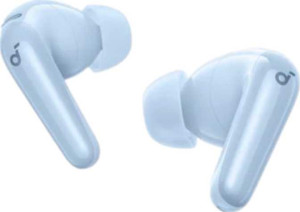
Anker Soundcore R60i
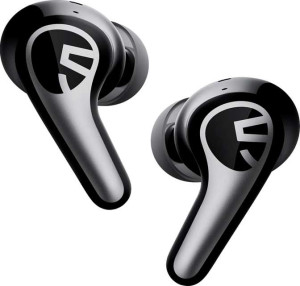
Soundpeats C30

Anker Soundcore R60i Soundpeats C30

Overview

Welcome to our detailed specification comparison between the Anker Soundcore R60i and the Soundpeats C30. Both are fully wireless, in-ear earbuds packed with active noise cancellation, LDAC support, and ambient sound mode, making them strong contenders in the mid-range audio market. However, key battlegrounds emerge around audio frequency range, connectivity features, and built-in smart capabilities that could tip the scales depending on your priorities. Read on to see how these two stack up across every major specification.

Common Features

  • Both earbuds have an in-ear fit.
  • Neither product has wires or cables.
  • Neither product is a neckband earbud style.
  • Wingtips are not included with either product.
  • RGB lighting is not available on either product.
  • Both products have stereo speakers.
  • UV light is not available on either product.
  • Neither product has a display.
  • Both products support active noise cancellation (ANC).
  • Both products have passive noise reduction.
  • The lowest frequency on both products is 20 Hz.
  • Dolby Atmos is not supported on either product.
  • Neither product has a neodymium magnet.
  • Both products offer 10 hours of battery life.
  • Both products have a charge time of 2 hours.
  • Wireless charging is not available on either product.
  • Both products have a battery level indicator.
  • Both products have a rechargeable battery.
  • Both products have a USB Type-C port.
  • Both products support LDAC.
  • Bluetooth LE Audio is not supported on either product.
  • Both products have ambient sound mode.
  • Both products support fast charging.
  • Neither product can read notifications.
  • Both products have a mute function.
  • Both products can be used as a headset.
  • Both products have a control panel placed on the device.
  • Both products have voice prompts.
  • A travel bag is included with both products.
  • Both products have a noise-canceling microphone.

Main Differences

  • Ingress Protection rating is IP55 on Anker Soundcore R60i and IP54 on Soundpeats C30.
  • Water resistance is rated for water on Anker Soundcore R60i, while Soundpeats C30 is rated for sweat resistance only.
  • The driver unit size is 11 mm on Anker Soundcore R60i and 12 mm on Soundpeats C30.
  • The highest frequency is 20000 Hz on Anker Soundcore R60i and 40000 Hz on Soundpeats C30.
  • Spatial audio support is present on Anker Soundcore R60i but not available on Soundpeats C30.
  • Battery life of the charging case is 40 hours on Anker Soundcore R60i and 42 hours on Soundpeats C30.
  • Fast pairing is available on Anker Soundcore R60i but not available on Soundpeats C30.
  • The Bluetooth version is 6.1 on Anker Soundcore R60i and 6.0 on Soundpeats C30.
  • A built-in translator is present on Anker Soundcore R60i but not available on Soundpeats C30.
Specs Comparison
Anker Soundcore R60i

Anker Soundcore R60i

Soundpeats C30

Soundpeats C30

Design:
Fit In-ear In-ear
Ingress Protection (IP) rating IP55 IP54
water resistance Water resistant Sweat resistant
has no wires or cables
are neckband earbuds
wingtips included
has RGB lighting
has stereo speakers
has UV light
Has a display

Both the Anker Soundcore R60i and the Soundpeats C30 share the same fundamental design philosophy: true wireless, in-ear earbuds with no cables, no neckband, no wingtips, no RGB lighting, and no display. For most users, this common ground means both will feel familiar and straightforward to use out of the box.

The most meaningful differentiator in this group is water resistance. The R60i carries an IP55 rating, while the C30 is rated IP54. In practical terms, both are protected against low-pressure water jets from any direction, but the R60i's higher second digit (5 vs. 4) means it also resists dust ingress more effectively — the C30 offers only limited dust protection. Anker also describes the R60i as ″water resistant,″ a broader claim than Soundpeats′ ″sweat resistant″ label for the C30, suggesting the R60i is better suited for use in rain or higher-moisture environments, not just workouts.

The Anker Soundcore R60i holds a clear, if modest, edge in design durability. The improved IP rating and broader water resistance claim make it the more versatile choice for active or outdoor use, while the C30 is better positioned as a gym-only companion. All other design attributes are identical between the two.

Sound quality:
has active noise cancellation (ANC)
has passive noise reduction
driver unit size 11 mm 12 mm
lowest frequency 20 Hz 20 Hz
highest frequency 20000 Hz 40000 Hz
supports spatial audio
has Dolby Atmos
has Dirac Virtuo
has a neodymium magnet

On the fundamentals, these two earbuds are well-matched: both offer active noise cancellation, passive noise reduction, and an identical low-end floor of 20 Hz. The shared ANC and passive isolation combination means neither product is compromising on noise management at this price tier.

The divergence emerges in two notable areas. The Soundpeats C30 pairs a slightly larger 12 mm driver (vs. the R60i′s 11 mm) with a dramatically extended high-frequency ceiling of 40,000 Hz, compared to the R60i′s standard 20,000 Hz. The larger driver can theoretically move more air for a fuller low-end, and the extended frequency range — often marketed as ″hi-res audio″ — matters for listeners using high-resolution audio sources, though human hearing rarely exceeds 20 kHz in practice. The Anker Soundcore R60i, on the other hand, supports spatial audio, which the C30 lacks entirely. Spatial audio creates a simulated three-dimensional soundstage — a tangible, perceptible enhancement for movies, gaming, and certain music genres.

The edge here depends on listening priorities. The C30 is better positioned for audiophile-leaning users who value extended frequency response and a larger driver, while the R60i offers a more immersive, dimensionally richer experience through spatial audio support. Neither has a universal advantage, but for everyday mixed-use listening, spatial audio tends to have a broader real-world impact than an ultrasonic frequency extension most ears cannot detect.
Power:
Battery life 10 hours 10 hours
Battery life of charging case 40 hours 42 hours
charge time 2 hours 2 hours
has wireless charging
Has a solar power battery
has a battery level indicator
has a rechargeable battery

Power performance is nearly identical across these two earbuds, and that consistency is worth noting positively. Both deliver 10 hours of earbud battery life and refill in 2 hours, placing them comfortably in the upper-mid range for true wireless earbuds at this tier. Ten hours is enough to cover a full workday of listening without touching the case.

The only measurable difference lies in the case capacity: the Soundpeats C30 edges ahead with 42 total hours versus the R60i′s 40 hours. In practice, this translates to roughly one additional full earbud recharge from the case — a real but minor advantage for extended travel or situations where access to a power outlet is limited for multiple days.

This category is effectively a draw. The 2-hour gap in total case endurance gives the C30 a technical lead, but it is too slim to constitute a meaningful real-world advantage for most users. Neither product supports wireless charging, and both include a battery level indicator for convenience. Buyers should not let power specs drive their decision between these two models.

Connectivity:
has fast pairing
Has USB Type-C
Bluetooth version 6.1 6
has LDAC
has LDHC
has Bluetooth LE Audio
has aptX Adaptive
has aptX Low Latency
has aptX HD
has aptX
has aptX Lossless
has aptX Voice
has Auracast
maximum Bluetooth range 10 m 10 m
supports Bluetooth pairing using NFC
Can be used wirelessly
has AAC

Codec support is where many connectivity comparisons diverge sharply, but here the two earbuds are well-aligned. Both carry LDAC and AAC, covering the most important high-quality wireless audio codec bases. LDAC in particular enables near-lossless streaming at up to 990 kbps on compatible Android devices — a genuine differentiator over budget earbuds that offer only SBC. Neither product supports aptX variants or Bluetooth LE Audio, so neither has an edge on that front.

The meaningful differences are in Bluetooth version and pairing behavior. The Anker Soundcore R60i runs Bluetooth 6.1 versus the C30′s Bluetooth 6.0, a minor but forward-looking advantage that can contribute to more stable connections and improved power efficiency in real-world use. More practically, the R60i also supports fast pairing, which the C30 lacks — a quality-of-life feature that streamlines the initial device connection experience, particularly for users switching between multiple devices or setting up for the first time.

The Anker Soundcore R60i holds a clear, if modest, edge in connectivity. The newer Bluetooth version and fast pairing support are both tangible advantages over the C30, while codec parity means neither product sacrifices audio streaming quality. For users who value seamless setup and marginally future-proofed wireless performance, the R60i is the stronger choice in this category.

Features:
release date November 2025 November 2025
has ambient sound mode
Supports fast charging
can read notifications
Has a built-in translator
has a mute function
can be used as a headset
control panel placed on a device
Has voice prompts
travel bag is included
Has an in-line control panel
Has a temperature sensor
Has a built-in camera remote control function

Feature parity is high between these two earbuds. Both offer ambient sound mode, fast charging, mute, on-device controls, voice prompts, headset functionality, and even a travel bag in the box — a thoughtful inclusion that not all earbuds at this price point provide. Fast charging in particular is worth highlighting as a practical daily convenience, allowing users to recover meaningful playback time from a short case top-up.

The single differentiator in this category is the built-in translator found exclusively on the Anker Soundcore R60i. A real-time translation feature built directly into the earbuds removes the need for a separate app or device when communicating across languages — a genuinely useful tool for frequent travelers or multilingual work environments. The Soundpeats C30 has no equivalent capability.

The Anker Soundcore R60i takes a clear edge here. The built-in translator is the only spec-level differentiator in this group, but it is a high-utility feature that addresses a specific and practical use case. For users who have no need for translation, both earbuds are functionally identical in this category — but for those who do, the R60i offers something the C30 simply cannot match.

Microphone:
has a noise-canceling microphone

Microphone specs are identical here: both the Anker Soundcore R60i and the Soundpeats C30 include a noise-canceling microphone. For call quality, this is the most important microphone feature at this product tier — it filters out ambient background noise so the person on the other end hears your voice more clearly, whether you are on a busy street or in an open-plan office.

This category is a complete tie. With only one shared data point and no differentiating specs available, neither product holds any advantage over the other in microphone capability as defined by the provided data. Buyers prioritizing call clarity can consider both earbuds equally matched on this front.

Comparison Summary & Verdict

After examining every specification, both earbuds share a remarkably strong foundation: ANC, LDAC, fast charging, a noise-canceling microphone, and a 10-hour battery life. Where they diverge is telling. The Anker Soundcore R60i stands out with its spatial audio support, built-in translator, fast pairing, Bluetooth 6.1, and a slightly higher IP55 water resistance rating, making it the more feature-rich choice for tech-savvy users. The Soundpeats C30, on the other hand, counters with a wider frequency range up to 40000 Hz, a larger 12 mm driver, and a marginally longer 42-hour charging case battery life, appealing to those who prioritize raw audio performance. Neither product is a clear overall winner; the right choice depends entirely on whether you value smart features or sonic range.

Anker Soundcore R60i
Buy Anker Soundcore R60i if...

Buy the Anker Soundcore R60i if you want spatial audio, a built-in translator, fast pairing, and a slightly higher water resistance rating alongside Bluetooth 6.1.

Soundpeats C30
Buy Soundpeats C30 if...

Buy the Soundpeats C30 if you prioritize a wider frequency range of up to 40000 Hz, a larger 12 mm driver, and a marginally longer charging case battery life.