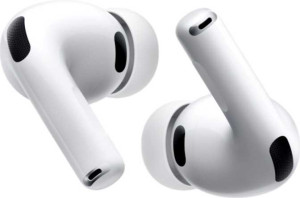
Apple AirPods Pro 3
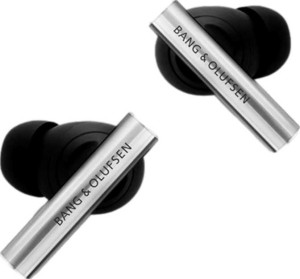
Bang & Olufsen Beo Grace

Apple AirPods Pro 3 Bang & Olufsen Beo Grace

Overview

When choosing between the Apple AirPods Pro 3 and the Bang & Olufsen Beo Grace, buyers are faced with two premium in-ear wireless earbuds that share a strong foundation yet diverge in meaningful ways. This comparison explores their key battlegrounds, including battery life and ANC performance, audio depth, smart features, and connectivity options, to help you decide which pair truly fits your lifestyle.

Common Features

  • Both products use an in-ear fit.
  • Both products are waterproof.
  • Both products have no wires or cables.
  • Neither product is a neckband earbud.
  • Neither product includes wingtips.
  • Neither product has RGB lighting.
  • Both products have stereo speakers.
  • Neither product has a UV light.
  • Both products have active noise cancellation (ANC).
  • Both products have passive noise reduction.
  • Both products reach a highest frequency of 20000 Hz.
  • Spatial audio support is available on both products.
  • Dirac Virtuo support is not available on either product.
  • Both products support wireless charging.
  • Neither product has a solar power battery.
  • Both products have a battery level indicator.
  • Both products have a rechargeable battery.
  • Both products have USB Type-C.
  • Both products use Bluetooth version 5.3.
  • LDAC support is not available on either product.
  • LDHC support is not available on either product.
  • aptX Adaptive support is not available on either product.
  • aptX Low Latency support is not available on either product.
  • aptX HD support is not available on either product.
  • aptX support is not available on either product.
  • Both products have an ambient sound mode.
  • Both products support fast charging.
  • Both products have a mute function.
  • Both products can be used as a headset.
  • Both products have a control panel placed on the device.
  • Both products have voice prompts.
  • A travel bag is included with both products.
  • Neither product has an in-line control panel.
  • Both products have a noise-canceling microphone.

Main Differences

  • The Ingress Protection (IP) rating is IP57 on Apple AirPods Pro 3 and IP54, IP57 on Bang & Olufsen Beo Grace.
  • The weight is 10.1 g on Apple AirPods Pro 3 and 12 g on Bang & Olufsen Beo Grace.
  • The driver unit size is 10.7 mm on Apple AirPods Pro 3 and 12 mm on Bang & Olufsen Beo Grace.
  • The lowest frequency is 20 Hz on Apple AirPods Pro 3 and 10 Hz on Bang & Olufsen Beo Grace.
  • Dolby Atmos support is present on Apple AirPods Pro 3 but not available on Bang & Olufsen Beo Grace.
  • A neodymium magnet is present on Bang & Olufsen Beo Grace but not included on Apple AirPods Pro 3.
  • Battery life (ANC) is 8 hours on Apple AirPods Pro 3 and 4.5 hours on Bang & Olufsen Beo Grace.
  • Charge time is 1.5 hours on Apple AirPods Pro 3 and 1.4 hours on Bang & Olufsen Beo Grace.
  • Fast pairing is available on Apple AirPods Pro 3 but not on Bang & Olufsen Beo Grace.
  • Bluetooth LE Audio support is present on Bang & Olufsen Beo Grace but not available on Apple AirPods Pro 3.
  • The ability to read notifications is available on Apple AirPods Pro 3 but not on Bang & Olufsen Beo Grace.
  • A built-in translator is present on Apple AirPods Pro 3 but not available on Bang & Olufsen Beo Grace.
  • A temperature sensor is present on Apple AirPods Pro 3 but not on Bang & Olufsen Beo Grace.
  • A built-in camera remote control function is available on Apple AirPods Pro 3 but not on Bang & Olufsen Beo Grace.
  • The number of microphones is 4 on Apple AirPods Pro 3 and 6 on Bang & Olufsen Beo Grace.
Specs Comparison
Apple AirPods Pro 3

Apple AirPods Pro 3

Bang & Olufsen Beo Grace

Bang & Olufsen Beo Grace

Design:
Fit In-ear In-ear
Ingress Protection (IP) rating IP57 IP54, IP57
water resistance Waterproof Waterproof
weight 10.1 g 12 g
has no wires or cables
are neckband earbuds
wingtips included
has RGB lighting
has stereo speakers
has UV light
Has a display

Both the Apple AirPods Pro 3 and the Bang & Olufsen Beo Grace share the same fundamental design philosophy: true wireless, in-ear earbuds with no cables, no neckband, no RGB lighting, and no display. For users, this means a clean, minimalist experience on both sides, and neither product holds a structural advantage in form factor alone.

Where differences emerge is in the details. The AirPods Pro 3 come in at 10.1 g versus the Beo Grace's 12 g — a nearly 19% weight difference. While both are lightweight by any reasonable standard, that extra ~2 g can matter during extended wear, particularly for users sensitive to ear fatigue over long listening sessions. On water resistance, both carry an IP57 rating, meaning they can withstand submersion in up to 1 meter of water for 30 minutes. However, the Beo Grace is also certified to IP54, suggesting that different components of the system — likely the charging case — carry a separate, slightly lower rating. This dual-rating actually reflects a more transparent disclosure of real-world protection levels across the full product ecosystem.

In terms of design, the AirPods Pro 3 hold a slight edge in wearability due to their lower weight, which is a meaningful factor for all-day comfort. The Beo Grace counters with a more comprehensive IP certification disclosure. Overall, these two products are closely matched in design, but users prioritizing long-wear comfort may lean toward the lighter AirPods Pro 3.
Sound quality:
has active noise cancellation (ANC)
has passive noise reduction
driver unit size 10.7 mm 12 mm
lowest frequency 20 Hz 10 Hz
highest frequency 20000 Hz 20000 Hz
supports spatial audio
has Dolby Atmos
has Dirac Virtuo
has a neodymium magnet

At the foundation, both earbuds are well-equipped for noise isolation, combining active noise cancellation with passive noise reduction. The meaningful divergence lies in the drivers. The Beo Grace uses a 12 mm driver versus the AirPods Pro 3's 10.7 mm unit — a larger driver generally moves more air, which tends to translate into fuller bass reproduction and a more expansive soundstage, though tuning and acoustic engineering ultimately determine the final result.

The frequency response gap is more telling. The Beo Grace extends down to 10 Hz, well below the AirPods Pro 3's 20 Hz lower limit — and indeed below the threshold of human hearing. While you won't ″hear″ 10 Hz in the traditional sense, sub-bass extension at that level produces physical sensation and a sense of depth that audiophiles often describe as added weight and presence. Both top out at 20000 Hz, so the upper end is equivalent. The Beo Grace also pairs its larger driver with a neodymium magnet, which improves magnetic flux efficiency and can contribute to tighter, more controlled driver movement. On the software side, the AirPods Pro 3 counters with Dolby Atmos support alongside spatial audio, offering a more immersive, cinema-grade listening experience within Apple's ecosystem.

For pure acoustic hardware capability, the Beo Grace holds the edge — its larger driver, deeper frequency floor, and neodymium magnet suggest a setup tuned for serious listeners who prioritize raw sonic performance. The AirPods Pro 3 remain highly competitive and add Dolby Atmos as a meaningful differentiator for multimedia consumption, but users who place sound quality above all else will find the Beo Grace's hardware credentials more compelling.

Power:
Battery life (ANC) 8 hours 4.5 hours
charge time 1.5 hours 1.4 hours
has wireless charging
Has a solar power battery
has a battery level indicator
has a rechargeable battery

Battery life is where the gap between these two products becomes impossible to ignore. The AirPods Pro 3 deliver 8 hours of continuous playback with ANC enabled, while the Beo Grace manages just 4.5 hours — barely more than half. In practical terms, the AirPods Pro 3 can cover a full workday of focused listening in a single charge, whereas the Beo Grace will need a top-up mid-afternoon for heavy users. For commuters, travelers, or anyone who relies on ANC throughout the day, this difference is significant.

The charging story is more balanced. Both earbuds refill in roughly the same time — 1.5 hours for the AirPods Pro 3 versus 1.4 hours for the Beo Grace — and both support wireless charging, which adds everyday convenience. The near-identical charge times do mean the Beo Grace recovers quickly when it does run out, but it will simply need to do so more frequently. Both products also include a battery level indicator, so users are never caught off guard by a sudden shutdown.

On power, the AirPods Pro 3 hold a clear and decisive advantage. The 8-hour ANC runtime is strong by any standard in this category, and the Beo Grace's 4.5-hour ceiling is a notable limitation that users should weigh carefully — especially given that the Beo Grace is positioned as a premium audio product where all-day usability is a reasonable expectation.

Connectivity:
has fast pairing
Has USB Type-C
Bluetooth version 5.3 5.3
has LDAC
has LDHC
has Bluetooth LE Audio
has aptX Adaptive
has aptX Low Latency
has aptX HD
has aptX
has aptX Lossless
has aptX Voice
has Auracast
maximum Bluetooth range 10 m 10 m
supports Bluetooth pairing using NFC
Can be used wirelessly
has AAC

Shared ground dominates this category: both earbuds run on Bluetooth 5.3, top out at the same 10 m range, support USB-C, AAC, and wireless connectivity. Neither supports aptX in any form or LDAC, so high-resolution codec enthusiasts will find neither product satisfies that particular need.

The two meaningful differentiators pull in opposite directions. The AirPods Pro 3 include fast pairing, which streamlines the initial setup experience — particularly within the Apple ecosystem where one-tap pairing is seamless and instant. The Beo Grace counters with Bluetooth LE Audio, a newer, more efficient audio transmission standard that reduces power consumption, improves audio quality at lower bitrates, and lays the groundwork for future multi-stream and broadcast audio features. LE Audio is a forward-looking technology, whereas fast pairing is a convenience feature that primarily benefits first-time setup.

This group is effectively a trade-off rather than a clear win for either side. The AirPods Pro 3 edge out in day-to-day pairing convenience, which matters most to users who frequently switch between devices. The Beo Grace's LE Audio support is the more technically significant feature long-term, but its practical impact depends on whether connected devices and software fully leverage it. Users deeply embedded in the Apple ecosystem will favor the AirPods Pro 3 here; platform-agnostic users may find the Beo Grace's LE Audio support the more future-proof choice.

Features:
release date September 2025 September 2025
has ambient sound mode
Supports fast charging
can read notifications
Has a built-in translator
has a mute function
can be used as a headset
control panel placed on a device
Has voice prompts
travel bag is included
Has an in-line control panel
Has a temperature sensor
Has a built-in camera remote control function

The feature set shared by both earbuds is solid: ambient sound mode, fast charging, mute, headset capability, on-device controls, voice prompts, and a travel bag are all present on each. For most users, this common baseline already covers the essentials of a premium wireless earbud experience.

Where the AirPods Pro 3 pull decisively ahead is in smart, ecosystem-integrated features. Notification reading keeps users informed without reaching for their phone; the built-in translator enables real-time language translation directly through the earbuds — a genuinely useful tool for travelers and multilingual environments. The temperature sensor adds a health-monitoring dimension, and the camera remote control function allows hands-free photo triggering, a niche but convenient addition. None of these features are present on the Beo Grace.

The AirPods Pro 3 hold a clear and substantial advantage in this category. The Beo Grace covers the functional fundamentals competently, but the AirPods Pro 3 layer on several features — particularly the translator and temperature sensor — that meaningfully expand what the earbuds can do beyond audio. Users who want their earbuds to function as a broader personal technology tool will find the AirPods Pro 3 far more capable here.

Microphone:
number of microphones 4 6
has a noise-canceling microphone

Both earbuds feature noise-canceling microphones, so call clarity in challenging environments is a baseline expectation for each. The key distinction is quantity: the Beo Grace deploys 6 microphones compared to the AirPods Pro 3's 4. In microphone array design, more microphones generally enable more precise beamforming — the process of isolating the speaker's voice while filtering out surrounding noise — and more robust wind and ambient noise rejection.

The practical implication is that the Beo Grace has more raw hardware available for voice pickup algorithms to work with. Whether that translates into a noticeably cleaner call experience depends heavily on the underlying signal processing software, but the hardware foundation gives the Beo Grace a structural advantage in environments with complex or directional noise sources, such as busy streets or open offices.

On microphone hardware alone, the Beo Grace holds the edge by virtue of its 6-microphone setup. For users who frequently take calls or rely on voice assistants in noisy conditions, this is a meaningful differentiator. The AirPods Pro 3's 4-microphone configuration is still competitive and benefits from Apple's audio processing, but the spec data gives the Beo Grace the hardware advantage in this category.

Comparison Summary & Verdict

After examining the full spec sheet, both earbuds prove themselves as capable, feature-rich options in the premium wireless category. The Apple AirPods Pro 3 stands out with its significantly longer 8-hour ANC battery life, Dolby Atmos support, fast pairing, and an impressive suite of smart features including a built-in translator, temperature sensor, and camera remote — making it the stronger all-rounder for Apple ecosystem users who demand versatility. The Bang & Olufsen Beo Grace, on the other hand, appeals to audiophiles with its deeper 10 Hz low-frequency response, larger 12 mm driver, neodymium magnet, and 6-microphone array, paired with Bluetooth LE Audio for future-proof connectivity. If raw sound fidelity and call clarity are your priorities, the Beo Grace delivers; if you want a smarter, longer-lasting earbud packed with features, the AirPods Pro 3 is the clear choice.

Apple AirPods Pro 3
Buy Apple AirPods Pro 3 if...

Buy the Apple AirPods Pro 3 if you want longer battery life with ANC, Dolby Atmos support, fast pairing, and a rich set of smart features like a built-in translator and temperature sensor.

Bang & Olufsen Beo Grace
Buy Bang & Olufsen Beo Grace if...

Buy the Bang & Olufsen Beo Grace if you prioritize deeper bass extension, a larger driver with a neodymium magnet, more microphones for clearer calls, and Bluetooth LE Audio support.