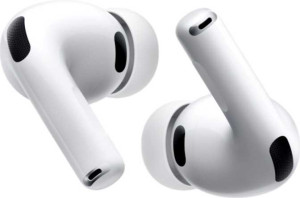
Apple AirPods Pro 3
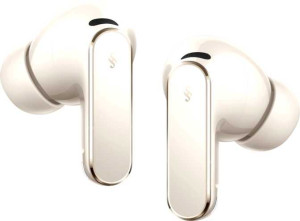
Huawei FreeBuds Pro 5

Apple AirPods Pro 3 Huawei FreeBuds Pro 5

Overview

Welcome to our in-depth spec comparison between the Apple AirPods Pro 3 and the Huawei FreeBuds Pro 5. Both earbuds share a strong foundation — fully wireless in-ear designs, active noise cancellation, and fast charging — but they diverge in meaningful ways across audio performance, battery experience, and smart features. Read on to see which of these premium earbuds is the right fit for your lifestyle.

Common Features

  • Both products use an in-ear fit design.
  • Both products are waterproof.
  • Both products are fully wireless with no cables.
  • Neither product is a neckband earbud style.
  • Neither product features RGB lighting.
  • Both products have stereo speakers.
  • Neither product includes a UV light.
  • Neither product has a built-in display.
  • Both products offer active noise cancellation (ANC).
  • Both products provide passive noise reduction.
  • Neither product supports Dirac Virtuo.
  • Neither product uses a neodymium magnet.
  • Both products have a charge time of 1.5 hours.
  • Neither product has a solar power battery.
  • Both products include a battery level indicator.
  • Both products have a rechargeable battery.
  • Both products include a USB Type-C port.
  • Neither product supports LDHC, Bluetooth LE Audio, aptX Adaptive, aptX Low Latency, aptX HD, aptX, or aptX Lossless.
  • Both products feature an ambient sound mode.
  • Both products support in/on-ear detection, a find device feature, fast charging, a mute function, headset use, an on-device control panel, and voice prompts.
  • Both products include a noise-canceling microphone.

Main Differences

  • The Ingress Protection rating is IP57 on Apple AirPods Pro 3 and IP54 on Huawei FreeBuds Pro 5.
  • The weight is 10.1 g on Apple AirPods Pro 3 and 11 g on Huawei FreeBuds Pro 5.
  • Wingtips are included with Huawei FreeBuds Pro 5 but not with Apple AirPods Pro 3.
  • The lowest reproduced frequency is 20 Hz on Apple AirPods Pro 3 and 10 Hz on Huawei FreeBuds Pro 5.
  • The highest reproduced frequency is 20000 Hz on Apple AirPods Pro 3 and 48000 Hz on Huawei FreeBuds Pro 5.
  • Spatial audio support is available on Apple AirPods Pro 3 but not on Huawei FreeBuds Pro 5.
  • Dolby Atmos support is present on Apple AirPods Pro 3 but not available on Huawei FreeBuds Pro 5.
  • Battery life is 10 hours on Apple AirPods Pro 3 and 9 hours on Huawei FreeBuds Pro 5.
  • Battery life of the charging case is 20 hours on Apple AirPods Pro 3 and 29 hours on Huawei FreeBuds Pro 5.
  • Battery life with ANC enabled is 8 hours on Apple AirPods Pro 3 and 6 hours on Huawei FreeBuds Pro 5.
  • Wireless charging is supported on Apple AirPods Pro 3 but not available on Huawei FreeBuds Pro 5.
  • Fast pairing is supported on Apple AirPods Pro 3 but not available on Huawei FreeBuds Pro 5.
  • The Bluetooth version is 5.3 on Apple AirPods Pro 3 and 6 on Huawei FreeBuds Pro 5.
  • LDAC support is present on Huawei FreeBuds Pro 5 but not available on Apple AirPods Pro 3.
  • The ability to read notifications is present on Apple AirPods Pro 3 but not available on Huawei FreeBuds Pro 5.
  • A built-in translator is present on Apple AirPods Pro 3 but not available on Huawei FreeBuds Pro 5.
  • A temperature sensor is included on Apple AirPods Pro 3 but not on Huawei FreeBuds Pro 5.
  • A built-in camera remote control function is available on Apple AirPods Pro 3 but not on Huawei FreeBuds Pro 5.
Specs Comparison
Apple AirPods Pro 3

Apple AirPods Pro 3

Huawei FreeBuds Pro 5

Huawei FreeBuds Pro 5

Design:
Fit In-ear In-ear
Ingress Protection (IP) rating IP57 IP54
water resistance Waterproof Waterproof
weight 10.1 g 11 g
has no wires or cables
are neckband earbuds
wingtips included
has RGB lighting
has stereo speakers
has UV light
Has a display

Both the Apple AirPods Pro 3 and Huawei FreeBuds Pro 5 share the same fundamental design philosophy: fully wireless, in-ear earbuds with no neckband, no RGB gimmicks, and no display — keeping the focus squarely on audio performance and wearability. These shared traits mean neither product compromises on portability or modern wireless convenience.

Where they diverge, the differences carry real-world weight. On water resistance, the AirPods Pro 3 holds a meaningful edge with an IP57 rating versus the FreeBuds Pro 5's IP54. The ″7″ in IP57 means the AirPods Pro 3 can withstand submersion in water up to 1 meter for 30 minutes, while IP54 only guarantees protection against water splashes from any direction — a notable gap if you plan to wear these during intense workouts or in heavy rain. The AirPods Pro 3 also comes in marginally lighter at 10.1 g per earbud versus 11 g, a small but perceptible difference over long listening sessions. Conversely, the FreeBuds Pro 5 includes wingtips, which can provide a more secure, locked-in fit during physical activity — something the AirPods Pro 3 lacks out of the box.

Overall, the AirPods Pro 3 holds the design edge on durability and weight, while the FreeBuds Pro 5 counters with better fit security through its included wingtips. Users who prioritize water protection and lighter wear will lean toward the AirPods Pro 3; those who need a more stable fit during exercise may find the FreeBuds Pro 5 more practical.

Sound quality:
has active noise cancellation (ANC)
has passive noise reduction
lowest frequency 20 Hz 10 Hz
highest frequency 20000 Hz 48000 Hz
supports spatial audio
has Dolby Atmos
has Dirac Virtuo
has a neodymium magnet

At the foundation, both earbuds are well-matched: active noise cancellation, passive noise reduction, and no neodymium magnet on either side. The real story, however, lies in two distinct philosophies of sound reproduction. The Huawei FreeBuds Pro 5 pushes a dramatically wider frequency range — 10 Hz to 48,000 Hz — compared to the AirPods Pro 3's standard 20 Hz to 20,000 Hz. The low-end extension to 10 Hz reaches into sub-bass territory that is felt more than heard, adding physical presence to bass-heavy tracks, while the upper ceiling of 48 kHz enables hi-res audio playback well beyond the threshold of human hearing — relevant only if your source content and codec chain actually support it.

The Apple AirPods Pro 3, meanwhile, counters with spatial audio and Dolby Atmos support — features the FreeBuds Pro 5 entirely lacks. Spatial audio creates a three-dimensional, head-tracked soundstage that transforms stereo and multi-channel content, particularly for movies and immersive music mixes. Dolby Atmos further enriches this experience on compatible streaming platforms. These are not marginal features; for users deeply embedded in Apple's ecosystem or who consume a lot of Atmos-encoded content, this capability meaningfully changes how audio is perceived.

The verdict here depends on use case. The FreeBuds Pro 5 appeals to audiophiles chasing raw frequency breadth and hi-res audio fidelity, while the AirPods Pro 3 delivers a richer, more immersive listening experience through spatial audio and Dolby Atmos. For most mainstream listeners — especially those streaming movies or music on Atmos-compatible services — the AirPods Pro 3 holds the practical edge in perceived sound quality.
Power:
Battery life 10 hours 9 hours
Battery life of charging case 20 hours 29 hours
Battery life (ANC) 8 hours 6 hours
charge time 1.5 hours 1.5 hours
has wireless charging
Has a solar power battery
has a battery level indicator
has a rechargeable battery

Taken at face value, the per-earbud battery numbers favor the Apple AirPods Pro 310 hours of playback versus 9 hours for the FreeBuds Pro 5 — but the ANC comparison is where the gap becomes more meaningful. With noise cancellation active, the AirPods Pro 3 sustains 8 hours compared to the FreeBuds Pro 5's 6 hours, a full two-hour difference. For commuters or frequent travelers who rely on ANC throughout the day, that margin is practically significant and could determine whether a mid-day recharge is necessary.

Flip the lens to total system endurance, though, and the picture shifts. The FreeBuds Pro 5 charging case extends the overall battery pool to 29 hours combined — versus the AirPods Pro 3's 20 hours — meaning more top-ups between wall charges. This makes the FreeBuds Pro 5 more compelling for multi-day travel or situations where access to a power outlet is limited. Charge time is identical at 1.5 hours for both, so neither has an advantage in recovery speed. One notable asymmetry: the AirPods Pro 3 supports wireless charging, while the FreeBuds Pro 5 does not, adding everyday convenience for users already in a Qi charging ecosystem.

This category is genuinely split by use case. The AirPods Pro 3 is the stronger choice for daily ANC-heavy users who prioritize per-session endurance and wireless charging convenience. The FreeBuds Pro 5 serves those who go longer between charges and need the case to carry more total energy reserves. Neither product dominates outright, but the AirPods Pro 3 edges ahead for typical daily use scenarios.

Connectivity:
has fast pairing
Has USB Type-C
Bluetooth version 5.3 6
has LDAC
has LDHC
has Bluetooth LE Audio
has aptX Adaptive
has aptX Low Latency
has aptX HD
has aptX
has aptX Lossless
has aptX Voice
has Auracast
maximum Bluetooth range 10 m 10 m
supports Bluetooth pairing using NFC
Can be used wirelessly
has AAC

The most structurally significant difference here is the Bluetooth version. The Huawei FreeBuds Pro 5 ships with Bluetooth 6, the latest generation, while the Apple AirPods Pro 3 runs on Bluetooth 5.3. Bluetooth 6 introduces improved channel sounding for more precise connection accuracy and lower-latency data handling — advantages that are subtle in everyday use but point to longer-term resilience as device ecosystems evolve. Both products share the same maximum range of 10 m, so real-world reach is a non-factor in this comparison.

Codec support tells its own story. The FreeBuds Pro 5 adds LDAC on top of the shared AAC baseline, enabling high-resolution audio streaming at up to 990 kbps — a meaningful capability for Android users with LDAC-compatible source devices who want to extract the most from hi-res audio files. The AirPods Pro 3 relies solely on AAC, which is well-optimized for Apple devices but represents a ceiling that audiophiles on non-Apple hardware will quickly feel. On the flip side, the AirPods Pro 3 supports fast pairing, streamlining the initial device connection experience — a convenience the FreeBuds Pro 5 does not offer.

For users locked into the Apple ecosystem, the AirPods Pro 3's connectivity is purpose-built and seamless, making the Bluetooth version gap largely academic. For everyone else — particularly Android users seeking high-fidelity wireless streaming — the FreeBuds Pro 5 holds a clear edge through its newer Bluetooth standard and LDAC support. On balance, the FreeBuds Pro 5 is the stronger performer in raw connectivity capability.

Features:
release date September 2025 November 2025
has ambient sound mode
has in/on-ear detection
has find device feature
Supports fast charging
can read notifications
Has a built-in translator
has a mute function
can be used as a headset
control panel placed on a device
Has voice prompts
travel bag is included
Has an in-line control panel
Has a temperature sensor
Has a built-in camera remote control function

Both the Apple AirPods Pro 3 and the Huawei FreeBuds Pro 5 offer several similar features, including ambient sound mode, in/on-ear detection, and the ability to find the device. Both also support fast charging, include a travel bag, and have voice prompts. Additionally, both can be used as a headset, and the control panel is placed on a device rather than directly on the earbuds themselves.

However, there are a few differences. The AirPods Pro 3 has the ability to read notifications, a built-in translator, a temperature sensor, and a built-in camera remote control function, none of which are available on the FreeBuds Pro 5. On the other hand, the FreeBuds Pro 5 lacks the notification reading and translation features, as well as the temperature sensor and camera remote control.

Both models have a mute function, but the FreeBuds Pro 5 does not include the additional features found in the AirPods Pro 3, such as the temperature sensor or camera control capability.

Microphone:
has a noise-canceling microphone

Both the Apple AirPods Pro 3 and the Huawei FreeBuds Pro 5 are equipped with a noise-canceling microphone, ensuring clear audio capture during calls or voice commands. There are no differences between the two products in this regard.

Both models feature this technology for enhanced call quality, but no other microphone-related specifications were provided.

Comparison Summary & Verdict

After examining every specification, it is clear that both earbuds are strong contenders in the premium wireless category. The Apple AirPods Pro 3 stands out with its broader smart-feature set — including spatial audio with Dolby Atmos, a built-in translator, a temperature sensor, and a camera remote — alongside wireless charging, fast pairing, and a slightly longer per-earbud battery life with ANC enabled. The Huawei FreeBuds Pro 5 counters with a notably wider frequency range (10 Hz–48 kHz), a newer Bluetooth 6 chipset, LDAC high-resolution audio support, and a significantly larger charging case battery of 29 hours. Ultimately, the AirPods Pro 3 is the stronger choice for Apple ecosystem users and those who value versatile smart features, while the FreeBuds Pro 5 is better suited to audiophiles and Android users who prioritize extended case battery life and high-fidelity wireless audio.

Apple AirPods Pro 3
Buy Apple AirPods Pro 3 if...

Buy the Apple AirPods Pro 3 if you want spatial audio with Dolby Atmos, wireless charging, and a richer set of smart features like a built-in translator, temperature sensor, and camera remote control.

Huawei FreeBuds Pro 5
Buy Huawei FreeBuds Pro 5 if...

Buy the Huawei FreeBuds Pro 5 if you prioritize a wider frequency range for audiophile-grade sound, LDAC support, a larger charging case battery life of 29 hours, and the latest Bluetooth 6 connectivity.