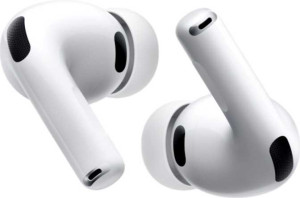
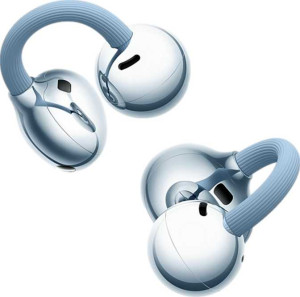
Frequency response is the one area where both earbuds stand equal: each covers the full audible spectrum from 20 Hz to 20,000 Hz, meaning neither has a raw hardware advantage in the range of sound it can reproduce. Beyond that baseline, however, the two products diverge sharply. The AirPods Pro 3 layers on both Active Noise Cancellation and passive noise reduction, while the FreeClip 2 offers neither — a direct consequence of its open-ear design, which by nature cannot block or counteract ambient sound.
The immersive audio gap is equally significant. The AirPods Pro 3 supports spatial audio with Dolby Atmos, enabling a three-dimensional soundstage that adapts to head movement — a meaningful upgrade for music, films, and gaming. The FreeClip 2 provides a standard stereo presentation with no equivalent technology. For users who stream content from platforms that carry Dolby Atmos tracks, this translates to a noticeably richer, more cinematic listening experience on the AirPods side.
The AirPods Pro 3 holds a clear and decisive advantage in this category. The addition of ANC, passive isolation, and spatial audio with Dolby Atmos represents a substantial feature stack that the FreeClip 2 simply does not compete with on paper. That said, FreeClip 2 users who prioritize ambient awareness over immersion are not choosing a defective product — they are choosing a different listening philosophy, one where these omissions are features rather than shortcomings.