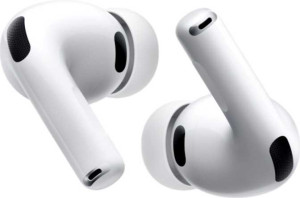
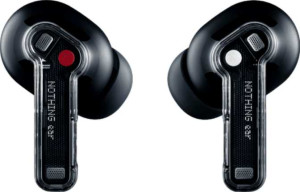
At their core, both earbuds share a strong foundation: active and passive noise cancellation, a 20 Hz low-end floor, and spatial audio support. The meaningful divergences, however, lie in driver size, high-frequency ceiling, and audio format support. The Nothing Ear 3 uses a 12 mm driver versus the AirPods Pro 3's 10.7 mm — a larger driver generally moves more air, which can translate to more impactful bass and greater dynamic range, though the actual tuning ultimately determines the listening experience.
On frequency response, the Ear 3 extends to 40,000 Hz compared to the AirPods Pro 3's 20,000 Hz ceiling. While human hearing typically tops out around 20 kHz, the higher limit can benefit users of hi-res audio formats that encode above that threshold, and some audiophiles believe it contributes to a more natural rendering of frequencies just below the cutoff. It is a spec that matters more in theory than in everyday listening, but it signals a deliberate engineering priority toward high-fidelity reproduction.
Where the AirPods Pro 3 counters is with Dolby Atmos support, which enables object-based, three-dimensional audio on compatible content — a practically meaningful advantage for movie and Apple Music users in particular. The Nothing Ear 3 offers no equivalent certified spatial format. Overall, this group is a genuine split: the Ear 3 edges ahead on raw acoustic hardware, while the AirPods Pro 3 leads on immersive audio format support. Your priority — hardware headroom versus ecosystem-integrated spatial audio — determines the winner.