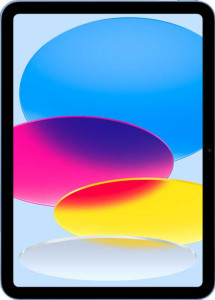
Apple iPad (2025)
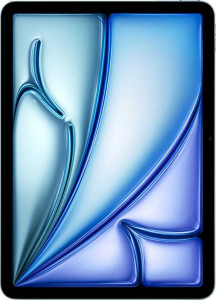
Apple iPad Air 11 (2025) Wi-Fi + Cellular

Apple iPad (2025) Apple iPad Air 11 (2025) Wi-Fi + Cellular

Overview

Welcome to our in-depth spec comparison between the Apple iPad (2025) and the Apple iPad Air 11 (2025) Wi-Fi + Cellular. While both tablets share Apple's ecosystem polish and a nearly identical display, the two diverge meaningfully when it comes to raw performance, connectivity options, and camera flexibility. Whether you are weighing everyday value against professional-grade power, this side-by-side breakdown will help you navigate the key battlegrounds before making your decision.

Common Features

  • Neither product includes a stylus in the box.
  • Neither product has a detachable keyboard.
  • Neither product has a backlit keyboard.
  • Neither product offers water resistance.
  • Both products share the same maximum operating temperature of 35 °C and minimum of 0 °C.
  • Both products have the same display resolution of 2360 x 1640 px.
  • Both products have a pixel density of 264 ppi.
  • Both products use an IPS LCD display type.
  • Both products have a 60Hz refresh rate.
  • Neither product has branded damage-resistant glass.
  • Both products have a typical brightness of 500 nits.
  • Both products have a touchscreen.
  • Neither product has a sapphire glass display.
  • Neither product has an external memory slot.
  • Both products have integrated graphics.
  • Both products use DDR5 memory.
  • Both products have a 12 MP main camera and a 12 MP front camera.
  • Both products support video recording at 2160 x 60 fps.
  • Neither product has a flash.
  • Both products have a front camera.
  • Both products support HDR mode in-camera.
  • Both products can create panoramas in-camera.
  • Both products support slow-motion video recording.
  • Both products have stereo speakers.
  • Neither product has a 3.5 mm audio jack.
  • Both products have 2 microphones.
  • Neither product has a radio.
  • Both products have a battery life of 10 hours.
  • Neither product supports wireless charging.
  • Both products have a rechargeable, non-removable battery.
  • Both products include Mail Privacy Protection.
  • Both products support on-device machine learning.
  • Both products provide clipboard warnings.
  • Both products have location privacy options.
  • Both products have camera and microphone privacy options.
  • Both products can block app tracking.
  • Both products block cross-site tracking.
  • Both products support split screen.

Main Differences

  • Weight is 481 g on Apple iPad (2025) and 460 g on Apple iPad Air 11 (2025) Wi-Fi + Cellular.
  • Thickness is 7 mm on Apple iPad (2025) and 6.1 mm on Apple iPad Air 11 (2025) Wi-Fi + Cellular.
  • Width is 248.6 mm on Apple iPad (2025) and 247.6 mm on Apple iPad Air 11 (2025) Wi-Fi + Cellular.
  • Height is 179.5 mm on Apple iPad (2025) and 178.5 mm on Apple iPad Air 11 (2025) Wi-Fi + Cellular.
  • Volume is 312.37 cm³ on Apple iPad (2025) and 269.60 cm³ on Apple iPad Air 11 (2025) Wi-Fi + Cellular.
  • Screen size is 10.9″ on Apple iPad (2025) and 11″ on Apple iPad Air 11 (2025) Wi-Fi + Cellular.
  • Anti-reflection coating is present on Apple iPad Air 11 (2025) Wi-Fi + Cellular but not available on Apple iPad (2025).
  • Internal storage is 512 GB on Apple iPad (2025) and 1024 GB on Apple iPad Air 11 (2025) Wi-Fi + Cellular.
  • RAM is 6 GB on Apple iPad (2025) and 8 GB on Apple iPad Air 11 (2025) Wi-Fi + Cellular.
  • The chipset is Apple A16 Bionic on Apple iPad (2025) and Apple M3 on Apple iPad Air 11 (2025) Wi-Fi + Cellular.
  • The GPU is Apple A16 GPU on Apple iPad (2025) and Apple M3 GPU on Apple iPad Air 11 (2025) Wi-Fi + Cellular.
  • CPU speed is 2 x 3.46 & 4 x 2.02 GHz on Apple iPad (2025) and 8 x 3.4 GHz on Apple iPad Air 11 (2025) Wi-Fi + Cellular.
  • Semiconductor size is 4 nm on Apple iPad (2025) and 3 nm on Apple iPad Air 11 (2025) Wi-Fi + Cellular.
  • Number of transistors is 16,000 million on Apple iPad (2025) and 25,000 million on Apple iPad Air 11 (2025) Wi-Fi + Cellular.
  • CPU threads count is 6 on Apple iPad (2025) and 8 on Apple iPad Air 11 (2025) Wi-Fi + Cellular.
  • Maximum memory amount is 6 GB on Apple iPad (2025) and 24 GB on Apple iPad Air 11 (2025) Wi-Fi + Cellular.
  • Maximum memory bandwidth is 51.2 GB/s on Apple iPad (2025) and 100 GB/s on Apple iPad Air 11 (2025) Wi-Fi + Cellular.
  • Manual focus is available on Apple iPad Air 11 (2025) Wi-Fi + Cellular but not on Apple iPad (2025).
  • Manual shutter speed is available on Apple iPad Air 11 (2025) Wi-Fi + Cellular but not on Apple iPad (2025).
  • Battery power is 8500 mAh on Apple iPad (2025) and 7606 mAh on Apple iPad Air 11 (2025) Wi-Fi + Cellular.
  • Fast charging is supported on Apple iPad Air 11 (2025) Wi-Fi + Cellular but not on Apple iPad (2025).
  • Wi-Fi 6E (802.11ax) support is present on Apple iPad Air 11 (2025) Wi-Fi + Cellular but not available on Apple iPad (2025).
  • SIM card support is 1 eSIM only on Apple iPad (2025) and 1 physical SIM plus 1 eSIM on Apple iPad Air 11 (2025) Wi-Fi + Cellular.
  • USB version is 2 on Apple iPad (2025) and 3.1 on Apple iPad Air 11 (2025) Wi-Fi + Cellular.
Specs Comparison
Apple iPad (2025)

Apple iPad (2025)

Apple iPad Air 11 (2025) Wi-Fi + Cellular

Apple iPad Air 11 (2025) Wi-Fi + Cellular

Design:
weight 481 g 460 g
thickness 7 mm 6.1 mm
width 248.6 mm 247.6 mm
height 179.5 mm 178.5 mm
volume 312.3659 cm³ 269.59926 cm³
Stylus included
Has a detachable keyboard
Has a backlit keyboard
water resistance None None
maximum operating temperature 35 °C 35 °C
lowest potential operating temperature 0 °C 0 °C

In terms of overall footprint, these two tablets are nearly identical twins: the difference in width (248.6 mm vs 247.6 mm) and height (179.5 mm vs 178.5 mm) amounts to just 1 mm in each dimension, meaning they will feel essentially the same size in your hands and fit the same cases or sleeves. Where the distinction becomes tangible is in thickness and weight. The iPad Air 11 (2025) is measurably slimmer at 6.1 mm versus 7 mm for the standard iPad — a 13% reduction that, while it sounds small on paper, is noticeable when sliding the device into a bag or holding it at an edge.

The weight gap reinforces this premium feel: the Air comes in at 460 g against the iPad's 481 g. A 21 g difference may seem trivial, but over extended reading sessions or one-handed use, lighter devices cause noticeably less forearm fatigue. The combination of the thinner profile and reduced mass also results in a significantly lower displaced volume (269.6 cm³ vs 312.4 cm³), reflecting a more compact, dense construction in the Air despite nearly the same external dimensions — a sign of tighter internal engineering.

On every other design dimension — water resistance (none on both), accessory compatibility (no bundled stylus or keyboard on either), and operating temperature range (0 °C to 35 °C for both) — the two devices are completely equal. The clear design edge belongs to the iPad Air 11 (2025), which delivers a lighter, slimmer chassis without sacrificing any portability or environmental resilience. For users who prioritize a premium in-hand feel and daily carry comfort, this distinction matters.

Display:
screen size 10.9" 11"
resolution 2360 x 1640 px 2360 x 1640 px
pixel density 264 ppi 264 ppi
Display type IPS, LCD IPS, LCD
refresh rate 60Hz 60Hz
has branded damage-resistant glass
has anti-reflection coating
brightness (typical) 500 nits 500 nits
has a touch screen
Has sapphire glass display
Has an e-paper display

At first glance, the two displays are remarkably similar: both are IPS LCD panels sharing the exact same 2360 x 1640 px resolution, 264 ppi pixel density, 60 Hz refresh rate, and 500 nits of typical brightness. The screen size difference — 10.9″ on the standard iPad versus 11″ on the Air — is negligible in practice, and since pixel density is identical, sharpness and text clarity will be indistinguishable between the two.

The one meaningful differentiator in this group is the iPad Air 11's anti-reflection coating, which the base iPad lacks entirely. This is a practical advantage that shows up every day: in bright indoor lighting, near windows, or outdoors, the Air's coated glass will reduce distracting glare and maintain perceived contrast, making content easier to read without needing to reposition the device or raise brightness. For users who frequently work in mixed or variable lighting environments, this is a genuine usability improvement that no spec number fully captures.

Neither tablet offers branded damage-resistant glass, which is a shared limitation worth noting at these price points. Overall, the display edge goes to the iPad Air 11 (2025) — not because of resolution or brightness, but because the anti-reflection coating addresses a real-world pain point that the standard iPad simply does not.

Performance:
internal storage 512GB 1024GB
RAM 6GB 8GB
Chipset (SoC) name Apple A16 Bionic Apple M3
GPU name Apple A16 GPU Apple M3 GPU
CPU speed 2 x 3.46 & 4 x 2.02 GHz 8 x 3.4 GHz
has an external memory slot
semiconductor size 4 nm 3 nm
Supports 64-bit
Uses big.LITTLE technology
Has integrated graphics
number of transistors 16000 million 25000 million
Has NX bit
CPU threads 6 threads 8 threads
Supports ECC memory
Has TrustZone
maximum memory amount 6GB 24GB
Uses HMP
maximum memory bandwidth 51.2 GB/s 100 GB/s

The silicon gap between these two tablets is substantial. The standard iPad runs on the Apple A16 Bionic, a capable smartphone-derived chip built on a 4 nm process with 16 billion transistors, while the iPad Air 11 is powered by the Apple M3 — a full desktop-class processor on a 3 nm node packing 25 billion transistors. That 56% increase in transistor count, combined with the finer fabrication process, translates directly into more headroom for sustained performance in compute-intensive tasks like video editing, 3D rendering, or running advanced machine learning workloads.

The memory architecture tells a similarly one-sided story. The Air ships with 8 GB of RAM expandable to a maximum of 24 GB, versus 6 GB capped at 6 GB on the standard iPad. More critically, the M3's memory bandwidth reaches 100 GB/s — nearly double the iPad's 51.2 GB/s — meaning the Air can move data between the CPU, GPU, and memory at a far greater rate. For multitasking, large file handling, or GPU-accelerated work, this bandwidth advantage is tangible, not theoretical. The Air also offers up to 1 TB of internal storage versus 512 GB maximum on the base iPad, relevant for users managing large media libraries or creative assets.

The performance edge belongs unambiguously to the iPad Air 11 (2025). For everyday tasks like browsing, streaming, or light productivity, the A16 Bionic in the standard iPad is entirely sufficient — but users with demanding creative or professional workloads will find the M3's superior transistor density, doubled memory bandwidth, and higher RAM ceiling to be meaningful, lasting advantages.
Cameras:
megapixels (main camera) 12 MP 12 MP
megapixels (front camera) 12MP 12MP
video recording (main camera) 2160 x 60 fps 2160 x 60 fps
has a flash
has a front camera
has a built-in HDR mode
can create panoramas in-camera
supports slow-motion video recording
has touch autofocus
has a BSI sensor
has manual white balance
has a CMOS sensor
wide aperture (main camera) 1.8f 1.8f
has continuous autofocus when recording movies
Has a front-facing LED flash
has manual ISO
has a video light
Has timelapse function
wide aperture (front camera) 2.4f 2.4f
Shoots 360° panorama
has a serial shot mode
has built-in optical image stabilization
has manual focus
has manual exposure
has manual shutter speed

Camera hardware is a draw: both tablets share an identical spec sheet for their imaging systems, including 12 MP sensors front and rear, f/1.8 main apertures, 4K at 60 fps video recording, BSI CMOS sensors, and the same suite of features like HDR, panorama, slow-motion, and timelapse. Neither device has optical image stabilization or a flash, so the physical imaging ceiling is the same on both.

The only differentiator in this group sits in manual camera controls. The iPad Air 11 adds manual focus and manual shutter speed on top of the manual exposure both tablets share. For most casual users, these omissions on the standard iPad will go completely unnoticed — but for users who want finer creative control over their shots, particularly in tricky lighting conditions or when capturing motion, the ability to lock shutter speed independently is a meaningful addition. Manual focus similarly benefits users shooting close-up subjects or in situations where autofocus hunting is a problem.

The camera edge goes narrowly to the iPad Air 11 (2025), strictly on the basis of its expanded manual controls. The underlying hardware is identical, so output quality under automatic modes will be equivalent — but the Air gives more experienced users additional tools to work with, making it the more capable choice for intentional, hands-on photography and video capture.

Audio:
has stereo speakers
has a socket for a 3.5 mm audio jack
number of microphones 2 2
Has a radio

Audio is a complete tie. Both the Apple iPad (2025) and the iPad Air 11 (2025) are equipped with stereo speakers, dual microphones, no 3.5 mm headphone jack, and no radio — every data point in this group is identical. Users on both devices who want wired audio will need an adapter or a USB-C headset, a shared trade-off rather than a differentiator.

Neither product holds any advantage in this category. The decision between the two should rest entirely on the other specification groups — design, display, performance, and connectivity — where meaningful differences do exist.

Battery:
battery power 8500 mAh 7606 mAh
Battery life 10 hours 10 hours
Supports fast charging
has wireless charging
has a battery level indicator
has a rechargeable battery
has a removable battery

Despite having a notably smaller battery — 7606 mAh versus 8500 mAh on the standard iPad — the iPad Air 11 matches its counterpart with the same rated 10-hour battery life. This tells an important story about efficiency: the M3 chip's more advanced 3 nm architecture allows the Air to deliver identical endurance while drawing less power, effectively squeezing more out of fewer milliamp-hours. For day-to-day users, the end result is the same regardless of which device they choose.

Where the two diverge meaningfully is in how they replenish that charge. The iPad Air 11 supports fast charging; the standard iPad does not. In practical terms, this means the Air can recover usable battery levels significantly faster during a short break — a genuine convenience advantage for users who are frequently on the move or who cannot always plan long overnight charges. The base iPad's lack of fast charging is a notable omission that compounds over time for heavy users.

This group produces a split result with no clean overall winner. The standard iPad holds the edge on raw battery capacity, but the Air neutralizes that advantage through greater efficiency while adding the practical benefit of fast charging — a feature that arguably has more impact on real-world usability than a larger cell that charges at the same slow rate. Users who prioritize top-up speed will favor the Air; those who rarely have access to a charger and want maximum reserve may lean toward the standard iPad.

Connectivity & Features:
release date March 2025 March 2025
Wi-Fi version Wi-Fi 6 (802.11ax), Wi-Fi 5 (802.11ac), Wi-Fi 4 (802.11n) Wi-Fi 6 (802.11ax), Wi-Fi 5 (802.11ac), Wi-Fi 4 (802.11n), Wi-Fi 6E (802.11ax)
SIM cards 1 eSIM 1 SIM, 1 eSIM
has Mail Privacy Protection
has on-device machine learning
has clipboard warnings
has location privacy options
has camera/microphone privacy options
can block app tracking
blocks cross-site tracking
supports split screen
has SharePlay
has Live Text
has notification permissions
has full-page screenshots
has Quick Start
has theme customization
has Wi-Fi password sharing
has PiP
Can play games while they download
has an extra dim mode
can offload apps
has focus modes
has media picker
has dynamic theming
has dark mode
has battery health check
Has USB Type-C
has a cellular module
has 5G support
is a multi-user system
gets direct OS updates
has GPS
has a child lock
has an HDMI output
has NFC
Has a fingerprint scanner
USB version 2 3.1
Supports widgets
Bluetooth version 5.3 5.3
has a gyroscope
is DLNA-certified
Is free and open source
Has offline voice recognition
has a compass
supports Wi-Fi
Has sharing intents
Has customizable notifications
Uses 3D facial recognition
supports ANT+
Has a barometer
has an accelerometer
has AirPlay
has voice commands
Has an iris scanner
Has a built-in projector
supports Ethernet
Has an infrared sensor
Tracks the current position of a mobile device

Across the vast majority of connectivity and software features, these two tablets are identical — same Bluetooth 5.3, same 5G support, same sensor suite, same privacy controls, and the same extensive iPadOS feature set. The meaningful differences are concentrated in three specific areas that collectively paint a clear picture of where Apple drew the line between its entry-level and mid-range offerings.

The most impactful hardware gap is the USB port. The standard iPad ships with USB 2 speeds, while the iPad Air 11 steps up to USB 3.1 — a difference that translates to roughly a 10x increase in data transfer throughput. For users who regularly offload large video files, back up to external drives, or connect to high-bandwidth peripherals, this is a daily friction point on the base iPad. Similarly, the Air adds Wi-Fi 6E support, extending wireless connectivity into the 6 GHz band for lower congestion and higher speeds in dense environments, while the standard iPad tops out at Wi-Fi 6. On the cellular side, the Air offers both a physical SIM slot and an eSIM, versus eSIM only on the standard iPad — a practical advantage for travelers who swap physical SIM cards internationally.

The connectivity edge belongs clearly to the iPad Air 11 (2025). None of these advantages matter equally to every user — infrequent file transfers and single-carrier users may not feel any of them — but taken together, the faster USB port, expanded Wi-Fi spectrum, and dual SIM flexibility represent a consistent pattern of the Air being the more capable device for users who push connectivity harder.

Miscellaneous:
DDR memory version 5 5

This group contains a single shared data point: both the Apple iPad (2025) and the iPad Air 11 (2025) use DDR5 memory. DDR5 brings higher bandwidth and improved power efficiency compared to its predecessor, but since both devices operate on the same generation, this spec creates no distinction between them whatsoever. This group is a complete tie, and the choice between these two tablets should be driven entirely by the differences surfaced in other specification categories.

Comparison Summary & Verdict

Both tablets deliver a refined iPadOS experience with identical display resolution, refresh rate, and camera resolution, making either a solid choice for daily use. However, the differences are hard to ignore. The Apple iPad Air 11 (2025) Wi-Fi + Cellular stands out with the more powerful Apple M3 chip, double the RAM, up to 1 TB of storage, faster USB 3.1 connectivity, Wi-Fi 6E support, and fast charging — making it the clear pick for demanding workflows, creative professionals, and users who want room to grow. The Apple iPad (2025), on the other hand, offers a slightly larger battery at 8500 mAh and a familiar A16 Bionic chip at a more accessible position in Apple's lineup, making it a sensible choice for everyday tasks where top-tier performance is not a priority.

Apple iPad (2025)
Buy Apple iPad (2025) if...

Buy the Apple iPad (2025) if you want a capable everyday tablet with a larger battery and are not dependent on top-tier processing power or advanced connectivity features.

Apple iPad Air 11 (2025) Wi-Fi + Cellular
Buy Apple iPad Air 11 (2025) Wi-Fi + Cellular if...

Buy the Apple iPad Air 11 (2025) Wi-Fi + Cellular if you need the extra muscle of the M3 chip, more RAM and storage, fast charging, USB 3.1 speeds, Wi-Fi 6E, and greater camera control for demanding tasks.