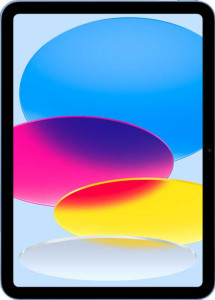
Apple iPad (2025)
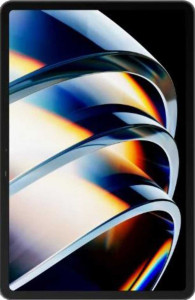
Infinix Xpad GT

Apple iPad (2025) Infinix Xpad GT

Overview

Welcome to our in-depth spec comparison between the Apple iPad (2025) and the Infinix Xpad GT — two tablets that take very different approaches to the modern tablet experience. From their contrasting display sizes and refresh rates to their distinct chipset philosophies and camera capabilities, these two devices cater to quite different audiences. Read on to see how every key specification stacks up before making your decision.

Common Features

  • Neither product includes a stylus in the box.
  • Neither product has a detachable keyboard.
  • Neither product has a backlit keyboard.
  • Neither product offers water resistance.
  • Both products have a touchscreen display.
  • Neither product uses branded damage-resistant glass.
  • Neither product has a sapphire glass display.
  • Neither product has an e-paper display.
  • Both products support 64-bit processing.
  • Both products have integrated LTE.
  • Both products use big.LITTLE CPU technology.
  • Both products have integrated graphics.
  • Both products share a maximum memory bandwidth of 51.2 GB/s.
  • Both products have a front camera.
  • Both products have a built-in HDR mode.
  • Both products support slow-motion video recording.
  • Both products have touch autofocus.
  • Both products use a CMOS sensor.
  • Neither product has a front-facing LED flash.
  • Both products have stereo speakers.
  • Neither product has a 3.5 mm audio jack.
  • Neither product has a radio.
  • Neither product supports wireless charging.
  • Both products have a battery level indicator.
  • Both products have a rechargeable and non-removable battery.
  • Both products have on-device machine learning.
  • Both products have clipboard warnings.
  • Both products have location privacy options.
  • Both products have camera and microphone privacy options.
  • Both products can block app tracking.
  • Both products support split screen.
  • Both products have Live Text functionality.
  • Both products have notification permissions.
  • Both products use DDR5 memory.

Main Differences

  • Weight is 481 g on Apple iPad (2025) and 655 g on Infinix Xpad GT.
  • Thickness is 7 mm on Apple iPad (2025) and 6.5 mm on Infinix Xpad GT.
  • Screen size is 10.9″ on Apple iPad (2025) and 13″ on Infinix Xpad GT.
  • Resolution is 2360 x 1640 px on Apple iPad (2025) and 2880 x 1840 px on Infinix Xpad GT.
  • Pixel density is 264 ppi on Apple iPad (2025) and 263 ppi on Infinix Xpad GT.
  • Refresh rate is 60Hz on Apple iPad (2025) and 144Hz on Infinix Xpad GT.
  • HDR10 support is present on Infinix Xpad GT but not available on Apple iPad (2025).
  • Internal storage is 512GB on Apple iPad (2025) and 256GB on Infinix Xpad GT.
  • RAM is 6GB on Apple iPad (2025) and 8GB on Infinix Xpad GT.
  • The chipset is Apple A16 Bionic on Apple iPad (2025) and Qualcomm Snapdragon 888 on Infinix Xpad GT.
  • The GPU is Apple A16 GPU on Apple iPad (2025) and Adreno 660 on Infinix Xpad GT.
  • CPU speed is 2 x 3.46 & 4 x 2.02 GHz on Apple iPad (2025) and 1 x 2.84 & 3 x 2.42 & 4 x 1.8 GHz on Infinix Xpad GT.
  • Geekbench 6 multi-core score is 5684 on Apple iPad (2025) and 3014 on Infinix Xpad GT.
  • Geekbench 6 single-core score is 2321 on Apple iPad (2025) and 1002 on Infinix Xpad GT.
  • Semiconductor size is 4 nm on Apple iPad (2025) and 5 nm on Infinix Xpad GT.
  • L2 cache is 24 MB on Apple iPad (2025) and 1 MB on Infinix Xpad GT.
  • CPU threads count is 6 on Apple iPad (2025) and 8 on Infinix Xpad GT.
  • RAM speed is 6400 MHz on Apple iPad (2025) and 3200 MHz on Infinix Xpad GT.
  • Maximum memory amount is 6GB on Apple iPad (2025) and 16GB on Infinix Xpad GT.
  • Main camera resolution is 12 MP on Apple iPad (2025) and 13 MP on Infinix Xpad GT.
  • Front camera resolution is 12 MP on Apple iPad (2025) and 9 MP on Infinix Xpad GT.
  • A rear flash is present on Infinix Xpad GT but not available on Apple iPad (2025).
  • In-camera panorama creation is supported on Apple iPad (2025) but not on Infinix Xpad GT.
  • A BSI sensor is used on Apple iPad (2025) but not on Infinix Xpad GT.
  • Manual white balance is available on Infinix Xpad GT but not on Apple iPad (2025).
  • Continuous autofocus during video recording is available on Infinix Xpad GT but not on Apple iPad (2025).
  • Manual ISO control is available on Infinix Xpad GT but not on Apple iPad (2025).
  • A video light is present on Infinix Xpad GT but not on Apple iPad (2025).
  • Serial shot mode is available on Apple iPad (2025) but not on Infinix Xpad GT.
  • Manual focus is available on Infinix Xpad GT but not on Apple iPad (2025).
  • Battery capacity is 8500 mAh on Apple iPad (2025) and 10000 mAh on Infinix Xpad GT.
  • Fast charging is supported on Infinix Xpad GT but not on Apple iPad (2025).
  • Mail Privacy Protection is available on Apple iPad (2025) but not on Infinix Xpad GT.
  • Cross-site tracking blocking is present on Apple iPad (2025) but not on Infinix Xpad GT.
  • Quick Start is supported on Apple iPad (2025) but not on Infinix Xpad GT.
  • Theme customization is available on Infinix Xpad GT but not on Apple iPad (2025).
  • Wi-Fi password sharing is supported on Apple iPad (2025) but not on Infinix Xpad GT.
  • Playing games while they download is supported on Infinix Xpad GT but not on Apple iPad (2025).
  • An extra dim mode is available on Infinix Xpad GT but not on Apple iPad (2025).
  • Focus modes are available on Apple iPad (2025) but not on Infinix Xpad GT.
  • Dynamic theming is available on Infinix Xpad GT but not on Apple iPad (2025).
  • A cellular module is present on Apple iPad (2025) but not on Infinix Xpad GT.
  • 5G support is available on Apple iPad (2025) but not on Infinix Xpad GT.
  • Multi-user system support is present on Infinix Xpad GT but not on Apple iPad (2025).
  • Geekbench 5 single-core score is 1874 on Apple iPad (2025) and 966 on Infinix Xpad GT.
  • Geekbench 5 multi-core score is 5382 on Apple iPad (2025) and 3043 on Infinix Xpad GT.
Specs Comparison
Apple iPad (2025)

Apple iPad (2025)

Infinix Xpad GT

Infinix Xpad GT

Design:
weight 481 g 655 g
thickness 7 mm 6.5 mm
Stylus included
Has a detachable keyboard
Has a backlit keyboard
water resistance None None

The most significant differentiator in this group is weight. The Apple iPad (2025) comes in at 481 g, while the Infinix Xpad GT is notably heavier at 655 g — a difference of 174 g, which is roughly the weight of a large apple. In real-world use, that gap is clearly perceptible during extended handheld sessions: reading, gaming, or video calls held up without a stand will feel noticeably more fatiguing on the Xpad GT over time.

On thickness, the tables turn slightly — the Xpad GT is marginally slimmer at 6.5 mm versus the iPad's 7 mm. However, a 0.5 mm difference is virtually imperceptible in daily handling and offers no meaningful practical advantage to either device. Both tablets also share the same baseline accessory story: no bundled stylus, no detachable keyboard, and no water resistance, meaning neither product offers any out-of-the-box protection against liquid exposure or an expanded input ecosystem without additional purchases.

On design, the Apple iPad (2025) holds a clear edge, primarily due to its substantially lower weight. For a device class that is frequently used handheld, lighter is almost always better for comfort and portability, and the nearly 175 g advantage is too large to dismiss. The Xpad GT's fractionally thinner profile does not meaningfully offset this disadvantage.

Display:
screen size 10.9" 13"
resolution 2360 x 1640 px 2880 x 1840 px
pixel density 264 ppi 263 ppi
Display type IPS, LCD LCD, IPS
refresh rate 60Hz 144Hz
has branded damage-resistant glass
supports HDR10
has a touch screen
Has sapphire glass display
Has an e-paper display

Screen size and refresh rate are where the Infinix Xpad GT pulls ahead most decisively. Its 13″ panel versus the iPad's 10.9″ screen means meaningfully more real estate for multitasking, media consumption, and creative work — a difference that is immediately obvious side by side. More importantly, the Xpad GT's 144Hz refresh rate versus the iPad's 60Hz is a substantial gap: smoother scrolling, more fluid animations, and a tangible advantage in gaming responsiveness are all real, everyday benefits that users will notice from the first swipe.

Despite the size difference, both panels land at virtually identical pixel densities — 263 ppi on the Xpad GT and 264 ppi on the iPad — meaning neither screen will appear sharper or more detailed to the naked eye at normal viewing distances. Both also use IPS LCD technology, so contrast depth and color volume are comparable in kind, though not necessarily identical in calibration. Where the Xpad GT does add a meaningful extra: it supports HDR10, which enables better highlight and shadow detail when streaming compatible content, a feature the iPad entirely lacks in this spec set.

For this group, the Infinix Xpad GT holds a clear advantage. The larger screen, significantly higher refresh rate, and HDR10 support collectively make it the stronger display package — particularly for users who prioritize gaming or media. The iPad's only comparable footing is sharpness, where the two are essentially tied, but that alone is not enough to close the gap.

Performance:
internal storage 512GB 256GB
RAM 6GB 8GB
Chipset (SoC) name Apple A16 Bionic Qualcomm Snapdragon 888
GPU name Apple A16 GPU Adreno 660
CPU speed 2 x 3.46 & 4 x 2.02 GHz 1 x 2.84 & 3 x 2.42 & 4 x 1.8 GHz
Geekbench 6 result (multi) 5684 3014
Geekbench 6 result (single) 2321 1002
semiconductor size 4 nm 5 nm
Supports 64-bit
Has integrated LTE
Uses big.LITTLE technology
Has integrated graphics
L2 cache 24 MB 1 MB
Has NX bit
CPU threads 6 threads 8 threads
RAM speed 6400 MHz 3200 MHz
Has TrustZone
maximum memory amount 6GB 16GB
L1 cache 256 KB 512 KB
maximum memory bandwidth 51.2 GB/s 51.2 GB/s
OpenGL ES version 3 3.2

Raw processing power is not a close contest here. The Apple A16 Bionic in the iPad (2025) achieves a Geekbench 6 multi-core score of 5684 and a single-core score of 2321, compared to the Xpad GT's Snapdragon 888 scores of 3014 and 1002 respectively. That is roughly 2.3× the single-core performance — the metric most directly tied to everyday app responsiveness, UI fluidity, and how quickly individual tasks complete. The A16 is also built on a 4 nm process versus the Snapdragon 888's 5 nm, meaning it achieves this performance advantage while running more efficiently, with implications for sustained load and thermal management.

The memory picture is more nuanced. The Xpad GT carries 8 GB of RAM versus the iPad's 6 GB, and its spec sheet lists a higher maximum memory ceiling of 16 GB. However, the iPad's RAM operates at 6400 MHz — double the Xpad GT's 3200 MHz — which largely offsets the raw capacity gap in bandwidth-sensitive workloads. On storage, the iPad offers up to 512 GB while the Xpad GT tops out at 256 GB, a relevant consideration for users who store large media libraries or work with sizable files locally. The A16 also brings a vastly larger L2 cache of 24 MB versus just 1 MB on the Snapdragon 888, which helps keep frequently accessed data closer to the processor and reduces latency in demanding workflows.

The Apple iPad (2025) has a commanding advantage in this group. Its chipset outperforms the Snapdragon 888 — a chip that launched in 2020 — by a wide margin in both single and multi-core tasks, and its faster RAM and superior cache architecture reinforce that lead. The Xpad GT's slight RAM capacity edge does not meaningfully close the gap in real-world performance.

Cameras:
megapixels (main camera) 12 MP 13 MP
megapixels (front camera) 12MP 9MP
has a flash
has a front camera
has a built-in HDR mode
can create panoramas in-camera
supports slow-motion video recording
has touch autofocus
has a BSI sensor
has manual white balance
has a CMOS sensor
has continuous autofocus when recording movies
Has a front-facing LED flash
has manual ISO
has a video light
Shoots 360° panorama
has a serial shot mode
has built-in optical image stabilization
has manual focus
has manual exposure
has manual shutter speed

Tablet cameras are rarely a primary purchase driver, but the differences here are meaningful enough to matter in specific use cases. On the rear, both devices land at nearly identical resolutions — 13 MP on the Xpad GT versus 12 MP on the iPad — so neither has a pixel-count advantage worth discussing. The more telling divergence is in sensor quality and manual control: the iPad features a BSI (Back-Side Illuminated) sensor, which improves light capture efficiency and tends to produce cleaner results in lower-light conditions, while the Xpad GT counters with a broader manual control suite including manual ISO, white balance, and focus — tools that matter to users who want deliberate, hands-on control over their shots.

For video and practical shooting, the Xpad GT pulls ahead in a few targeted ways. It includes a rear flash and a video light, making it more self-sufficient in dim environments without relying on ambient lighting. It also supports continuous autofocus during video recording, which the iPad lacks — a tangible advantage when capturing moving subjects. The iPad, on the other hand, wins on the front camera: its 12 MP selfie shooter significantly outresolves the Xpad GT's 9 MP front camera, which is relevant for video calls and self-facing content, arguably the most common camera use case on a tablet.

This group ends in a genuine split depending on the user's priorities. The iPad's superior front camera and BSI sensor give it an edge for video conferencing and low-light rear shooting, while the Xpad GT's manual controls, flash, and continuous autofocus make it more capable for deliberate rear-camera photography and video work. Neither product dominates outright — the right choice depends on which camera role matters most to the individual user.
Audio:
has stereo speakers
has a socket for a 3.5 mm audio jack
Has a radio

The audio spec sheet for these two tablets is identical in every available data point. Both feature stereo speakers, both omit a 3.5 mm headphone jack, and neither includes a built-in radio. Users who prefer wired headphones will need a USB-C adapter on either device — a now-common trade-off in the tablet segment. The shared stereo speaker setup means both are at least capable of producing directional sound, which benefits media consumption compared to a mono configuration.

This group is a complete tie based on the provided specs. There is no differentiator between the two products here, and no advantage can be assigned to either side.

Battery:
battery power 8500 mAh 10000 mAh
Supports fast charging
has wireless charging
has a battery level indicator
has a rechargeable battery
has a removable battery

Battery capacity favors the Infinix Xpad GT in a meaningful way. Its 10000 mAh cell outpaces the iPad's 8500 mAh by 1500 mAh — an 18% larger reservoir on paper. It is worth noting that raw capacity alone does not determine real-world screen-on time, since a larger, higher-refresh display (as the Xpad GT has) draws more power. That said, the capacity gap is substantial enough that the Xpad GT still holds a credible endurance advantage in comparable usage scenarios.

Where the difference becomes unambiguous is charging. The Xpad GT supports fast charging, while the iPad (2025) does not — meaning the iPad not only starts with a smaller battery but also takes longer to replenish it. For users who rely on their tablet through long days without consistent access to a power source, that combination of higher capacity and faster top-up speed is a practical, everyday benefit. Neither device supports wireless charging, so both require a wired connection regardless.

The Infinix Xpad GT holds a clear edge in this group. Larger capacity and fast charging support together form a stronger battery package, and the absence of fast charging on the iPad is a notable omission that compounds the capacity disadvantage at refill time.

Connectivity & Features:
release date March 2025 May 2025
has Mail Privacy Protection
has on-device machine learning
has clipboard warnings
has location privacy options
has camera/microphone privacy options
can block app tracking
blocks cross-site tracking
supports split screen
has Live Text
has notification permissions
has full-page screenshots
has Quick Start
has theme customization
has Wi-Fi password sharing
has PiP
Can play games while they download
has an extra dim mode
can offload apps
has focus modes
has media picker
has dynamic theming
has dark mode
has battery health check
Has USB Type-C
has a cellular module
has 5G support
is a multi-user system
gets direct OS updates
has GPS
has a child lock
has an HDMI output
has NFC
Has a fingerprint scanner
Supports widgets
Is free and open source
Has offline voice recognition
supports Wi-Fi
Has sharing intents
Has customizable notifications
Uses 3D facial recognition
Has a barometer
has voice commands
Has an iris scanner
Has a built-in projector
supports Ethernet
Has an infrared sensor
Tracks the current position of a mobile device

Connectivity hardware is where the Apple iPad (2025) establishes a substantial lead. It includes a cellular module with 5G support and GPS, making it a genuinely untethered device capable of staying connected and location-aware without a Wi-Fi network nearby. The Xpad GT is Wi-Fi only with no GPS, which limits its usefulness in mobile or navigation-dependent scenarios. The iPad also features a fingerprint scanner for biometric authentication — a convenience the Xpad GT entirely lacks — and a barometer for environmental sensing, rounding out a more capable hardware feature set.

On the software and privacy side, the iPad again holds more ground. It offers Mail Privacy Protection, cross-site tracking blocking, focus modes, and direct OS updates — features that collectively reflect a more mature and privacy-forward software ecosystem. The Xpad GT, however, has its own advantages here: it supports multi-user accounts, making it more shareable in household or institutional settings, and offers dynamic theming and deeper visual customization options that the iPad does not. It can also play games while they download in the background, a small but welcome convenience for gaming-oriented users.

Overall, the Apple iPad (2025) holds the stronger position in this group. The combination of cellular connectivity, GPS, biometric security, and a more comprehensive privacy framework represents a wider and more impactful set of advantages than the Xpad GT's multi-user support and customization flexibility — particularly for users who need their tablet to function independently of Wi-Fi.

Miscellaneous:
Geekbench 5 result (single) 1874 966
Geekbench 5 result (multi) 5382 3043
DDR memory version 5 5

The data in this group is sparse but pointed. The Geekbench 5 results reinforce what the Geekbench 6 figures already indicated in the Performance group: the Apple iPad (2025) leads decisively, posting a single-core score of 1874 versus the Xpad GT's 966, and a multi-core score of 5382 against 3043. Across both threading scenarios, the iPad roughly doubles the Xpad GT's single-core output — the metric most reflective of snappy, real-world task execution — and maintains a commanding multi-core lead as well. These figures from a different benchmark suite corroborate the same performance hierarchy with consistency.

Both devices share DDR5 memory, which is the one point of parity here. DDR5 offers higher bandwidth and improved efficiency over its predecessor, so both tablets benefit equally from that architectural baseline — it is not a differentiator between them.

The Apple iPad (2025) holds the clear advantage in this group. The DDR5 tie is the only common ground; on computational performance, the gap is wide and consistent across both single and multi-core measurements.

Comparison Summary & Verdict

After reviewing every specification, the two tablets emerge as strong contenders in different areas. The Apple iPad (2025) stands out with its significantly superior CPU and GPU performance — backed by Geekbench 6 multi-core scores nearly double those of its rival — along with a lighter 481 g build, 5G connectivity, and 512 GB of storage. It is the clear pick for users deeply embedded in the Apple ecosystem who demand raw processing power. The Infinix Xpad GT, on the other hand, wins on display experience with its larger 13-inch screen and fluid 144Hz refresh rate, and it pulls ahead in battery endurance thanks to its 10000 mAh cell with fast charging. Add in more manual camera controls, multi-user support, and 16 GB maximum memory, and it becomes a compelling choice for entertainment-focused and budget-conscious users who want a bigger, longer-lasting screen experience.

Apple iPad (2025)
Buy Apple iPad (2025) if...

Buy the Apple iPad (2025) if you prioritize raw processing power, a lightweight design, 5G connectivity, and seamless integration with the Apple ecosystem.

Infinix Xpad GT
Buy Infinix Xpad GT if...

Buy the Infinix Xpad GT if you want a larger 13-inch display with a smooth 144Hz refresh rate, a bigger battery with fast charging, and more manual camera controls at your fingertips.