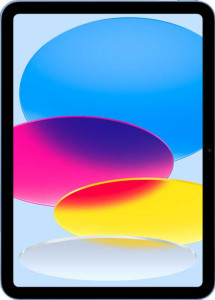
Two differences here carry outsized practical weight. First, the Apple iPad (2025) includes a cellular module with 5G support, while the Lenovo Idea Tab Pro is Wi-Fi only — a fundamental distinction for users who need connectivity away from known networks. Second, the Lenovo supports Wi-Fi 6E, extending into the less congested 6 GHz band for faster, cleaner wireless performance in dense environments, while the iPad tops out at Wi-Fi 6. On wired connectivity, the Lenovo's USB 3.2 port enables significantly faster data transfers compared to the iPad's USB 2 — relevant for anyone moving large files to and from external storage.
The privacy and security picture favors the iPad. It includes Mail Privacy Protection, cross-site tracking blocking, focus modes, and a fingerprint scanner — none of which are present on the Lenovo. The iPad also receives direct OS updates, meaning security patches and new features arrive without waiting on a third-party distribution chain. The Lenovo, by contrast, supports multi-user accounts — a meaningful advantage in shared household or institutional settings where the iPad's single-user model falls short.
Both tablets share a strong common baseline: Bluetooth 5.3, GPS, gyroscope, accelerometer, split-screen, widgets, dark mode, and offline voice recognition are present on both. The conclusion here is context-dependent but clear: the iPad edges ahead for mobile professionals and privacy-conscious users thanks to cellular connectivity, direct updates, and biometric security; the Lenovo is better suited to shared-use environments and users who prioritize faster local data transfer and Wi-Fi 6E networking.