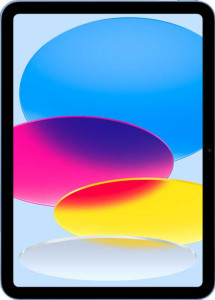
Wireless connectivity is one of the clearer dividing lines here. The iPad (2025) supports Wi-Fi 6 (802.11ax), while the Moto Pad 60 Neo tops out at Wi-Fi 5 (802.11ac). Wi-Fi 6 delivers faster throughput and significantly better performance in congested environments — a meaningful real-world difference in busy homes, offices, or public spaces. The iPad also edges ahead on Bluetooth 5.3 versus 5.2, though that gap is minor in practice. More notably, the iPad includes a cellular module with an eSIM, keeping users connected on the go without relying on Wi-Fi, whereas the Moto Pad lacks a cellular module entirely.
The sensor suite further separates the two. The iPad carries a gyroscope, compass, and barometer — none of which are present on the Moto Pad — making it more capable for navigation, augmented reality applications, and environmental awareness tasks. The iPad also includes a fingerprint scanner for biometric security, which the Moto Pad omits entirely. On the software and privacy side, the iPad offers a notably broader set of protections including Mail Privacy Protection, cross-site tracking blocking, focus modes, and direct OS updates — all absent on the Moto Pad, where software updates depend on the manufacturer's release schedule.
The Moto Pad 60 Neo does hold some meaningful practical advantages: it supports multi-user accounts — useful for shared or family tablets — and offers theme customization and dynamic theming for users who value personalization. Still, when weighing connectivity, sensors, security, and long-term software support together, the Apple iPad (2025) holds a substantial overall advantage in this category.